Every dog benefits from a small set of genuinely reliable commands, the kind that work in a real moment, not just during a calm training session at home.
This guide covers the core commands worth prioritising and why each one matters.
For the full training foundation this fits into, see: Dog Training Tips: The Complete Guide for Every Dog Owner.
1. Sit
Sit is usually the first command taught, and for good reason: it gives you a simple way to ask your dog to pause and settle in almost any situation, from greeting visitors to waiting at a curb.
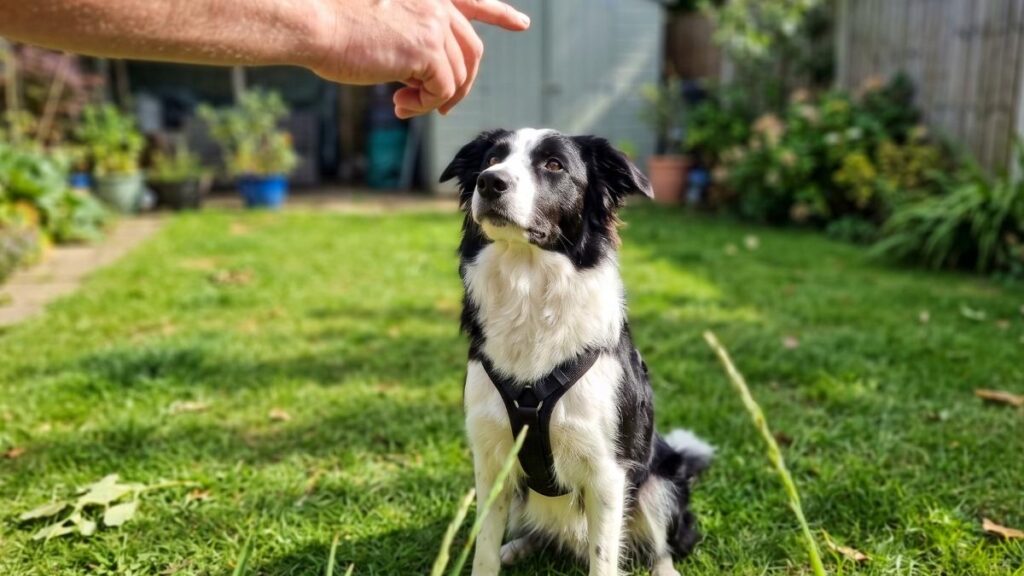
Most dogs pick this up quickly using a treat lured up and back over the nose, which naturally tips them into a seated position.
2. Down
Down asks for a deeper level of settling than sit, and it’s especially useful for longer waits, like at a cafe table or during a vet visit.
It builds naturally from a solid sit, luring the treat down and forward toward the floor until your dog follows into a lying position.
3. Stay
Stay teaches your dog to hold a position until released, and it’s one of the most genuinely useful safety commands you can teach, useful for open doors, busy parking lots, or any moment your dog needs to simply not move.
Build duration and distance gradually and separately, rather than asking for both at once early on.
4. Come (Recall)
A reliable recall is arguably the single most important command for your dog’s safety, since it’s what brings them back to you around genuine hazards, off leash, or during an unplanned door dash.
Recall needs to be trained as one of the highest-value behaviours in your dog’s whole repertoire, always rewarded generously, never used right before something unpleasant like a bath or nail trim.
5. Leave It
Leave it teaches your dog to disengage from something, whether that’s dropped food, a tempting trash pile, or another dog’s toy.
Start with low-value items and build up gradually to higher-value temptations as your dog’s reliability improves.
6. Drop It
Different from leave it, drop it asks your dog to release something already in their mouth, which matters for genuine safety when a dog picks up something dangerous.
Trading up, offering a better treat in exchange for releasing the item, tends to work better than trying to physically pry something free.
7. Heel
Heel asks your dog to walk closely beside you rather than pulling ahead or lagging behind, useful for crowded sidewalks, narrow doorways, or any situation calling for tighter control than a standard loose-leash walk.
This one typically takes longer to build than the others, since it asks for sustained positional awareness rather than a single response.
8. Wait
Wait is a lighter version of stay, asking your dog to pause briefly rather than hold a position for an extended time, genuinely useful at doorways, before crossing a street, or getting in and out of a car.
Many owners find this the most-used command in daily life once it’s solid.
Teaching Order Worth Following
Sit and down tend to come easiest first, since they build on natural body positions. Stay and wait follow once your dog understands holding still has value.
Recall deserves early, dedicated attention given its safety importance, while leave it, drop it, and heel typically come once your dog already has some training vocabulary and focus built up.
For the full method behind teaching any of these, see: Dog Obedience Training: The Complete Guide.
Proofing Commands Against Distraction
A command that only works in a quiet living room isn’t finished yet. Practice each one gradually in busier environments, starting easy and building toward genuine real-world distractions like other dogs, food on the ground, or unfamiliar people.
A good general rule is to only add a new layer of distraction, distance, or duration once your dog is succeeding reliably at the current level, rather than combining several new challenges at once.
When a Command Stops Working
If a previously solid command suddenly gets unreliable, it’s rarely that your dog has forgotten it. More often, reinforcement has quietly dropped off over time, or the environment has gotten harder than what was actually trained for.
A brief refresher, going back to rewarding every correct response for a week or two, usually restores the reliability quickly.
Common Mistakes
Repeating the command multiple times. Saying “sit, sit, sit” teaches your dog that the first one or two don’t actually require a response.
Only rewarding in one specific location. A command practiced only in the kitchen often falls apart completely at the park until it’s specifically generalised there too.
Skipping real-world proofing entirely. A command that only works without distractions isn’t reliable enough to depend on in situations that actually matter.
Frequently Asked Questions
Which command should I teach first? Sit is the traditional starting point, since it’s simple and builds quickly, though recall deserves early priority too given how much it matters for safety.
How long does it take to teach all of these? Most dogs can learn the basics of each command within a few weeks, though building genuine reliability around real distractions takes considerably longer, often months of ongoing practice.
Do I need special equipment for any of these? No, a treat pouch and your dog’s regular collar or harness are enough for all eight commands listed here.
The Bottom Line
A handful of genuinely reliable commands does more for daily life with your dog than a long list of half-learned ones.
Focus on real-world reliability over flashy variety, and build from there. For the full training foundation, see: Dog Training Tips: The Complete Guide for Every Dog Owner.