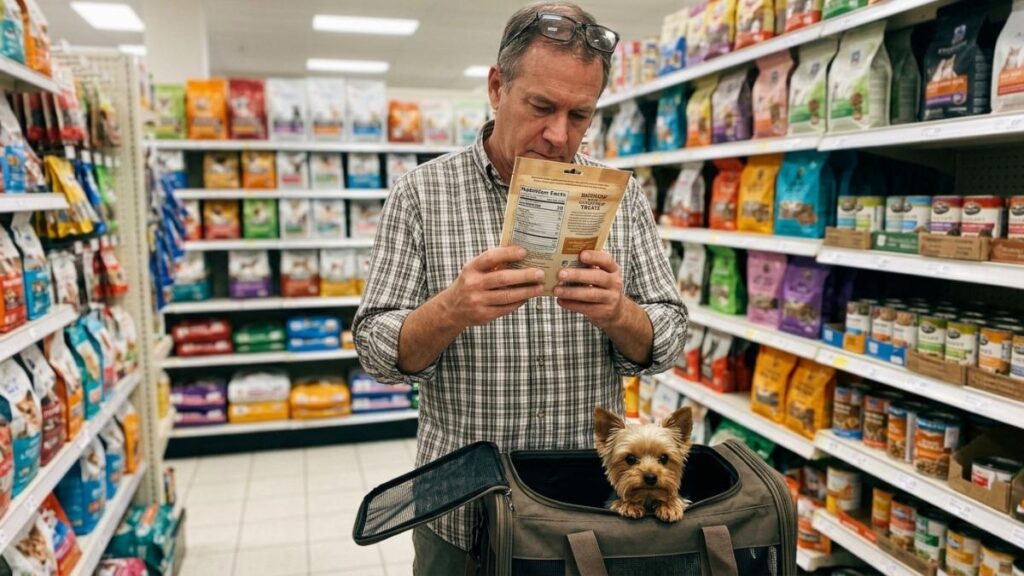
Not every store-bought treat is worth reaching for, even when the packaging says “natural” or “healthy.” This is a guide to reading a treat label properly. For homemade alternatives instead, see Dog Themed Party Food Recipes or Homemade Dog Training Treats Recipe.
Words That Don’t Mean What They Sound Like
“Natural,” “healthy,” and “wholesome” have no regulated definition on pet treat packaging, the same as with dog food generally. See How to Choose a Healthy Dog Food Brand for the same principle applied to full meals.
A short, recognizable ingredient list matters more than marketing language on the front of the bag.
Ingredients Worth Watching For
BHA and BHT are synthetic preservatives sometimes used in treats, and some studies have raised concern about them as potential carcinogens with long-term exposure, though research in dogs specifically is limited.
Propylene glycol, used to keep some soft treats moist, is generally recognized as safe in small amounts but is worth avoiding in a dog with any sensitivity, since it’s chemically related to (though distinct from) the ethylene glycol found in antifreeze.
Artificial colors add no nutritional value and exist purely for visual appeal to the person buying the treat, not the dog eating it.
Vague ingredient names like “meat by-product” or “animal fat” without a named species make it harder to know what’s actually in the treat, compared to a named source like “chicken liver” or “beef fat.”
Single-Ingredient Treats
A treat made from one dehydrated or freeze-dried ingredient, like chicken breast, sweet potato, or liver, is about as simple and transparent as a treat can get.
These tend to be more calorie-dense than a baked biscuit, so portion size still matters even though the ingredient list is minimal.
Calorie Density Still Counts
Treats, however healthy the ingredients, should stay under about 10 percent of a dog’s total daily calories, the same limit Tufts Petfoodology and UC Davis’s Nutrition Support Service recommend generally.
A “healthy” treat fed in excess is still an excess of calories. Ingredient quality doesn’t cancel out portion size.
Common Mistakes
Trusting front-of-package language over the ingredient list. Words like “natural” and “healthy” aren’t regulated claims.
Assuming freeze-dried treats are low-calorie because they’re light. Removing water concentrates calories, so these are often more calorie-dense by volume than they appear.
Ignoring treats when counting a dog’s daily calories. Treats add up and should count toward, not sit outside, the day’s total intake.
FAQ
Are grain-free treats healthier than treats with grain?
Not inherently. Grain-free doesn’t equal healthier, and grain-free diets have been linked to heart issues in some dogs, so this isn’t a default upgrade.
Should I avoid all preservatives in dog treats?
Natural preservatives like mixed tocopherols (a form of vitamin E) are generally considered safer than synthetic ones like BHA and BHT, though moderation matters either way.
Are homemade treats automatically healthier than store-bought ones?
Not automatically, but they do give you full control over every ingredient, which is the main advantage over a packaged treat.
The Bottom Line
A genuinely good treat has a short, named ingredient list and gets counted toward your dog’s daily calories, regardless of what the front of the packaging claims. For homemade options built the same way, see Dog Themed Party Food Recipes.