The wrong crate can quietly undermine even the best training approach, and getting the size and style right from the start makes the whole process considerably easier.
This guide breaks down how to choose based on your dog’s size, growth stage, and lifestyle, so you can pick a crate that actually sets your training up to succeed.
For the full crate training method, see: Crate Training a Puppy: The 5-Day Method for Quiet Nights.
1. The Right Size Matters More Than People Expect
A crate that’s the correct size lets your dog stand up fully, turn around comfortably, and lie down fully stretched out without touching the sides.
Too small, and the crate becomes genuinely uncomfortable rather than cosy, which can create a negative association that undoes weeks of otherwise good training. Too large, and a dog may use one end as a bathroom while sleeping at the other, which actively works against house training.
Most manufacturers list a recommended weight range for each crate size, but it’s worth measuring your own dog’s length and height directly where possible, since breeds vary considerably in proportions even at the same weight.
2. Sizing for a Growing Puppy
Many crates come with a divider panel specifically so you can buy one crate sized for your dog’s full adult size, then section it down to a smaller space while they’re still a puppy.
Move the divider back gradually as your puppy grows, always keeping the usable space appropriately snug rather than jumping straight to the full adult-size space too early. Checking the fit every couple of weeks during a growth spurt is a good habit, since puppies can outgrow a section faster than expected.
If your puppy is a mixed breed or their adult size is genuinely uncertain, it’s reasonable to buy a mid-size crate initially and upgrade later, rather than guessing at a full adult size from the start.
3. Wire Crates
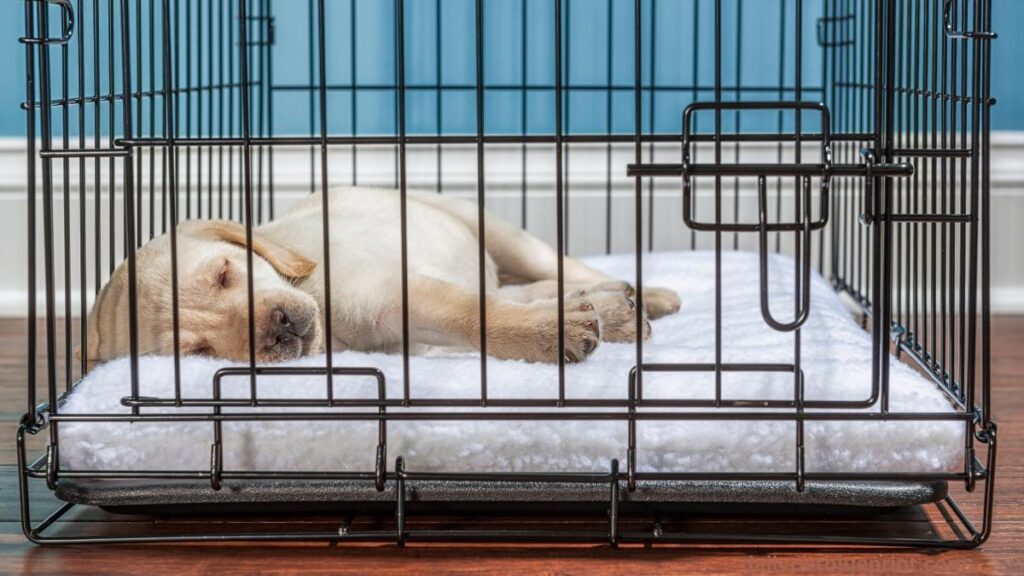
Wire crates offer excellent airflow and visibility, which suits dogs who feel more comfortable seeing their surroundings, and they typically fold flat for storage or travel.
Some anxious dogs actually feel more exposed in a wire crate rather than comforted by the visibility, in which case a cover over part of the crate can help create a more den-like feel without losing the ventilation benefits entirely.
Wire crates also tend to be the most budget-friendly option and are widely available secondhand, which is worth considering for a puppy who’ll need a larger crate again within a year or two.
4. Plastic (Hard-Sided) Crates
Plastic crates feel more enclosed and den-like, which many dogs find genuinely calming, and they’re generally the sturdier, more travel- and crash-appropriate option for car use.
They offer less airflow than wire designs, so ventilation and temperature are worth paying attention to, especially in warmer climates, and they’re usually the required style for airline travel if that’s ever a consideration.
Plastic crates are generally easier to clean thoroughly too, which matters during the early stages of house training when accidents are still a realistic possibility.
5. Soft-Sided Crates
Soft-sided crates are lightweight and easy to transport, making them popular for travel, but they offer far less containment and durability, and generally aren’t appropriate for dogs still working through crate training or prone to chewing or scratching at the walls.
These tend to work best as a second crate for an already well-trained, calm dog, rather than as the primary training crate, and are a popular choice for calm, settled dogs travelling to pet-friendly cafes or events.
6. Furniture-Style Crates
Furniture-style crates are built into or disguised as end tables, TV stands, or other pieces of home furniture, appealing to owners who want the crate to blend into the room rather than stand out.
They’re typically more expensive than standard wire or plastic crates and tend to run smaller inside relative to their outer dimensions, so it’s especially important to check the actual interior measurements rather than judging by the piece’s overall footprint.
These crates suit a dog who’s already fully comfortable and settled in a crate, rather than being ideal for the early training phase, since ventilation and visibility are often more limited than a standard wire design.
7. Chew-Resistant Options for Heavy Chewers
Some dogs, particularly those with genuine separation anxiety or a strong chewing drive, can damage a standard wire or plastic crate, or in rare cases injure themselves attempting to escape.
Heavy-duty, reinforced crates exist specifically for this situation, built with thicker materials and secure latching systems designed to withstand determined chewing or scratching.
If your dog is destroying a standard crate or showing signs of real panic rather than simple protest, that’s also a good moment to loop in a certified professional trainer, since a tougher crate treats the symptom without addressing why the behaviour is happening in the first place.
8. Matching the Crate to Your Dog’s Personality
A more anxious or reactive dog often does better in an enclosed, den-like plastic crate, while a confident, curious dog may prefer the visibility of a wire design.
There’s no single right answer here, and it’s worth paying attention to how your individual dog responds during the early open-door phase of training, rather than assuming one style suits every dog. Some owners find it helpful to borrow or trial a friend’s crate style before committing to a purchase.
9. Budget and Longevity Considerations
A well-made wire or plastic crate can genuinely last a dog’s entire lifetime with reasonable care, which makes it worth viewing as a one-time investment rather than a disposable item.
For a growing puppy, factoring the cost of a divider panel or a larger secondhand crate into your budget from the start is usually more economical than buying multiple crates as your dog grows.
Frequently Asked Questions
Do I need to buy a new crate as my puppy grows? Not necessarily. A crate with a divider panel lets you buy one adult-sized crate and adjust the usable space as your puppy grows.
Is a bigger crate always better for comfort? No. Too much space can actually work against house training, since a dog may use one end as a bathroom while resting at the other end.
What’s the best crate type for a nervous or anxious dog? Enclosed, den-like plastic crates often help anxious dogs feel more secure, though it’s worth watching how your individual dog responds rather than assuming.
Are soft-sided crates safe for car travel? Generally not to the same standard as hard-sided, crash-tested crates, since they offer less structural protection in an accident.
Is a furniture-style crate a good choice for a puppy still in training? Usually not the best first choice, since interior space tends to run smaller than expected and ventilation is often more limited than a standard wire crate.
The Bottom Line
The right crate fits your dog’s current size, suits their personality, and matches how you’ll actually use it, whether that’s mainly at home or regularly on the road.
Getting this choice right from the start makes every other step of crate training noticeably easier. For the complete training foundation this fits into, see: Dog Training Tips: The Complete Guide for Every Dog Owner.