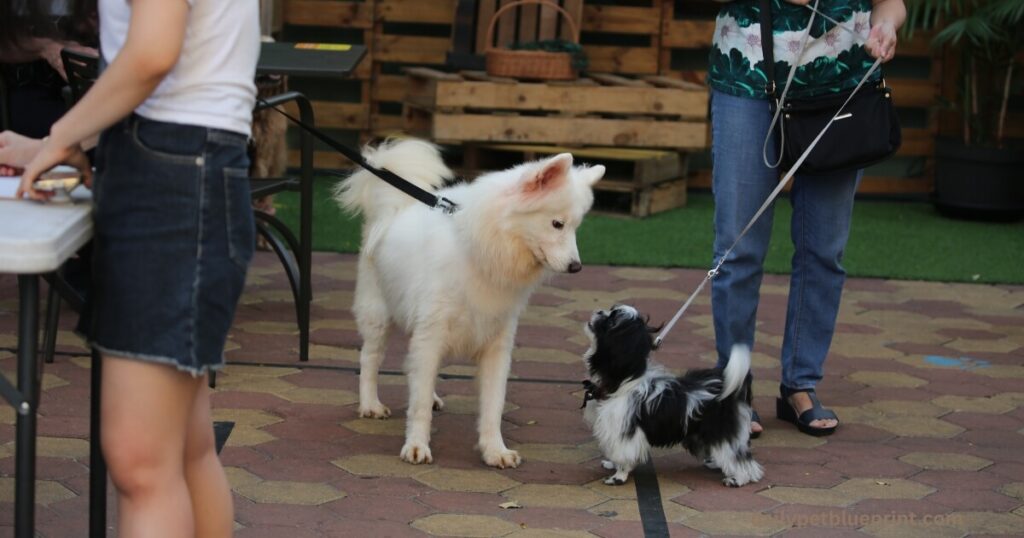
Watching two dogs meet in a park looks simple, but that interaction is a rapid, high-speed visual conversation. Long before two dogs ever touch noses or sniff tails, they’ve already exchanged dozens of micro-signals about their intentions, mood, and comfort levels.
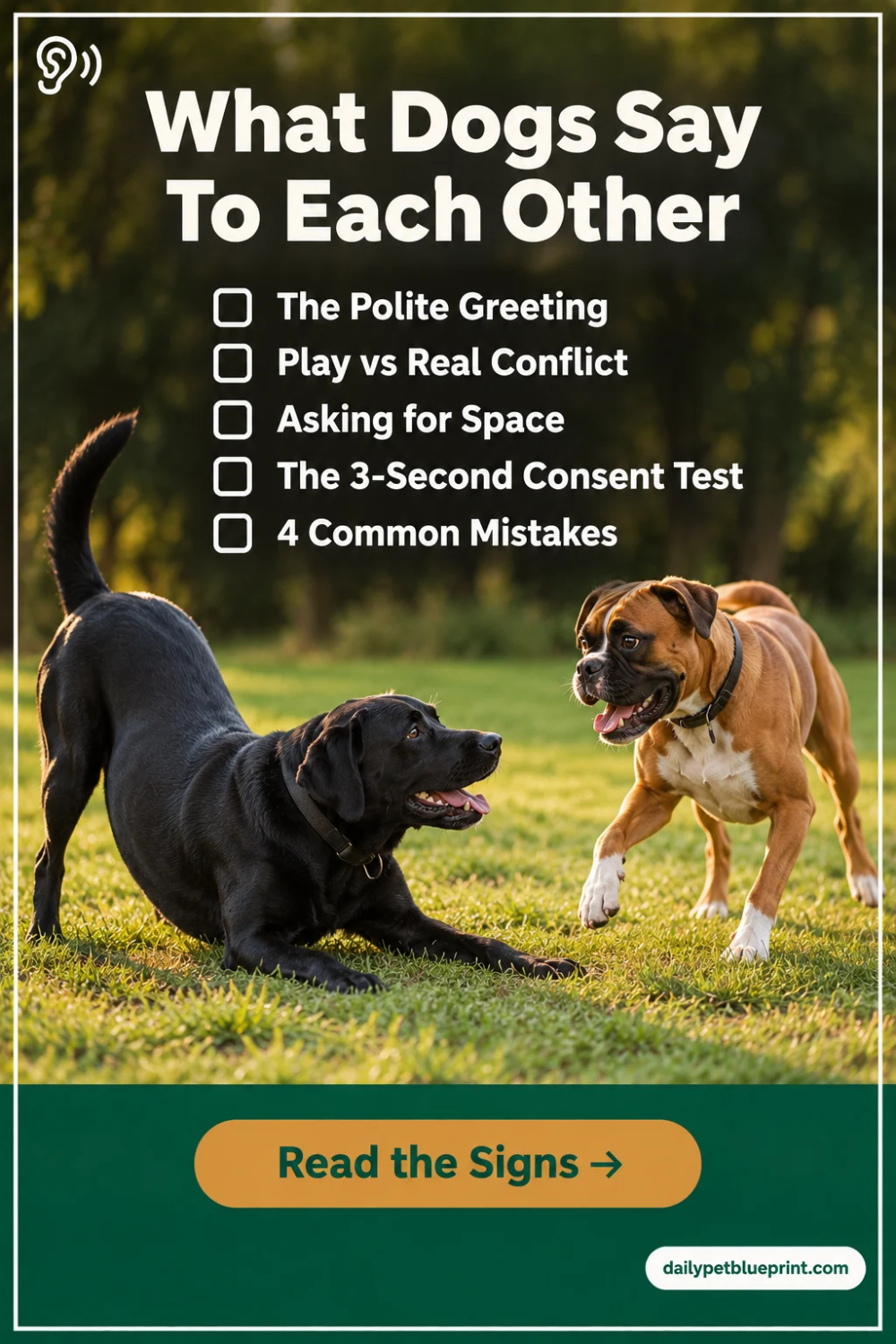
Canine social etiquette is delicate. A polite curve in their walking path means “I come in peace,” while a stiff, straight-line approach with direct eye contact signals a potential challenge.
When you learn to decode dog body language with other dogs, you’ll immediately know the difference between healthy social play, polite boundaries, and rising tension that requires your intervention.
Key Takeaways: Canine Social Etiquette
- The Curved Approach is Polite: Well-mannered dogs never approach each other head-on in a rigid straight line. They loop in a soft arc, sniffing the ground and avoiding direct stares.
- Healthy Play is Bouncy and Equal: True play features role reversals (taking turns chasing or being pinned), self-handicapping, and frequent natural pauses to shake off.
- Look for the 3-Second Play Freeze: If play goes from bouncy to completely still and silent for even three seconds, step in and separate the dogs calmly before tension boils over.
- Respect the “Cut-Off” Signals: A dog turning their head away, lip-licking, or moving away is politely asking for space. If the other dog ignores these cues, conflict can follow.
1. The Anatomy of a Polite Canine Greeting
In the dog world, rushing straight at someone’s face is considered exceptionally rude. Well-socialized dogs follow a specific step-by-step greeting ritual to ensure both parties feel safe.
Curved Approach ──> Soft Scent Sniffing ──> Circular Rear Inspection ──> Break Away or Play Bow
1. The Soft Curved Approach
- Instead of marching directly toward each other, polite dogs walk in a crescent-shaped arc.
- They’ll often drop their heads to sniff a patch of grass along the way, showing they aren’t marching in with hostile intent.
2. Soft Eyes and Broken Eye Contact
- Neither dog locks into a hard, unblinking stare. They blink softly, look slightly to the side, and keep their facial muscles completely loose.
3. The “Nose-to-Rear” Circle
- Once close, the dogs slowly circle each other in a loose carousel motion to sniff each other’s anal scent glands.
- Their spines remain curved, their tails wag in loose, mid-level sweeps, and their mouths stay soft and open.
4. The Natural Break
- After three to five seconds of mutual sniffing, polite dogs naturally disengage, take a step back, or shake off before deciding whether to initiate play or walk away.
To review an organized breakdown of these physical signals across the entire body, check out: Dog Body Language Chart: A Written Guide to Common Signals.
2. Healthy Dog Play vs. Dangerous Conflict
Rough-and-tumble play can look alarming to human eyes. Dogs growl, flash teeth, and wrestle on the ground during games.
To tell if dogs are having fun or if things are turning sour, look for these specific contrast markers:
Healthy, Safe Play Signs:
- Bouncy, Exaggerated Movements: The dogs move like rubber bands, springing off their back legs with loose, exaggerated motions.
- The Play Bow: Dropping the front chest to the ground with the rear end raised high to reaffirm that everything is just a game. To explore more joyful signs, read: Happy Dog Body Language: Signs Your Dog Is Content.
- Role Reversals: One dog chases for 30 seconds, then turns around and lets the other dog chase. One dog wrestles on bottom, then rolls up to the top.
- Self-Handicapping: A larger or stronger dog voluntarily rolls on their back or pulls their bites so a smaller, younger dog can participate safely.
- Natural Pauses and “Shake-Offs”: Every minute or two, both dogs naturally pause, step apart, shake their coats vigorously, and then re-engage with soft bodies.
Rising Tension and Warning Signs:
- Stiff, Rigid Muscle Locking: Movements become mechanical, straight, and rigid instead of bouncy and curved.
- One-Sided Bullying: One dog is constantly chasing, pinning, or cornering a dog that’s desperately trying to escape or hide behind their owner’s legs.
- Muzzle Punching and Persistent T-Boning: One dog persistently slams their chest into the other dog’s shoulder or rests their chin heavily over the other dog’s neck without backing off.
- The Silent Freeze: The play suddenly goes quiet, both bodies lock like stone statues, and the dogs lock eyes with closed mouths. This is the final warning before a fight.
For a deeper dive into dangerous pre-fight postures, explore: Aggressive Dog Body Language: Warning Signs to Recognize.
3. Appeasement Signals Between Dogs (Asking for Space)
When a dog feels overwhelmed by another dog’s high energy or pushy behavior, they’ll use appeasement signals to calm the situation down and ask for space.
- The Ground Sniff: Your dog suddenly glues their nose to the dirt and pretends to investigate a blade of grass while another dog charges over. They’re trying to say, “I’m busy minding my own business; please don’t bother me.”
- The Look-Away with Whale Eye: The dog turns their muzzle completely away while showing the white edges of their eyes. To learn more about this stress signal, read: Fearful Dog Body Language: Signs Your Dog Is Scared.
- The Full-Body Yawn: Exaggerated yawning in the middle of a tense greeting is a deliberate attempt to lower the surrounding arousal levels.
- Lying Flat with Paws Tucked: A dog that drops to the ground and goes motionless isn’t resting; they’re trying to shut down the other dog’s chase drive.
To see a wide collection of real-world examples across everyday interactions, visit: Common Dog Body Language Signs and What They Mean.
4. The 3-Second “Consent Test” (Is It Still Fun?)
If you aren’t sure whether your dog is enjoying a wrestling match or just tolerating it, use the Consent Test to find out immediately:
- Step 1: Gently Separate the Dogs
- Calmly call your dog or gently hold back the dog that appears to be doing most of the chasing or pinning.
- Step 2: Watch the Other Dog’s Reaction
- Step back and observe the dog who was being chased, pinned, or overwhelmed.
- Step 3: Read the Next Move
- If they want to keep playing: They’ll immediately trot back over, offer a bouncy play bow, or nudge the other dog to start the game again.
- If they were overwhelmed: They’ll shake off, walk away to sniff the grass, get a drink of water, or stay close to your legs. If this happens, keep them separated and end the play session.
4 Common Mistakes Owners Make During Dog Interactions
1. Letting Dogs “Work It Out Themselves” Leaving dogs to sort out rising tension without human guidance is how fights happen. If a pushy adolescent dog is ignoring another dog’s polite requests for space, the uncomfortable dog will eventually be forced to escalate to a snap or bite. Step in and advocate for your pet early.
2. Tightening Leashes During On-Leash Greetings When two dogs meet on a leash and both owners yank upward on the lead, the dogs’ chests are forced forward into an artificial, upright “challenge” posture. This leash tension transmits stress down the line and triggers defensive snapping. Whenever possible, avoid face-to-face leash greetings on narrow sidewalks.
3. Misreading the Play Growl A throaty, exaggerated play growl during a game of tug or chase is completely normal if the body is loose, wiggly, and bouncy. A dangerous growl is low-pitched, guttural, and accompanied by a stiff, motionless body and hard eye contact.
4. Assuming Every Dog Wants Dog Friends Just like humans, many mature adult dogs are socially selective. They might enjoy their trusted housemate but have zero desire to play with random strange dogs at a dog park. That isn’t a behavioral flaw; it’s a completely normal part of canine adulthood.
When to Seek Professional Guidance
Navigating dog-to-dog communication is a skill that develops with observation and practice.
However, you should seek help from a certified positive reinforcement trainer (CPDT-KA) or certified applied animal behaviorist (CAAB) if:
- Your dog cannot see another dog from 50 feet away without lunging, screaming, or showing rigid conflict postures.
- Your dog frequently bullies other dogs by pinning them, ignoring clear appeasement signals, and refusing to take breaks.
- Your dog exhibits immediate panic, bladder voiding, or defensive snapping whenever another dog approaches them politely.
🐾 Not sure how your dog feels about another dog?
Tap the signals you can see and the decoder tells you whether your dog is relaxed, uneasy or close to their limit.
Try the Body Language Decoder →Frequently Asked Questions
Why does my dog place their chin over another dog’s neck?
Chin-resting or placing paws over another dog’s withers is an assertive, high-arousal gesture. While some familiar dogs use this during balanced wrestling, doing this during an initial greeting with a strange dog is a pushy challenge that can trigger an immediate defensive fight.
What should I do if two dogs freeze while sniffing each other?
If two dogs go completely still while sniffing, do not yell or yank hard on the leash. Instead, use a cheerful, high-pitched voice to call your dog (“Puppy, this way! Let’s go!”) while moving backward to redirect their focus before a fight breaks out.
Why do dogs shake off after greeting another dog?
A full-body shake-off is an adrenaline discharge. When two dogs complete a tense or formal greeting, shaking their coats allows them to release physical tension from their muscles and reset their nervous systems back to a calm state.
Fostering Safe, Positive Canine Friendships
Dogs are expressive social animals, but they rely on us to ensure their interactions remain safe, balanced, and fun.
When you know how to read the subtle curves, the play bows, and the quiet requests for space, you can step in as your dog’s trusted guardian and make sure every social outing is a positive one.
Ready to understand the most critical warning signals that prevent fights and bites? Move straight into our final cluster guide: Aggressive Dog Body Language: Warning Signs to Recognize.