A backyard pool’s biggest risk isn’t the water itself, it’s a dog that can’t find their way back out of it. For the full picture on water safety, see Dog Swimming Safety Guide.
Teach the Exit, Not Just the Swim
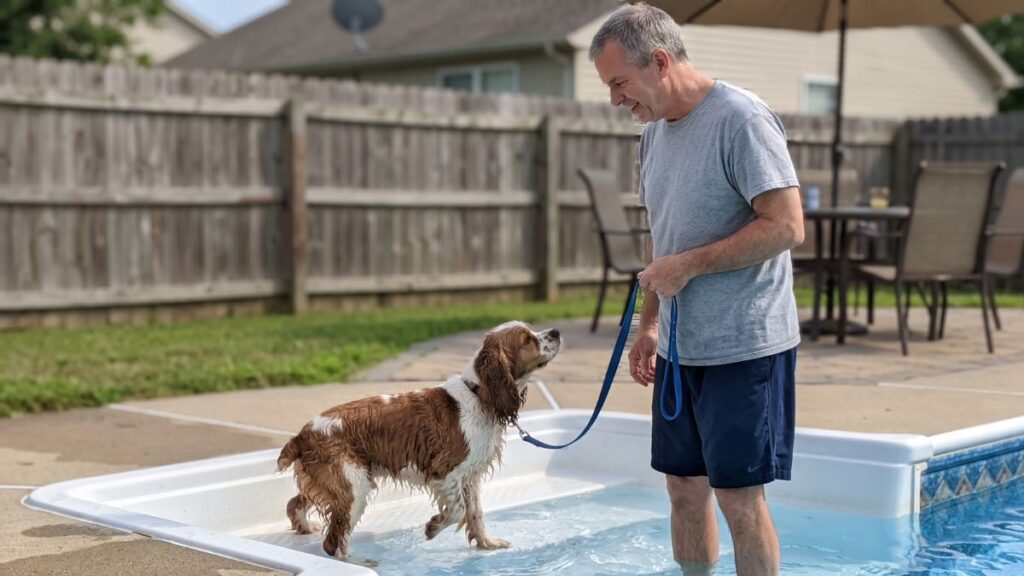
Attach a leash, gently guide your dog into the pool from the steps, and let them find their own way back out from that same point, repeating several times until it becomes automatic.
Once that’s solid, guide your dog into the water from other areas of the pool and use the leash to direct them back toward the steps, giving as little help as needed each time.
Refresh this training every few months, even for a dog that swims often, since the goal is a calm, automatic response under the stress of an unplanned fall rather than a skill only demonstrated during calm practice.
Physical Exit Points Matter
A dog-specific pool ramp gives a lower-angle, easier-to-climb exit than standard steps, and is worth adding if your dog struggles with a steep step edge.
Make sure at least one accessible exit point exists on every side a dog could realistically enter from, not just the shallow end.
Chlorine and Pool Chemicals
Normal chlorine levels are generally safe for swimming, though heavy or repeated exposure can dry out skin and coat, and irritate paw pads and eyes in sensitive dogs.
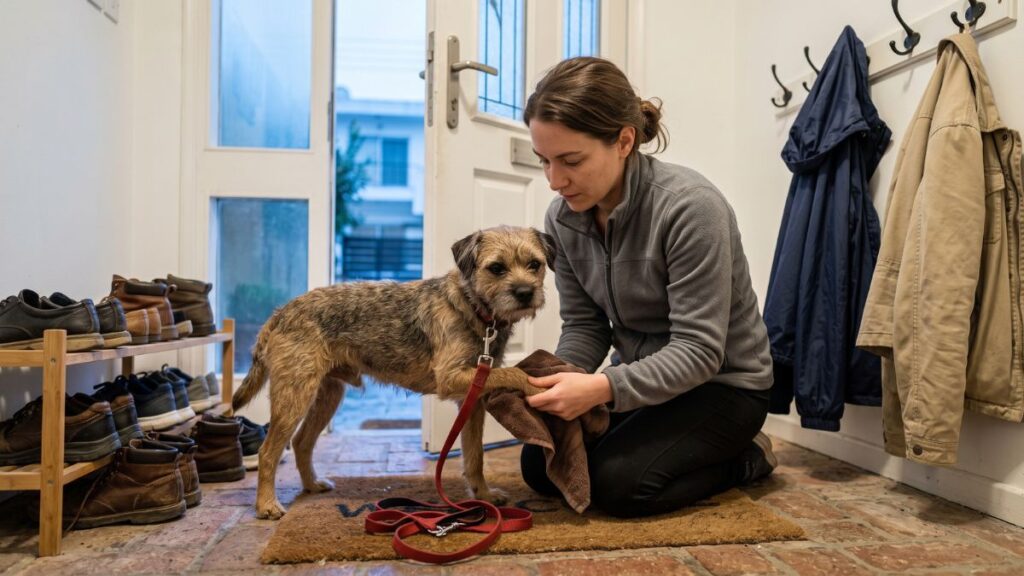
Rinse your dog with fresh water after swimming and dry their ears thoroughly, since trapped moisture is a common cause of ear infections in dogs that swim regularly.
Store pool chemicals, especially chlorine tablets, securely out of reach. Concentrated chlorine tablets are a genuine chemical hazard if chewed or swallowed, distinct from the diluted chlorine in pool water itself.
Supervision and Barriers
Constant supervision remains the most important factor, even for a well-trained dog, since fatigue and unexpected falls can happen regardless of experience.
A secure pool fence or gate matters as much for dogs as it does for children, particularly when the pool is unsupervised.
A pool cover, if used, should be a rigid safety cover or a taut, animal-rated mesh cover. A flimsy cover can create a false sense of solid ground and is a genuine drowning risk if a dog walks onto it and it gives way.
Common Mistakes
Assuming a dog will figure out the exit on their own. Most dogs try to exit from their entry point and can exhaust themselves searching along the wrong wall.
Leaving pool chemicals accessible. Chlorine tablets specifically are a real ingestion hazard, separate from normal pool water exposure.
Trusting a lightweight pool cover to hold a dog’s weight. Only a rigid or properly rated mesh safety cover should be treated as load-bearing.
FAQ
Is it safe for my dog to drink pool water?
Small amounts typically aren’t harmful, but drinking large amounts can cause stomach upset, so redirect your dog to a fresh water bowl nearby instead.
Do above-ground pools need the same precautions?
Yes, plus a sturdy ramp for entry and exit, since above-ground pool walls are often harder to climb out of in a hurry than an in-ground pool’s steps.
How do I know if my dog’s ears are irritated from pool water?
Head shaking, scratching at the ears, or a noticeable odor are common signs, worth checking after any swim session and addressing with thorough drying.
The Bottom Line
Real pool safety for a dog comes down to reliable exit training, secured chemicals, and a genuine barrier or cover, not just supervision alone. For the broader picture on water safety, head back to Dog Swimming Safety Guide.