“Fluffy” is its own distinct search intent, less about facial features and more about a genuinely voluminous, thick coat you want to sink your hands into. These six deliver that, along with the grooming reality behind each one.
Chow Chow
An enormous, lion-like mane and an unmistakable blue-black tongue give the Chow Chow one of the most distinctive fluffy silhouettes in the dog world, a look tied to its ancient origins in China as both a guard and hunting breed, with archaeological evidence suggesting the breed dates back over 2,000 years.
Dignified and independent rather than eager to please, Chows are naturally reserved with strangers and form close but not overly demonstrative bonds with their family, a temperament closer to a cat’s in many ways than a typical dog’s.
The grooming reality: that dense double coat needs brushing several times a week minimum, more during seasonal shedding, and mats form quickly and painfully close to the skin if neglected, particularly around the neck ruff and hindquarters. This isn’t a breed to underestimate on maintenance, and many owners find professional grooming help genuinely necessary.
Chows are also prone to entropion, a condition where the eyelid rolls inward and irritates the eye, and to hip dysplasia given their heavy build. Their thick coat also makes them genuinely heat-sensitive despite originating in a range of Chinese climates. Lifespan runs 9 to 15 years.
Pomeranian
Already a fixture on “cute” lists, the Pomeranian’s thick, standing-off double coat also earns it a spot here purely on fluff factor, especially when styled into a rounded, plush shape that makes the dog look considerably larger than its actual 3 to 7 pound frame.
Despite the tiny size, Pomeranians are alert and often surprisingly vocal, more confident than their frame would suggest, a trait that traces back to their descent from much larger German Spitz sled dogs before generations of selective breeding shrank them down.
The grooming reality: the coat blows out seasonally with real volume for such a small dog, and regular brushing, ideally several times a week, is needed to prevent the undercoat from matting against the skin, particularly around the legs, rear, and behind the ears where friction is highest.
Poms are prone to luxating patella and dental crowding given their small jaw, and their thick coat can mask weight gain, making regular hands-on body condition checks genuinely important rather than relying on appearance alone. Lifespan runs 12 to 16 years.
Old English Sheepdog
A shaggy, profuse coat that often obscures the eyes entirely gives the Old English Sheepdog one of the most immediately recognizable fluffy looks, historically bred to herd and drive livestock across the English countryside, with a working history dating back to the 1800s.
Good-natured and adaptable, this breed is generally calmer indoors than its herding background might suggest, though it still needs regular exercise and does best with a job or purpose, even if that’s just structured daily play.
The grooming reality: this coat is genuinely one of the most demanding on this entire list, needing near-daily brushing to prevent matting, and many pet owners opt for a shorter, more manageable trim rather than the full show-length coat, since maintaining full length realistically requires hours of grooming weekly.
The coat covering the eyes isn’t just aesthetic; without regular trimming or tying back, it can genuinely obstruct vision and trap debris close to the eye. Old English Sheepdogs are also prone to hip dysplasia and a hereditary eye condition called progressive retinal atrophy. Lifespan runs 10 to 12 years.
Keeshond
A thick, plush double coat with distinctive “spectacles” markings around the eyes gives the Keeshond a genuinely warm, expressive fluffy look, developed originally as a Dutch barge dog used to guard boats and warn of approaching strangers or danger.
Friendly and people-oriented, Keeshonds do well in families and tend to bond closely without the independence seen in some other fluffy breeds like the Chow Chow, generally preferring to be wherever their people are rather than off exploring alone.
The grooming reality: this is a heavy-shedding double coat requiring regular brushing multiple times a week, with a particularly intense seasonal “blow” that can fill a room with loose fur if not managed proactively with a dedicated deshedding tool.
Keeshonden are genuinely vocal, often used historically as watchdogs specifically for their alert barking, which can be a real consideration for close-neighbor living. They’re also prone to hip dysplasia and a heart condition called patent ductus arteriosus. Lifespan runs 12 to 15 years.
American Eskimo Dog
A brilliant white, plush double coat and an alert, fox-like face give the American Eskimo Dog a genuinely striking fluffy look, despite the name, the breed actually developed in the United States from German Spitz lines, with the name changed during World War I due to anti-German sentiment at the time.
Intelligent and trainable, this breed does well with consistent mental engagement and tends to be more work-oriented than purely decorative in temperament, having historically been used in circus performance acts for its trainability and athleticism.
The grooming reality: the white coat shows dirt readily and needs regular brushing to stay looking as pristine as it photographs, along with real seasonal shedding twice a year that requires more intensive brushing during those windows.
American Eskimo Dogs are prone to hip dysplasia, luxating patella, and progressive retinal atrophy, an inherited eye condition. Without enough mental stimulation, this breed can become genuinely vocal or develop anxious behaviors, tied to its history as an alert, working companion rather than a purely decorative lapdog. Lifespan runs 13 to 15 years.
Newfoundland
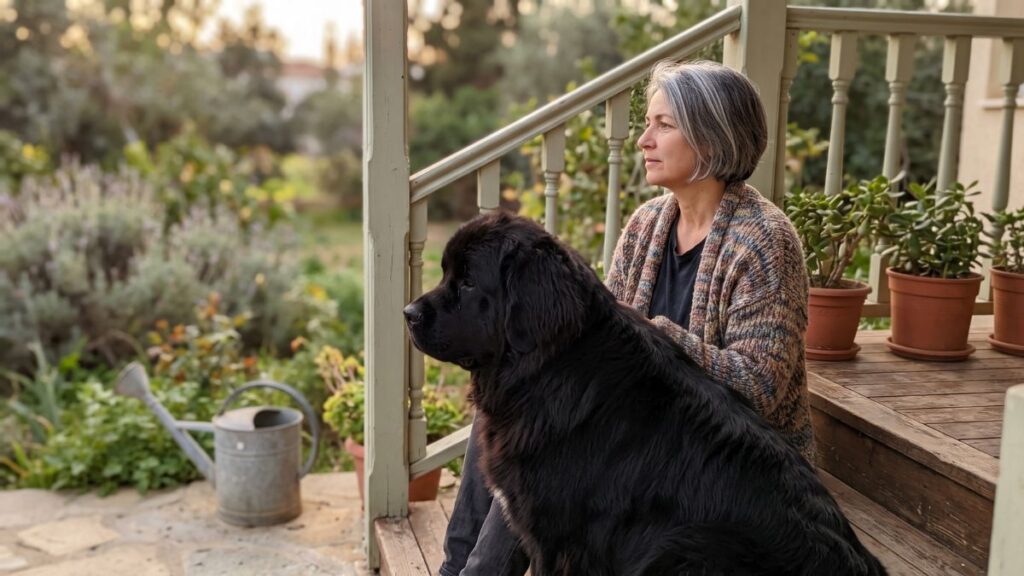
A massive frame combined with a thick, water-resistant double coat gives the Newfoundland a genuinely different kind of fluffy, less “powder puff” and more “gentle giant,” bred originally in Canada to assist fishermen, haul nets, and perform water rescue, a role the breed still performs in some working and competitive settings today.
Famously gentle and patient, Newfoundlands are often specifically chosen as family dogs for their calm, tolerant nature around children, a trait so well documented it’s sometimes referred to as the “nanny dog” reputation, though supervision with any large breed around small children remains genuinely important.
The grooming reality: this coat sheds heavily and needs consistent brushing to manage volume alone, and the breed’s size means grooming sessions take genuinely longer than for any other dog on this list, often 30 minutes or more per session done properly.
Newfoundlands are prone to hip and elbow dysplasia given their size, and to dilated cardiomyopathy, a heart condition. Their heavy coat and large body also make them prone to overheating, so exercise timing matters more for this breed in warm weather. Lifespan runs 9 to 10 years, shorter than most breeds on this list due to their large size.
FAQ
Are fluffy dog breeds always double-coated?
Most genuinely fluffy breeds do carry a double coat, an insulating undercoat beneath a coarser topcoat, which is exactly what creates that dense, voluminous look.
Do fluffy breeds need more grooming than average?
Consistently yes. Every breed on this list needs regular brushing well above what a smooth or short-coated breed requires, and several need professional grooming support too.
Which fluffy breed sheds the least?
None of these six are low-shedding; all carry genuine double coats built for insulation, which means real, regular shedding is part of the deal.
Which of these breeds is best suited to a first-time owner?
The American Eskimo Dog and Keeshond are both generally more manageable for a first-time owner than the larger or more independent breeds on this list, given their trainability.
The Bottom Line
These six breeds deliver real fluff, but every one of them comes with a genuine grooming commitment that goes well beyond an occasional brush.
For more on this same aesthetic theme, see Cute Dog Breeds, Pretty Dog Breeds, Cutest Dog Breeds, Beautiful Dog Breeds, and Elegant Dog Breeds.