Most cases of food poisoning in dogs start with something perfectly ordinary for us: a bunch of grapes on the counter, a slice of birthday cake, or a stick of sugar-free gum in a coat pocket.
Some of these foods cause a mild upset stomach. Others can lead to kidney failure, liver damage or seizures, sometimes from a surprisingly small amount.
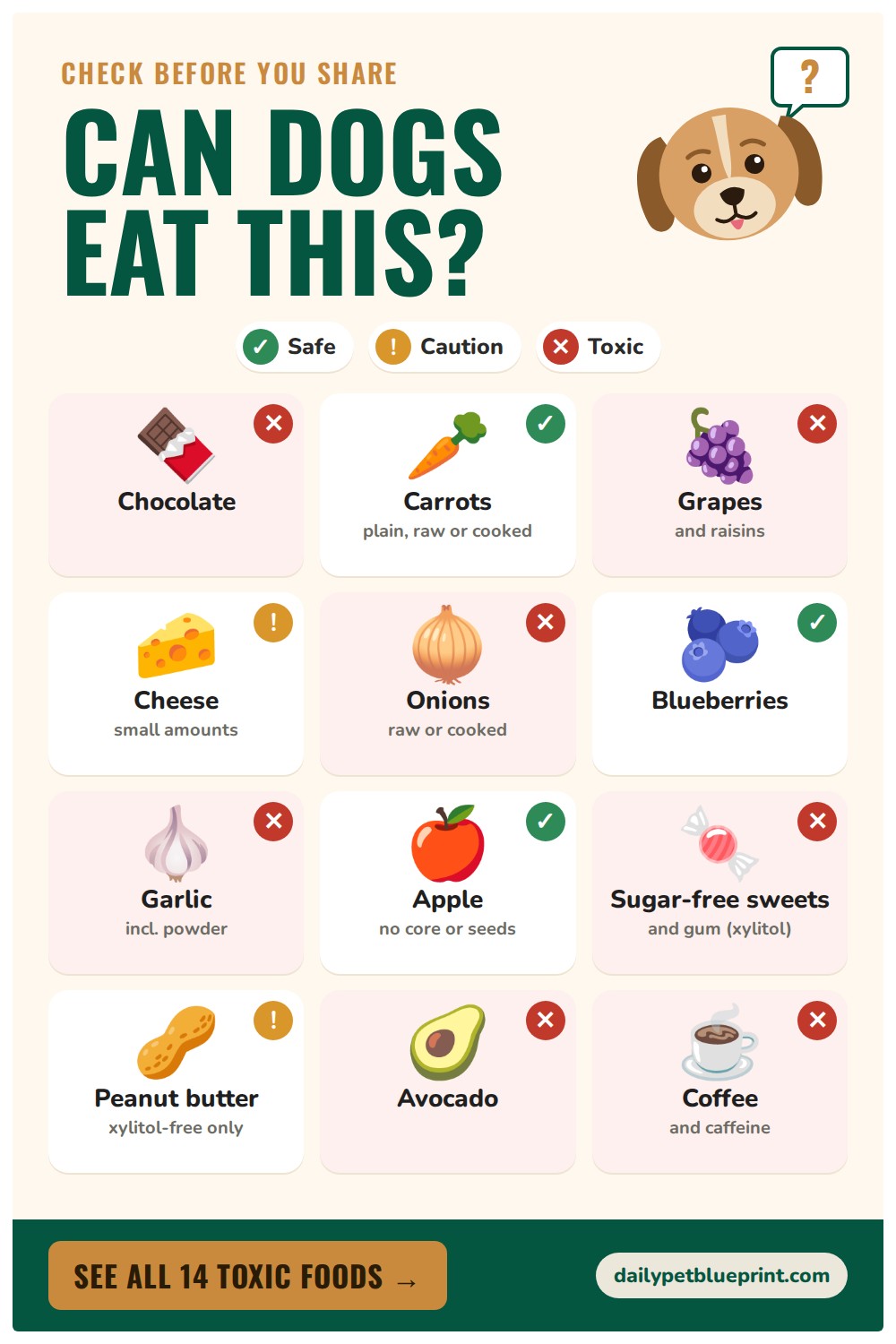
This guide covers the food toxic to dogs that every owner should know, why each one is dangerous, the signs to watch for and exactly what to do if your dog gets hold of something.
Key Takeaways: Foods Toxic to Dogs
- The big five: Chocolate, grapes and raisins, onions and garlic, xylitol and macadamia nuts cause the most serious poisonings in dogs.
- Small amounts can matter: With grapes and xylitol in particular, there’s no amount known to be safe.
- Symptoms can be delayed: Signs of onion or grape poisoning can take hours or even days to show, so don’t wait for them before calling your vet.
- Hidden sources catch people out: Peanut butter, baked goods, gravy and sugar-free sweets are common carriers.
- Call first, act second: Never make your dog sick at home unless a vet tells you to.
🐾 Need a quick answer about one food?
Search 69 common foods in our Toxic Food Calculator and see straight away whether each one is safe, needs caution or is toxic.
Check a Food in the Calculator →14 Foods That Are Toxic to Dogs
These are the foods that cause real poisoning in dogs. They’re listed roughly in order of how often they cause problems and how serious those problems can be.
1. Chocolate
Chocolate contains theobromine and caffeine, two stimulants that dogs break down far more slowly than people do.
The darker and more bitter the chocolate, the more dangerous it is. Cocoa powder and baking chocolate are the worst, while white chocolate contains very little theobromine but is still high in fat.
Signs to watch for: vomiting, diarrhoea, restlessness, excessive thirst, a racing heart, tremors and, in severe cases, seizures. Signs usually appear within 6 to 12 hours.
Where it hides: brownies, chocolate cake, hot chocolate mix, cocoa-dusted desserts and Easter eggs or advent calendars left within reach.
2. Grapes, Raisins, Currants and Sultanas
Grapes and their dried versions can cause sudden kidney failure in dogs.
Research published in 2021 points to tartaric acid as the likely cause, which may explain why some dogs react badly to a few grapes while others seem fine after more. Because nobody can predict which dog will react, no amount is considered safe.
Signs to watch for: vomiting within a few hours, then lethargy, loss of appetite, tummy pain and, as the kidneys are affected, drinking more or passing little urine.
Where it hides: fruit cake, Christmas pudding, hot cross buns, mince pies, trail mix, cereal bars and fruit scones.
3. Onions, Garlic, Leeks and Chives
Every member of the onion family contains compounds that damage a dog’s red blood cells, which can lead to anaemia.
Cooking doesn’t make them safe, and powdered forms are more concentrated than fresh. Japanese breeds such as Akitas and Shiba Inus are known to be more sensitive.
Signs to watch for: weakness, tiredness, pale gums, fast breathing and red or brown urine. These signs often take several days to appear, which makes the cause easy to miss.
Where it hides: gravy, stock cubes, soups, stews, pizza, takeaway leftovers and some baby food, which can contain onion powder.
4. Xylitol (Birch Sugar)
Xylitol is a sugar substitute that’s harmless to people but makes a dog’s body release a rush of insulin.
Blood sugar can drop dangerously within 10 to 60 minutes, and larger amounts can cause liver failure.
Signs to watch for: vomiting, weakness, wobbling, collapse and seizures.
Where it hides: sugar-free gum and mints, some peanut butters, sugar-free baked goods, some toothpastes and certain medicines. Check labels for xylitol or birch sugar.
5. Macadamia Nuts
Macadamia nuts affect a dog’s muscles and nervous system, although the exact toxin hasn’t been identified.
Signs to watch for: weakness (especially in the back legs), vomiting, wobbling, tremors and a high temperature, usually within 12 hours. Most dogs recover within a couple of days with vet care.
Where it hides: cookies, biscuits, nut mixes and white chocolate macadamia treats, which add chocolate to the problem.
6. Alcohol
Dogs are far more sensitive to alcohol than people, and even a small amount can be dangerous for a small dog.
It lowers blood sugar, blood pressure and body temperature, and can slow breathing.
Signs to watch for: vomiting, wobbling, confusion, drowsiness and, in severe cases, collapse.
Where it hides: drinks left on low tables, rum-soaked desserts, liqueur chocolates and hand sanitiser.
7. Caffeine
Caffeine affects dogs in the same way as the stimulants in chocolate, overworking the heart and nervous system.
Signs to watch for: restlessness, panting, vomiting, a racing heart and tremors.
Where it hides: coffee grounds, tea bags, energy drinks, caffeine tablets and coffee-flavoured desserts. Bins are a common source.
8. Raw Yeast Dough
Uncooked bread or pizza dough keeps rising in the warmth of a dog’s stomach, which can stretch it painfully.
As the yeast ferments, it also produces alcohol, so the dog can end up with alcohol poisoning on top of the bloating.
Signs to watch for: a swollen tummy, retching without bringing anything up, wobbling and weakness.
Where it hides: dough left to prove on the worktop and homemade pizza bases.
9. Mouldy Food and Compost
Mouldy food can contain toxins that attack the nervous system.
Compost heaps and bins are the usual source, along with mouldy walnuts that fall from trees.
Signs to watch for: tremors, twitching, a high temperature and seizures, sometimes within an hour.
Where it hides: food bins, compost heaps, forgotten leftovers and fallen walnuts in the garden.
10. Avocado
Avocado contains persin, which is much more dangerous to birds and horses than to dogs.
For dogs, the bigger problems are the stone, which can cause choking or a blockage, and the high fat content of the flesh.
Signs to watch for: vomiting, diarrhoea and, if the stone is swallowed, signs of a blockage such as repeated vomiting and a painful tummy.
Where it hides: guacamole, which often contains onion and garlic as well, and whole avocados left in the fruit bowl.
11. Nutmeg
Nutmeg contains myristicin, which can affect the nervous system in larger amounts.
A pinch baked into a cake is unlikely to cause harm, but a dog that gets into a jar can become ill.
Signs to watch for: a fast heart rate, disorientation, high blood pressure and, in large amounts, seizures.
Where it hides: spice racks, eggnog and festive baking.
12. Raw or Green Potatoes and Tomato Plants
Raw, green or sprouting potatoes and the leaves and stems of tomato plants contain solanine.
Cooked, plain potato flesh and ripe tomatoes are fine in small amounts.
Signs to watch for: vomiting, diarrhoea, drooling and weakness.
Where it hides: potato peelings in the bin and tomato plants in the garden or greenhouse.
13. Rhubarb
Rhubarb leaves, and to a lesser degree the stalks, contain oxalates that can affect the kidneys.
Signs to watch for: drooling, vomiting, tremors and changes in drinking or urination.
Where it hides: vegetable patches and allotments.
14. Raw Kidney Beans
Raw or undercooked kidney beans contain a toxin that thorough cooking destroys.
Signs to watch for: vomiting, diarrhoea and tummy pain.
Where it hides: dried beans being soaked in the kitchen and slow cooker dishes that haven’t been boiled properly.
5 Foods That Aren’t Toxic but Are Still Dangerous
These foods don’t poison dogs in the usual sense, but they send plenty of dogs to the vet every year.
1. Corn on the Cob
The corn itself is fine, but a chewed cob is a classic cause of a blocked intestine.
It often needs surgery to remove, so bin cobs where your dog can’t reach them.
2. Cooked Bones
Cooked bones become brittle and can splinter into sharp pieces.
These can break teeth, get stuck in the throat or damage the gut.
3. Fatty Scraps
Bacon rind, sausages, roast skin and fat trimmings can trigger pancreatitis, a painful inflammation of the pancreas.
Holiday meals are a common time for it, which is why our Christmas safety guide covers the dinner table as well as the chocolate.
4. Salty Foods and Salt Dough
Crisps and salty snacks aren’t good for dogs, but homemade salt dough and play dough are the real danger.
They contain enough salt to cause salt poisoning, with vomiting, wobbling and seizures.
5. Fruit Stones and Pips
Peach, plum, cherry and mango stones can cause choking or a blockage.
Many also contain compounds that release cyanide when chewed, so remove stones before sharing any fruit.
🐾 Not sure about a food that isn’t on this list?
Our Toxic Food Calculator covers 69 everyday foods, including the safe ones, so you can check before you share.
Check a Food in the Calculator →Signs Your Dog Has Eaten Something Toxic
Symptoms depend on what was eaten, but these are the most common signs of food poisoning in dogs:
- Vomiting or retching
- Diarrhoea
- Drooling more than usual
- Lethargy or weakness
- Wobbling or loss of balance
- Restlessness or a racing heart
- Pale gums
- Tremors or seizures
- Collapse
Some poisons, including grapes, onions and xylitol, can cause serious harm before obvious signs appear.
If you know your dog has eaten something on this list, call your vet even if they seem completely normal.
What to Do If Your Dog Eats Something Toxic
- Move your dog away from the food and stop them eating any more.
- Work out what they ate, how much and when. Keep the packaging, because ingredient lists and chocolate percentages help your vet.
- Call your vet or emergency vet straight away, even outside normal hours.
- Don’t make your dog sick unless a vet tells you to. Some substances do more damage coming back up, and home methods like salt water are dangerous.
- Follow your vet’s advice. Early treatment is usually simpler, cheaper and far more successful.
If you can’t reach your vet, a pet poison helpline can advise you for a fee.
In the UK, Animal PoisonLine is on 01202 509000. In the US, the ASPCA Animal Poison Control Center is on (888) 426-4435 and Pet Poison Helpline is on (855) 764-7661.
For other urgent warning signs, see Dog Health Emergencies: Signs That Need Immediate Vet Care.
How to Keep Toxic Foods Away From Your Dog
- Clear the counters: Keep grapes, chocolate, baking and dough well back from the edge.
- Use a dog-proof bin: Bins hold coffee grounds, corn cobs, bones and mouldy leftovers.
- Check bags and coats: Sugar-free gum and mints in pockets and handbags are a common source of xylitol.
- Brief your visitors: Guests and children are the people most likely to share food from their plate.
- Read labels: Check peanut butter, stock and treats for xylitol, onion and garlic before you share.
If you cook for your dog, our homemade dog food guide covers which ingredients belong in their bowl and which to leave out.
Plants can be just as risky as food. For the ones to watch, see Dog and Houseplant Safety: Which Plants Are Toxic.
Frequently Asked Questions
Is a small amount of chocolate okay for dogs?
It depends on the type of chocolate and the size of your dog. A crumb of milk chocolate is unlikely to harm a large dog, but a few squares of dark chocolate can make a small dog seriously ill.
Call your vet with the type, the amount and your dog’s weight, and let them decide.
Can dogs eat cooked onion or garlic?
No. Cooking doesn’t remove the compounds that damage red blood cells, and dried or powdered onion and garlic are even more concentrated.
Is peanut butter safe for dogs?
Plain peanut butter is fine in small amounts, as long as it doesn’t contain xylitol.
Some reduced-sugar brands use it, so check the label every time you buy a new jar.
How long after eating something toxic will my dog show symptoms?
It varies. Xylitol can cause problems within an hour, chocolate usually within 6 to 12 hours, and onion or grape poisoning can take a day or more.
That’s why it’s best to call your vet as soon as you know what happened, rather than waiting.
What should I do if I’m not sure what my dog ate?
Call your vet and describe what’s missing and what your dog has been doing.
Bring any wrappers or leftovers with you, because they help your vet work out the risk quickly.
The Bottom Line
Chocolate, grapes, onions, xylitol and macadamia nuts are the foods most likely to poison a dog, and several of them hide in everyday foods like cake, gravy and peanut butter.
Keep them out of reach, check labels and call your vet straight away if your dog eats something on this list.
For a quick check on any food before you share it, use our Toxic Food Calculator.