Most serious health problems don’t appear overnight. They build gradually, which means a dog owner who checks in regularly has a genuine head start on catching things early, often well before a problem becomes an emergency.
This guide covers how to build that habit without it turning into a chore.
For the specific warning signs this monitoring is designed to catch, see: Warning Signs of Dog Health Problems: What to Watch For.
Why a Regular Check-In Habit Matters
The value of monitoring isn’t really about spotting one dramatic symptom. It’s about building enough familiarity with your dog’s normal patterns that small deviations genuinely stand out to you, the same way you’d notice a change in a close friend’s mood before they said a word.
A dog owner who checks in daily, even briefly, tends to catch problems weeks earlier than one who only really pays attention once something’s obviously wrong.
The 60-Second Daily Check
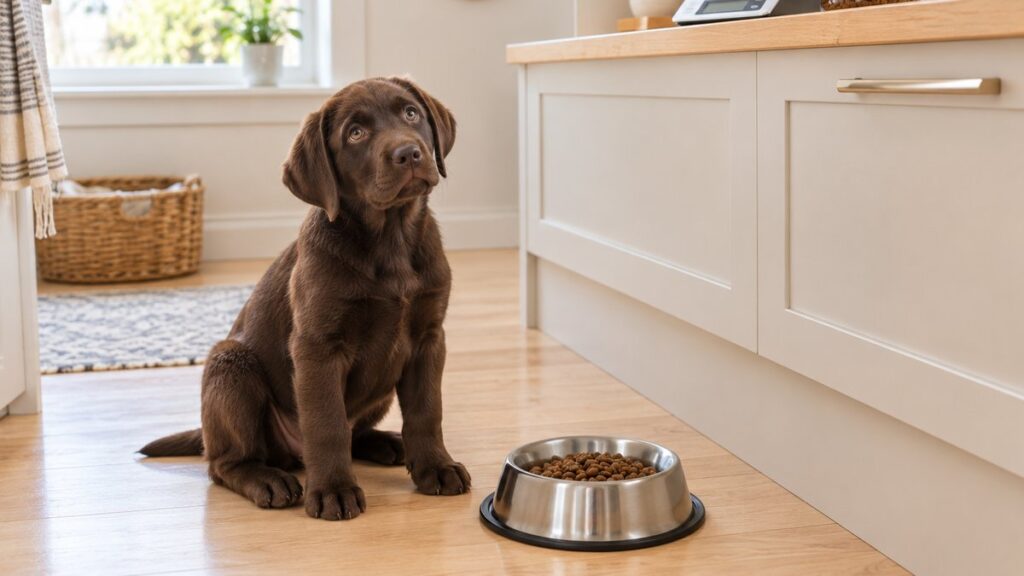
This doesn’t need to be formal. As part of your normal routine, morning feeding or the first walk of the day, notice how your dog is moving, whether they’re eating with their usual enthusiasm, and whether their general demeanor matches how they normally seem.
Most days, nothing stands out, and that’s exactly the point. The habit only pays off on the days something’s actually different.
A Weekly Hands-On Check
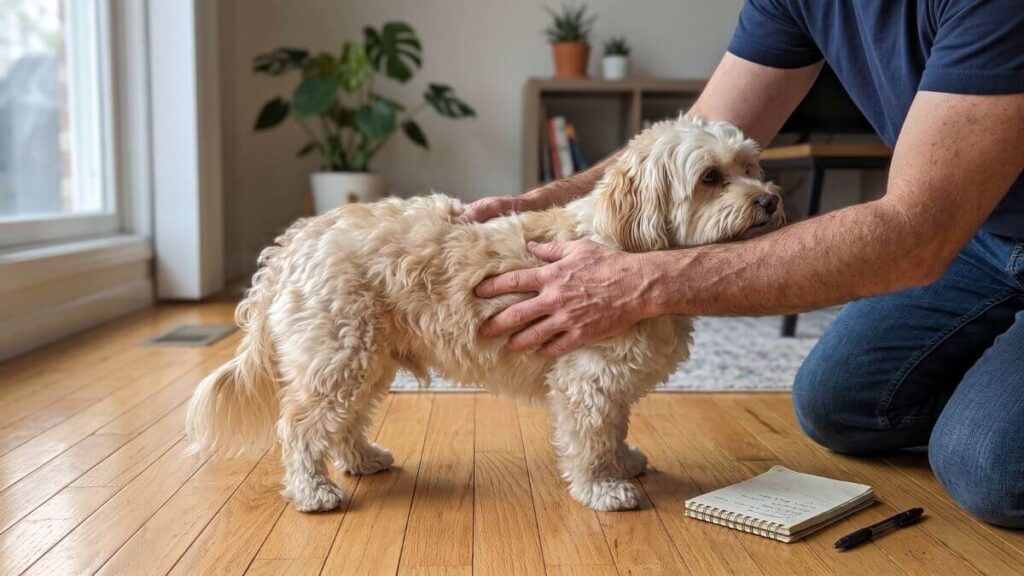
Once a week, spend a few extra minutes running your hands over your dog’s body while they’re relaxed, ideally during a calm moment like after a walk rather than when they’re excited or distracted.
Check the Coat and Skin
Feel for any new lumps, bumps, or areas of tenderness, and look for flaky skin, redness, or bald patches. Most lumps turn out to be harmless, but any new one is worth mentioning to your vet at the next visit, or sooner if it’s growing or changing.
Check the Ears
Look inside each ear for redness, discharge, or a noticeable odor, and notice if your dog seems sensitive when you touch around the area. A healthy ear should look clean and pale pink inside, without excess wax buildup or visible irritation.
Check the Eyes
Both eyes should look clear and bright, without excessive discharge, redness, or cloudiness. Some breeds naturally have more visible eye discharge than others, so it’s worth knowing what’s typical for your own dog specifically.
Check the Mouth and Teeth
Lift the lips gently and look at the gums and teeth. Healthy gums are usually a consistent pink, and teeth shouldn’t show heavy tartar buildup. A sudden change in breath odor is often one of the earliest signs of dental issues.
Check the Paws and Nails
Look between the toes for redness, swelling, or embedded debris, and check that nails aren’t overgrown to the point of curling. Overgrown nails can eventually affect how a dog walks, so this is worth keeping on top of even between full grooming sessions.
Tracking Weight Over Time
A dog’s weight can shift gradually enough that it’s genuinely hard to notice just by looking, especially if you see your dog every day. A simple monthly weigh-in, even using a bathroom scale by weighing yourself holding your dog and then subtracting your own weight, gives you an actual number to track over time rather than relying on visual impression.
Write the number down somewhere you’ll actually see it again, since a single data point isn’t nearly as useful as a trend over several months.
Keeping Notes Rather Than Relying on Memory
A simple running note, even just a few words logged occasionally, on things like appetite changes, energy shifts, or anything unusual you noticed, becomes genuinely useful at your dog’s next vet visit. Trying to recall these details from memory months later rarely works as well as you’d expect.
Involving Every Household Member
If more than one person cares for your dog, a shared note or simple system for flagging anything noticed makes monitoring more consistent than relying on just one person to catch everything. A change one household member dismisses as nothing might be exactly the pattern another person needed to hear about.
What to Do If You Find Something Concerning
Finding something during a check doesn’t automatically mean an urgent problem. Take a moment to assess: is it new, is it changing, is it paired with any other symptoms? A single new lump with no other changes is usually fine to mention at your next scheduled visit, while something changing rapidly or paired with other symptoms warrants a sooner call.
Taking a quick photo alongside your notes, especially for anything visual like a lump or skin change, gives you and your vet a useful reference point to compare against over time.
Using Simple Tools to Help You Stay Consistent
A recurring reminder on your phone, set for the same day each week, removes the reliance on remembering to check in amid a busy schedule. Some owners find a simple paper calendar or a basic health log works just as well, and the specific tool matters far less than actually sticking with it.
We cover a printable option for this here: Dog Health Record: Free Printable Template.
Adjusting Your Monitoring by Life Stage
Puppies benefit from slightly more frequent, curious observation simply because so much is changing quickly during growth. Senior dogs benefit from closer attention to mobility, weight, and cognitive changes specifically, since these tend to shift more in the later years.
We cover senior-specific monitoring in more depth here: Senior Dog Health Checklist: What to Watch For.
Common Mistakes When Monitoring at Home
Only checking when something already seems wrong. The whole value of monitoring comes from establishing a baseline during normal times, not just investigating after a problem’s already apparent.
Skipping the weight check because a dog “looks fine.” Visual impression is genuinely unreliable for catching gradual weight change, which is exactly why an actual number matters.
Treating a single weekly check as optional once it becomes routine. Consistency is what makes this habit valuable, and skipping weeks makes gradual changes considerably harder to catch.
Frequently Asked Questions
How long should a weekly health check actually take? Most dogs can be checked over thoroughly in under five minutes once it becomes a familiar routine for both of you.
What if my dog doesn’t like being handled for a check? Build tolerance gradually with treats and short, positive sessions, the same way you’d introduce any new handling exercise, rather than pushing through resistance.
Should I be worried if I find something during a check? Not necessarily. Most findings, a small lump, slightly overgrown nails, mild ear wax, are minor and simply worth keeping an eye on or mentioning at your next regular vet visit rather than treating as an emergency.
The Bottom Line
Regular, low-key monitoring is one of the simplest, most effective things you can do for your dog’s long-term health. It doesn’t need to be elaborate, just consistent enough that you genuinely know what’s normal.
For the full picture on dog health care, see: Dog Health Care: The Complete Guide.