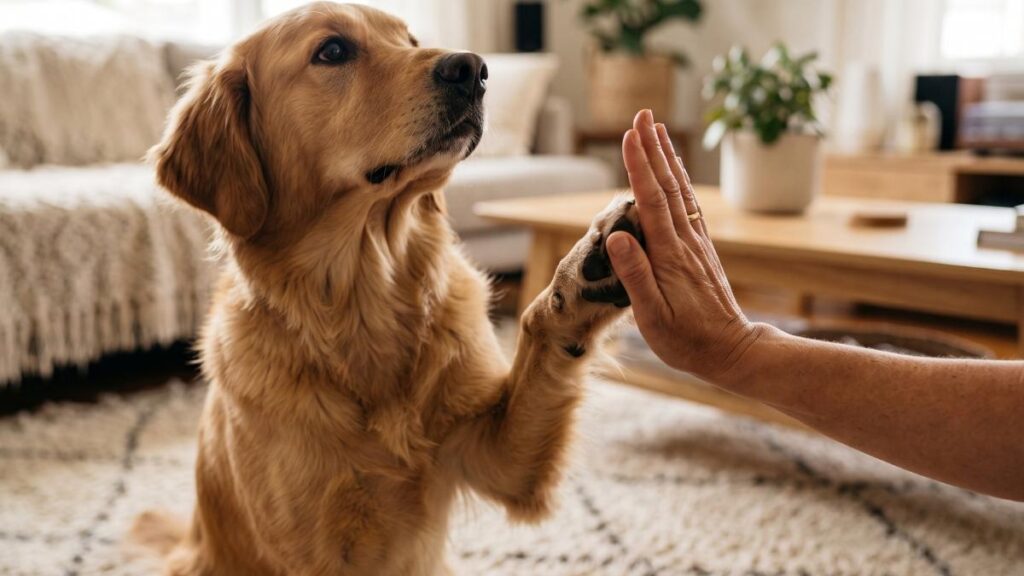
High five and shake are close cousins, built on the same underlying skill of your dog lifting a paw on cue, just with a slightly different finish.
Most dogs pick up the basic paw-lift quickly, and from there it’s really just a matter of shaping which version you want.
For the core principles behind trick training generally, see: Dog Tricks Training Step by Step for Beginners.
1. Start From a Sit
Have your dog sit in front of you. A stable sitting position makes it much easier for them to balance while lifting a paw.
2. Encourage the First Paw Lift
Hold a treat in a closed fist right in front of your dog, close enough that they’ll want to investigate it.
Many dogs will instinctively paw at your closed hand out of frustration or curiosity. The instant a paw touches your hand, mark and reward, even if the touch is brief or clumsy.
3. If Your Dog Doesn’t Paw Naturally
Not every dog offers a paw on their own. If yours doesn’t after a minute or two, gently touch the back of one paw or leg to prompt a small shift of weight, then mark and reward any lift, however small.
Build from there gradually rather than waiting for a big, obvious paw lift right away.
4. Shape It Into Shake
Once your dog is reliably lifting a paw toward your closed hand, start opening your hand slightly to actually receive the paw, like a handshake.
Mark and reward the moment their paw rests in your open palm, gradually expecting them to hold it there for a beat longer each time.
5. Shape It Into High Five
For high five instead, hold your open palm upright, facing your dog, rather than flat and low.
This naturally encourages a slightly higher, more energetic paw lift than shake does. Mark and reward contact with your raised palm, building height gradually if your dog starts low.
6. Add Separate Verbal Cues for Each
Since shake and high five use different hand positions, most dogs can learn to tell them apart once each has its own consistent verbal cue.
Say “shake” right before offering your flat open palm, and “high five” right before your raised palm, staying consistent with which position pairs with which word.
7. Which Paw Should You Teach First?
Most dogs naturally offer one paw more readily than the other, and there’s no need to fight that preference early on. Teach whichever paw comes easiest first, and build the trick to a reliable, confident level before worrying about the other side.
If you’d like your dog to eventually offer either paw, you can teach the second one later using the exact same steps, just be prepared for it to take a bit longer, since it’s a genuinely less natural motion for most dogs.
8. A Practical Bonus: Easier Nail Trims and Paw Handling
Beyond being a fun party trick, a dog who’s comfortable offering a paw on cue is often noticeably easier to handle during nail trims, paw wipes, or a vet exam.
Once shake is solid, you can start gently handling the paw a bit longer each time before releasing and rewarding, gradually building tolerance for the kind of handling those routine tasks require.
9. Troubleshooting a Weak or Half-Hearted Paw Lift
If your dog offers a small, low, or hesitant paw lift instead of a confident one, it’s often because the reward is coming a beat too late, after the paw’s already started dropping back down.
Tighten up your timing so the mark happens the instant the paw lifts, not after, and consider using a slightly higher-value treat for a session or two to rebuild some enthusiasm for the motion.
Common Mistakes
Rewarding a scratch instead of a lift. Some dogs scratch at a closed hand rather than lifting cleanly. Only mark and reward an actual paw lift, not scratching or pawing at the ground.
Teaching both tricks in the same session early on. Introducing shake and high five together before either is solid often leads to a dog who blends the two into one vague paw gesture.
Forcing the paw up by hand. Physically lifting your dog’s paw yourself tends to create hesitation or discomfort rather than a confident, voluntary lift.
Take the Next Step
🐾 Keep the good habits growing.
Want a clear plan for what to practise next? Brain Training for Dogs is a guided programme of games and everyday training you can work through together at home.
Read Our Full Review →Links to our affiliate review of Brain Training for Dogs.
Frequently Asked Questions
My dog won’t lift their paw at all. What now? Try gently touching the back of a front leg to prompt a small weight shift, and reward any movement in the right direction, however small, before expecting a full lift.
Can I teach shake and high five as the same trick? You can, but most dogs learn faster and stay clearer on cues if each has its own distinct hand position and word from the start.
Is it okay if my dog always offers the same paw? Yes, that’s completely normal. Teaching the other paw specifically is possible later, but not necessary for either trick to work well.
Does this trick actually help with grooming or vet visits? It can. A dog comfortable with paw handling from shake training often tolerates nail trims and paw checks more calmly than one who’s never practiced it.
The Bottom Line
Shake and high five both come from the same simple paw-lift skill, just shaped slightly differently depending on your hand position.
Keep the two cues distinct from the start and most dogs sort out the difference quickly. For more trick training guides, see: Dog Tricks Training Step by Step for Beginners.