“Little dog breeds” tends to pull a different pool than “small” or “toy,” more terrier and working-history breeds than purely decorative ones. These six fit that pattern, and it shows: they all act more like their working ancestors than their current lapdog reputation suggests.
Miniature Pinscher
Often mistaken for a small Doberman, the Miniature Pinscher actually predates the Doberman by centuries. It was developed in Germany to hunt rats and vermin around farms and stables, built for speed and agility rather than looks. The breed’s high-stepping gait, called “hackney” movement, is an actual hallmark of the breed standard, not just a quirk.
Fearless, energetic, and often described as having “big dog” confidence in a roughly 10-pound frame, Min Pins carry real working-terrier instincts and need more stimulation than their size suggests, structured play or short training sessions do them good. Despite the Doberman comparison, the two breeds aren’t actually related; the resemblance is coincidental, not shared ancestry.
For all that confidence, Min Pins bond closely with their people and can get anxious if routines change too fast, which surprises owners expecting the boldness to mean total independence.
The negative: that same fearlessness can turn into real stubbornness during training, and Min Pins are prone to patellar luxation and, thanks to that thin coat, real cold sensitivity in winter. Their high prey drive also rules them out for households with small pets like hamsters or birds. Lifespan runs 12 to 16 years.
Given the size and thin coat, Min Pins do best in a proper coat or sweater once it’s cold out, something owners of fluffier small breeds rarely have to think about. That short coat does mean easy upkeep the rest of the time, just an occasional wipe-down between baths.
Papillon
Named for the French word for “butterfly,” a nod to those large, fringed ears held in a wing-like position, the Papillon has real royal history behind it, showing up in European portraiture for centuries as a favored companion of nobility, Marie Antoinette reportedly among them.
Despite the delicate look, Papillons are surprisingly athletic and rank among the most trainable toy breeds in obedience and agility, regularly placing well against much bigger, sportier breeds. In canine intelligence rankings based on obedience trial performance, the Papillon usually comes out as one of the smartest toy breeds around.
A drop-eared variety called the Phalene is the same breed genetically, just with ears that hang instead of standing erect, and both can turn up in the same litter. Both compete under the same standard in the show ring, judged identically apart from ear carriage.
The negative: those large, thin ears are more prone to injury than a typical dog’s, and Papillons, like other small breeds, run a real risk of dental crowding and patellar luxation. Their size also makes them more vulnerable to injury during rough play with bigger dogs or young kids. Lifespan runs 14 to 16 years, among the longest of any breed.
Papillons make surprisingly good watchdogs too, alert to unusual sounds and quick to announce visitors, a holdover from their history as an attentive lapdog rather than a purely decorative one. Their trainability also makes them a solid pick for an owner who wants to try a dog sport like rally obedience for the first time.
West Highland White Terrier
Developed in Scotland to hunt rats, foxes, and other vermin, the “Westie” carries a hard, wiry white coat and a feisty, independent terrier temperament that hasn’t softened much despite generations as a companion breed. That white coat has a practical origin too: it made the dog easier for hunters to tell apart from the fox or badger it was chasing underground.
Confident and alert, Westies were bred to work independently underground, away from a handler’s oversight, and that shows up today as real self-sufficiency and a strong urge to dig. It’s a hard instinct to train out, so a securely fenced yard is worth planning for.
Westies also make good watchdogs and tend to be vocal about anything unusual, something some owners love and others find a lot in close quarters. That confident, almost comical self-assurance has made the breed a longtime favorite in advertising, showing up on everything from whisky labels to greeting cards.
The negative: Westies are prone to a skin condition sometimes called “Westie jaw itch,” or more formally atopic dermatitis, an allergy-related skin issue that often needs ongoing management, dietary changes or medicated shampoo among the usual fixes. They’re also prone to a liver condition and a hip disorder called Legg-Calve-Perthes disease. Lifespan runs 12 to 16 years.
The wiry coat needs hand-stripping every few months to keep its correct harsh texture, since clipping alone softens it over time, same story as other wire-coated terriers. Plenty of pet owners clip anyway for convenience and just accept the softer texture in trade for far less grooming time.
Cairn Terrier
Best known as the breed that played Toto in The Wizard of Oz, the Cairn Terrier was developed in the Scottish Highlands to hunt vermin among rocky cairns, which is where the name comes from, along with its sturdy, weatherproof double coat. It’s one of the oldest terrier breeds still recognized today.
Bold, curious, and independent, Cairns keep real digging and hunting instincts, and they’re generally fine with kids given a proper introduction, though their terrier confidence means they won’t back down from a bigger dog if challenged, worth managing carefully around unfamiliar dogs.
Cairns come in a wide range of colors, cream, wheaten, red, grey, brindle, more variety than most terrier breeds allow within one standard. The breed’s also an ancestor of the modern West Highland White Terrier; white-coated Cairn puppies were historically separated out to found that related breed.
The negative: Cairn Terriers are prone to hip dysplasia, patellar luxation, and a genetic eye condition called globoid cell leukodystrophy in some lines. Their wiry coat needs hand-stripping or regular trimming to stay healthy, and the breed’s independent streak makes off-leash recall unreliable. Lifespan runs 12 to 15 years.
Hunting background aside, Cairns generally do fine in apartments as long as their exercise and mental stimulation needs get met through daily walks and play. Their moderate size, sturdier than most toy breeds, also makes them a bit more resilient around careful, well-supervised kids.
Jack Russell Terrier
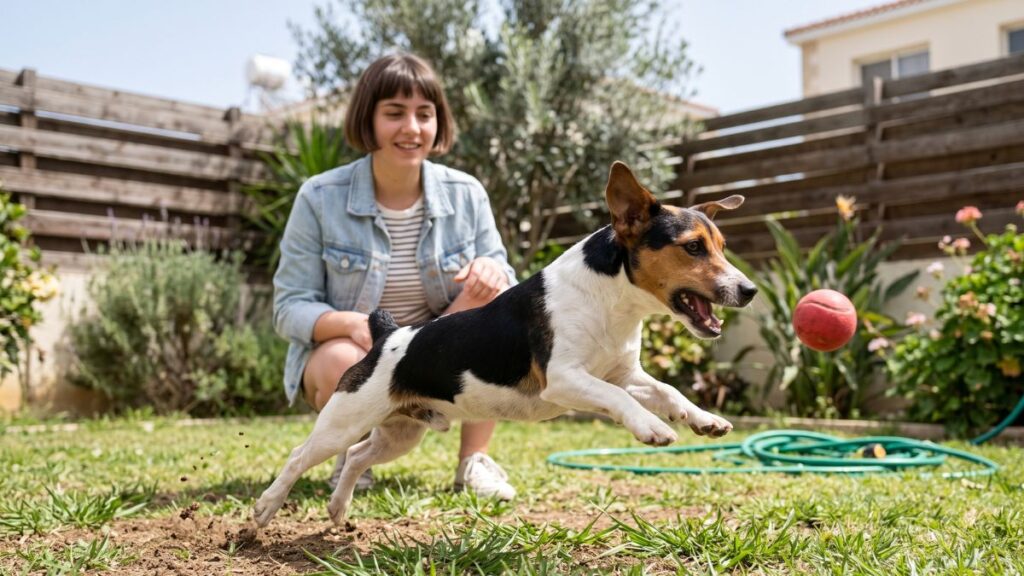
Developed in England specifically for fox hunting, bred small enough to chase foxes into their dens while staying fast and tough enough to keep pace with mounted hunters and hounds, the Jack Russell probably has the highest energy level of any breed on this list. A working terrier through and through.
Extremely intelligent and athletic, Jack Russells need serious daily exercise and mental engagement. Without it, this breed is notorious for destructive behavior born purely of boredom, digging, chewing, or working out how to escape.
The breed excels at flyball and agility, where its speed and drive become an asset instead of a management headache, and structured activity really is the key to a well-adjusted Jack Russell. It also has a long history in earthdog trials, a sport built around the terrier’s original den-hunting instinct, giving a driven Jack Russell a real, sanctioned outlet.
The negative: this is not a low-maintenance breed despite the small size, and Jack Russells have a real reputation for escaping yards, digging, and taking on other dogs regardless of size. They’re prone to patellar luxation and a hereditary eye condition. Lifespan runs 13 to 16 years.
Given the prey drive and fearlessness, Jack Russells need secure fencing and real supervision around traffic, since the instinct to chase can override caution entirely. Worth knowing too: the breed has two recognized standards, Jack Russell and Parson Russell Terrier, with the Parson variety usually a bit taller and leggier.
Miniature Schnauzer
Developed in Germany by crossing Standard Schnauzers with smaller breeds to create a more manageable farm ratter, the Miniature Schnauzer carries the same bushy eyebrows and beard as its bigger relatives, and needs hand-stripping or regular trimming to keep that wiry texture, more than a quick brush will do.
Friendly, alert, and trainable, Miniature Schnauzers rank among the more obedient small breeds, and their moderate size and temperament make them a popular pick for families wanting a small dog with a bit more substance than a toy breed.
The low-shedding coat is another real draw for allergy-conscious households, alongside the usual Bichon Frise and Poodle-type recommendations. Miniature Schnauzers also tend to be good with kids, mixing terrier confidence with a more even, less reactive temperament than some other terriers here.
The negative: Miniature Schnauzers are prone to pancreatitis, often linked to high-fat diets, so careful feeding matters more with this breed than most. They’re also prone to urinary stones and a fatty liver condition. Lifespan runs 12 to 15 years.
Given the pancreatitis risk, many vets recommend keeping table scraps and fatty treats to a real minimum here, stricter than most small breeds need. The breed’s traditionally docked tail and cropped ears, once standard in some countries, are now banned or discouraged in many places on welfare grounds, so most modern pets keep their natural ears and tail.
FAQ
What’s the real difference between “little” and “small” dog breeds in search terms?
They mostly overlap, though “little” tends to surface more terrier and working-heritage breeds in practice, based on the pattern in related-search data, rather than purely companion breeds bred just for a lap.
Are terrier breeds harder to train than companion breeds?
Often, yes. Terriers were bred to work independently rather than take constant direction, so training tends to be a more independent, sometimes stubborn experience than with a breed developed purely as a companion.
Which of these breeds needs the most exercise?
The Jack Russell Terrier by a wide margin, needing serious daily physical and mental engagement to stay balanced and out of trouble.
Which of these breeds is quietest for apartment living?
The Miniature Schnauzer is generally the calmest of this group indoors, though all six can turn into loud watchdogs when something catches their attention.
Do any of these breeds do well as a family’s only pet versus with other animals?
The Papillon and Miniature Schnauzer both tend to be the most sociable with other household pets, while the Miniature Pinscher’s prey drive makes it a poor fit for homes with small caged animals.
Which of these breeds sheds the least?
The wire-coated Cairn Terrier, West Highland White Terrier, and Miniature Schnauzer all shed minimally compared to smooth-coated breeds, though all three still need hand-stripping or clipping.
The Bottom Line
These six breeds carry real working or hunting history that still shapes how they act today, more independent and driven than a purely decorative companion breed. A dog that looks like a lapdog but acts like a working terrier is a real mismatch for someone expecting the opposite.
For more on small and toy breeds, see Small Dog Breeds, Best Small Dog Breeds, Tiny Dog Breeds, Cute Small Dog Breeds, Cutest Small Dog Breeds, Toy Dog Breeds, Small Dog Breeds That Are Low Maintenance, and Small Dog Breeds Chart.