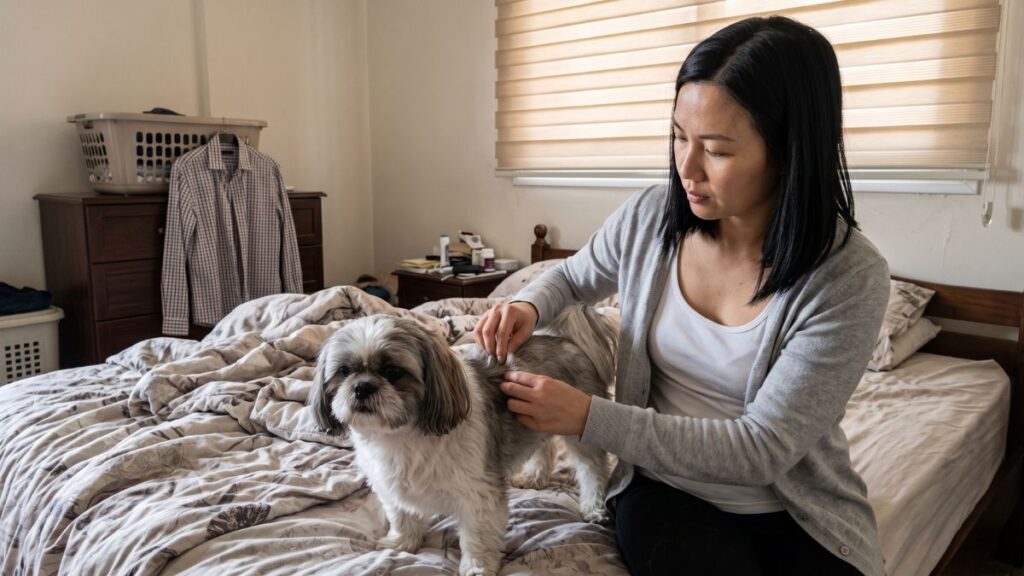
Finding a wet spot where your dog was lying, especially a spayed female dog, is one of the more common reasons owners start searching for home remedies. This guide covers what’s actually causing it, what real veterinary treatment looks like, and what genuinely helps versus what’s just management. Informational only, not a substitute for a vet visit.
What’s Actually Causing It
The most common cause by far is primary sphincter mechanism incompetence, sometimes called hormone-responsive or estrogen-responsive incontinence, and it mostly affects spayed female dogs. Urethral closure pressure predictably decreases in the 12 to 18 months following a spay, and it’s estimated to affect somewhere between 5 and 20 percent of spayed females, with larger breeds and dogs spayed at a younger age showing up more often. Boxers, Doberman Pinschers, Giant Schnauzers, Old English Sheepdogs, Rottweilers, Springer Spaniels, and Weimaraners are all noted as more commonly affected breeds.
It’s worth knowing this is genuinely different from house soiling or marking. A dog with this kind of incontinence leaks or dribbles urine without being aware of it, most often while sleeping or resting, rather than deliberately urinating somewhere inappropriate.
Other real causes exist too and need to be ruled out first: urinary tract infections, bladder stones, diabetes, neurological issues, and in male dogs, prostate problems. This is exactly why a vet visit matters before assuming it’s the common hormone-related type.
How a Vet Actually Diagnoses It
Diagnosis typically involves urine tests, bloodwork, and sometimes imaging, specifically to rule out infection, diabetes, and other causes that need different treatment entirely. Response to treatment is often part of confirming the diagnosis too.
The Real Medical Treatment
Phenylpropanolamine, usually shortened to PPA (brand names include Proin and Propalin), is the standard first treatment and controls incontinence in roughly 75 to 90 percent of affected dogs. It works by increasing muscle tone in the urethra, and dosing and frequency are set and adjusted by a vet, sometimes needing periodic bloodwork to check liver and kidney function over time.
Estrogen-based medication is sometimes used as a second option, generally when PPA alone doesn’t fully resolve things or isn’t well tolerated, since hormone therapy carries its own separate risks a vet needs to weigh.
What Actually Helps Alongside Treatment
Keeping your dog at a healthy weight is one of the more genuinely useful things an owner can control directly, since extra weight puts more pressure on the bladder and can make any degree of incontinence worse.
Frequent bathroom breaks, especially first thing after waking from a nap, help manage the practical side of things, since leakage happens most often when the bladder is fuller during rest.
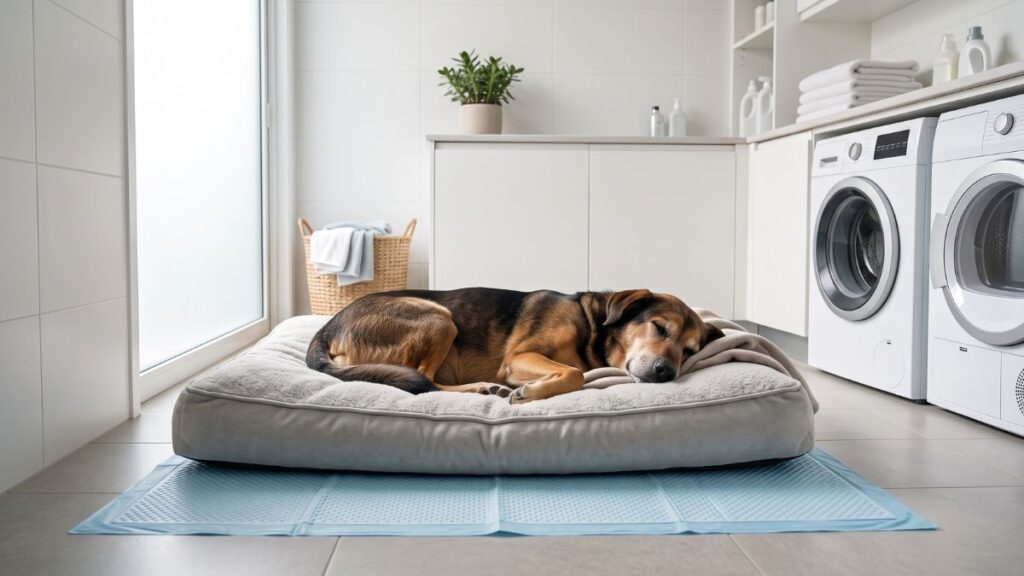
Waterproof bedding and washable pads protect furniture and floors while the real underlying cause gets diagnosed and treated, a practical management step rather than a treatment itself.
What’s Management, Not a Cure
Doggy diapers and belly bands are genuinely useful for managing leakage day to day, but they don’t address the underlying muscle tone issue at all, they just contain the result of it.
Supplements marketed for bladder support turn up a lot in searches for this, but there’s limited real veterinary research behind most of them compared to the well-established PPA treatment. Worth discussing with your vet before relying on one instead of an actual diagnosis.
FAQ
Is this the same thing as a dog just having accidents in the house?
No. Incontinence is involuntary leakage, usually during sleep or rest, while house soiling is a dog deliberately urinating somewhere inappropriate, often tied to behavior or a different medical issue entirely.
Does every spayed female dog develop incontinence?
No, estimates suggest somewhere between 5 and 20 percent of spayed females are affected, though larger breeds and dogs spayed younger show up more often in the data.
Can incontinence in a male dog mean something different?
Yes, prostate issues are a more common cause in male dogs specifically, which is part of why a proper vet diagnosis matters regardless of your dog’s sex.
Do supplements actually treat the underlying cause?
Not with the same evidence base as PPA. Most bladder-support supplements have limited veterinary research behind them, so they’re worth discussing with a vet rather than relying on alone.
The Bottom Line
What looks like a simple leaking problem is usually a specific, well-understood, and genuinely treatable condition once it’s properly diagnosed. Diapers, weight management, and bathroom scheduling all help manage things day to day, but they’re not a substitute for finding out the actual cause.
For more on home and natural approaches generally, see Home Remedies for Dogs: What’s Safe and What Isn’t.