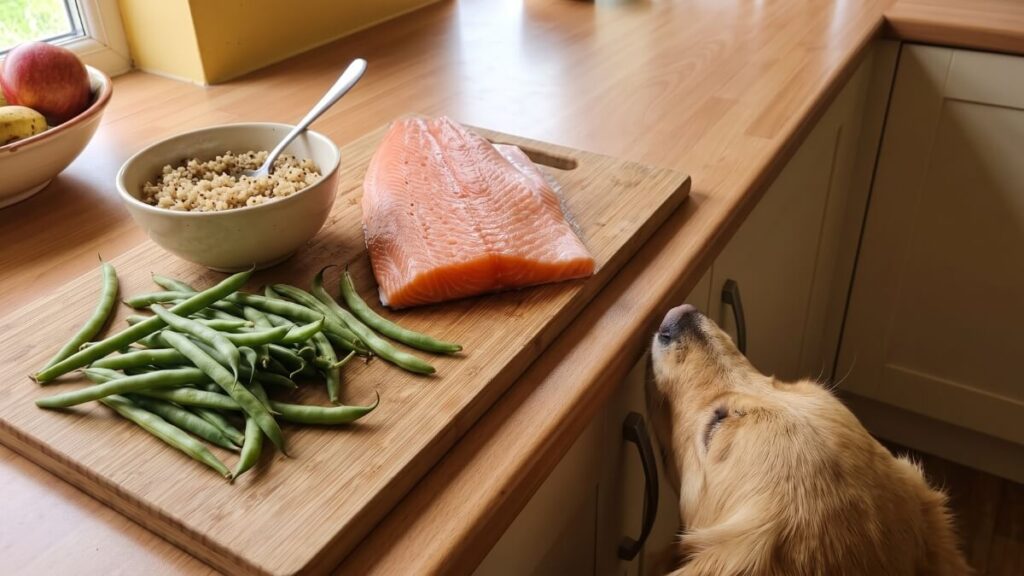
Two salmon recipes, a good option for dogs who do well on fish or need a change from a heavier meat-based diet. For the framework behind these recipes, see Homemade Dog Food Recipes by Protein.
A safety note specific to salmon: always cook salmon thoroughly and never feed it raw. Raw salmon, especially from the Pacific Northwest, can carry a parasite that causes a condition called salmon poisoning disease, which can be fatal to dogs if untreated.
Salmon and Quinoa Dog Food
Ingredients: 900g salmon fillet, boneless; 450g quinoa, cooked; 2 teaspoons ground eggshell (or 2,000mg calcium carbonate supplement); 1 serving of a complete vitamin and mineral supplement formulated for homemade dog food.
Bake or poach the salmon thoroughly until fully cooked and flakes easily, checking carefully for any small bones before flaking.
Cook the quinoa separately according to package instructions, then combine with the flaked salmon.
Mix in the calcium source evenly, then stir in the supplement once the mixture has cooled to a safe serving temperature. No added fish oil is needed here, since salmon already provides plenty of omega-3s on its own.
Salmon and Green Beans Dog Food
Ingredients: 900g salmon fillet, boneless; 450g green beans, chopped; 450g white rice, cooked; 2 teaspoons ground eggshell (or 2,000mg calcium carbonate supplement); 1 serving of a complete vitamin and mineral supplement formulated for homemade dog food.
Bake or poach the salmon thoroughly until fully cooked, checking for bones, then flake once cooled.
Steam or boil the green beans until tender, and cook the rice separately.
Combine the salmon, green beans, and rice, mix in the calcium source, then stir in the supplement once cooled.
How Much to Feed
Portion needs depend on your dog’s weight, not just this recipe’s batch size. See the full weight-based feeding table in Homemade Dog Food: The Complete Guide for daily and per-meal amounts by weight.
Start with the table’s figure for your dog’s weight, then adjust based on body condition, checked every couple of weeks.
Storage
Refrigerate for up to three days in an airtight container, since fish keeps slightly less well than other proteins. Freeze portions for longer storage.
Common Mistakes
Feeding raw or undercooked salmon. This is a genuine health risk, not just a food safety preference, so always cook it fully.
Missing small bones during flaking. Run your fingers through the fish carefully after cooking to check.
Adding extra fish oil on top of a salmon-based recipe. Salmon already supplies substantial omega-3s, so additional fish oil generally isn’t needed.
FAQ
Is farmed or wild salmon better for these recipes?
Both work as long as they’re fully cooked. Wild salmon is often leaner, so farmed salmon may need slightly more trimming of excess fat.
Can I use canned salmon instead of fresh?
Plain canned salmon in water, with bones removed, can work, but check the label for added salt, which should be avoided.
Is salmon a good option for a dog with joint issues?
Its omega-3 content is often discussed as supportive for joint health, though check with your vet if you’re specifically managing a joint condition.
The Bottom Line
Both recipes give you a complete starting point using salmon as the protein, as long as it’s always cooked thoroughly first. For more protein options, head back to Homemade Dog Food Recipes by Protein.