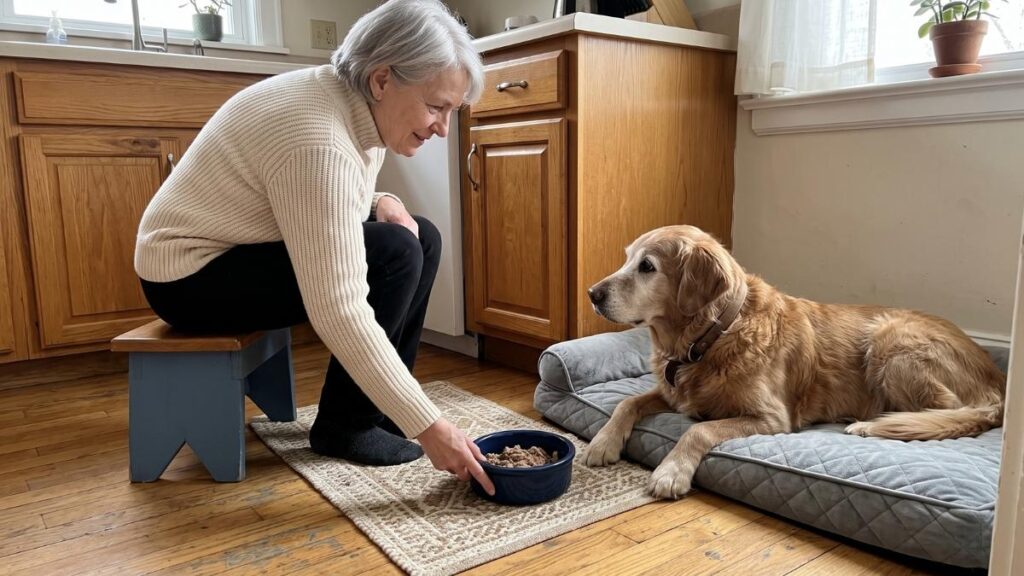
A lot of senior dog advice repeats the same assumption: less protein, fewer calories, done. Current veterinary nutrition research actually points the other way on protein. For the fundamentals of homemade cooking generally, see Homemade Dog Food: The Complete Guide.
The Protein Myth, Corrected
There’s no official AAFCO or National Research Council nutrient profile specifically for “senior” dogs, unlike the defined profiles for growth and adult maintenance. “Senior” isn’t a regulated life stage.
The old advice to reduce protein for older dogs, based on a since-disproven assumption that it protects the kidneys, has been reversed by more recent research. Healthy senior dogs without a diagnosed kidney condition generally benefit from maintaining or even increasing protein intake, since dogs lose 15 to 25 percent of muscle mass between ages 7 and 12, and adequate protein helps counter that loss.
This only applies to healthy seniors. A dog with diagnosed kidney disease needs a different, vet-formulated approach. See Kidney-Friendly Homemade Dog Food Recipes if that applies to your dog.
What Actually Tends to Change With Age
Calorie needs often drop with age due to reduced activity, but this varies enormously by individual dog, so there’s no universal “senior” calorie cut that applies to every dog.
Joint support through omega-3 fatty acids and, for some dogs, a glucosamine and chondroitin supplement is commonly recommended as dogs age and joints wear.
Easily digestible ingredients can help dogs with a more sensitive digestive system, which becomes more common with age in some dogs.
Lean Protein Senior Recipe
Ingredients: 900g boneless, skinless chicken thigh, cooked; 450g white rice, cooked; 2 teaspoons ground eggshell (or 2,000mg calcium carbonate supplement); 1 tablespoon fish oil; 1 serving of a complete vitamin and mineral supplement formulated for homemade dog food.
Boil or bake the chicken thoroughly, then chop or shred once cooled.
Combine with the cooked rice, mix in the calcium source, then stir in the fish oil and supplement once cooled to a safe serving temperature.
Joint-Support Senior Recipe
Ingredients: 900g salmon fillet, boneless; 450g sweet potato, peeled and cubed; 2 teaspoons ground eggshell (or 2,000mg calcium carbonate supplement); 1 serving of a complete vitamin and mineral supplement formulated for homemade dog food; optional glucosamine and chondroitin supplement, dosed per product label.
Bake or poach the salmon thoroughly until fully cooked, checking carefully for bones, then flake once cooled.
Boil the sweet potato until soft, mash lightly, then combine with the salmon.
Mix in the calcium source, then stir in the supplement and glucosamine addition if using, once cooled. No added fish oil is needed here, since salmon already provides substantial omega-3s.
How Much to Feed
See the full weight-based feeding table in Homemade Dog Food: The Complete Guide as a starting point, then adjust based on your senior dog’s actual activity level and body condition, checked regularly since this changes more with age.
Two smaller meals a day often suit senior dogs better than one larger one, easing digestion.
Storage
Refrigerate for up to four days in an airtight container, or freeze individual portions for longer storage.
Common Mistakes
Cutting protein just because a dog is labeled “senior.” Healthy older dogs generally need adequate to higher protein, not less, to help preserve muscle mass.
Assuming every senior dog needs fewer calories. Some do, some don’t. Base changes on your individual dog’s body condition, not their age alone.
Treating a senior recipe as a substitute for a kidney or liver diet. Age alone doesn’t call for the same restrictions a diagnosed condition does.
FAQ
Do senior dogs really need less protein?
No, not if they’re otherwise healthy. Current veterinary nutrition research supports maintaining or increasing protein to help preserve muscle mass as dogs age.
At what age should I switch to a senior recipe?
There’s no fixed age, since aging affects individual dogs differently by breed and size. Talk to your vet about when it makes sense for your specific dog.
Is a joint supplement necessary for all senior dogs?
No, it’s optional and most useful for dogs showing signs of joint stiffness or breeds prone to joint issues. Check with your vet before adding one.
The Bottom Line
A genuinely good senior recipe maintains solid protein levels and supports joints, rather than automatically restricting protein based on age alone. For the broader fundamentals of homemade cooking, head back to Homemade Dog Food: The Complete Guide.