Potty training without a yard is genuinely harder, but it’s absolutely doable with the right setup and a bit more planning than a house with a backyard needs.
The core principles stay the same, you’re just working around extra logistics like stairs, elevators, and longer walks to reach ground level.
For the full potty training routine this builds on, see: Puppy Potty Training Routine: A Step-by-Step Daily Schedule.
1. Plan for Extra Travel Time
A puppy that needs to go now doesn’t care that you’re three floors up.
Build in a genuine buffer between noticing the signs and actually reaching ground level, especially in a building with a slow elevator or a lot of stairs. This buffer matters more than almost anything else in an apartment setting.
2. Consider an Indoor Option for Very Young Puppies
Puppies under four months often physically can’t hold it long enough to make a multi-flight trip every single time, especially in the early weeks.
A puppy pad, an artificial grass patch, or a balcony setup can bridge that gap, giving your puppy somewhere appropriate to go when a full trip outside genuinely isn’t realistic in time.
3. Comparing Indoor Options
Standard puppy pads are the cheapest and most widely available option, but many puppies eventually need to unlearn the idea that indoor surfaces are ever acceptable.
A real or artificial grass patch, sometimes called a turf box, more closely mimics the actual outdoor surface and texture your puppy will eventually be trained to use, which can make the eventual transition outside smoother. A covered balcony setup works well if you have outdoor access, giving your puppy a genuinely outdoor-feeling option without the elevator trip.
4. Transitioning Away From Indoor Options
If you’re using an indoor option temporarily, plan to phase it out gradually rather than stopping abruptly once your puppy’s older.
Slowly move the pad or patch closer to the door over several weeks, then start timing outside trips right around when your puppy would normally use it, so the transition feels like an extension of the existing habit rather than a sudden change.
5. Choosing a Consistent Outdoor Spot
City blocks offer a lot of new smells and distractions, which can make it harder for a puppy to focus on the actual task at hand.
Picking one consistent spot near your building, and heading there directly rather than wandering, helps your puppy learn faster than exploring a new patch of sidewalk every time.
6. Managing Bad Weather
Without a backyard to dash into between raindrops, weather becomes a bigger factor in apartment potty training.
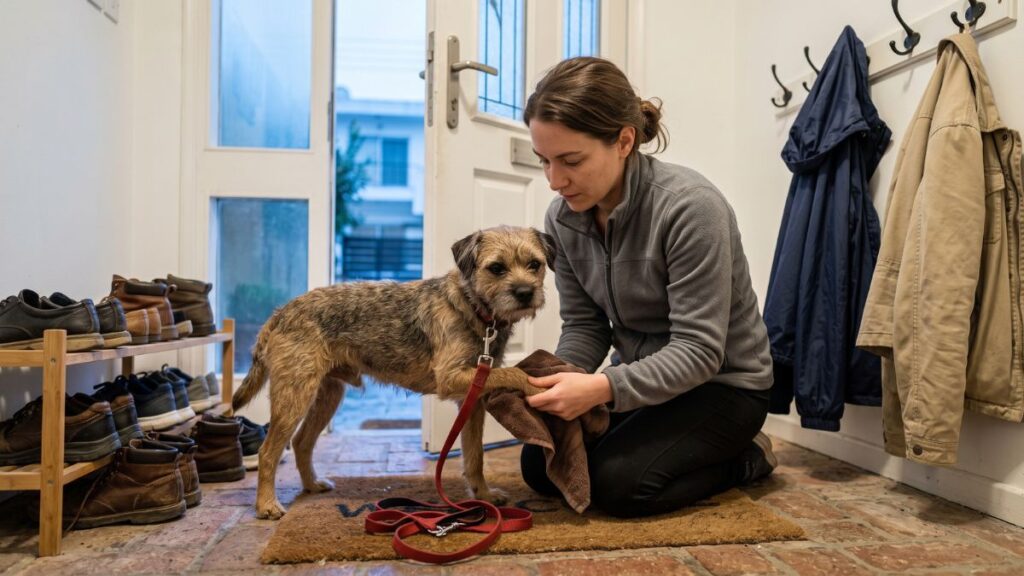
Keep a puppy-appropriate raincoat or towel routine on hand for wet days, and don’t be surprised if a puppy who’s hesitant about rain or snow needs a bit more encouragement and patience during those sessions.
7. Working With Building Rules and Elevators
If your building has elevator wait times or specific pet policies, it’s worth mapping out your realistic fastest route to ground level in advance, rather than discovering the delays during an actual emergency.
Some owners find it helpful to identify a backup relief spot, like a lobby-adjacent patch of gravel or a designated pet area, for situations where the usual outdoor spot just isn’t reachable in time.
8. Handling Elevator and Hallway Nerves
Elevators, echoey hallways, and unfamiliar neighbours can all be genuinely overwhelming for a young puppy, on top of everything else they’re learning.
Short, low-pressure exposure to these spaces outside of potty trips, just riding the elevator for fun with treats, for example, can help your puppy feel calmer during the actual bathroom-run version of the trip.
9. Coordinating With Roommates or Multiple Household Members
In shared living situations, it’s worth agreeing on one consistent outdoor spot and one consistent cue word among everyone in the household, rather than each person doing things slightly differently.
Consistency across everyone your puppy interacts with matters just as much as your own consistency, especially in a smaller living space where routines overlap more.
Common Mistakes in Apartment Potty Training
Underestimating travel time. A ground-floor house and a fifth-floor walk-up need very different bathroom-break timelines, and treating them the same sets your puppy up to fail.
Switching outdoor spots constantly. Novelty is distracting for a puppy who’s still learning the routine. Consistency helps far more than variety at this stage.
Leaving indoor pads down indefinitely without a plan to transition. Without a deliberate phase-out plan, an indoor option can become a permanent habit rather than the temporary bridge it was meant to be.
Frequently Asked Questions
Is it harder to potty train a puppy in an apartment? It typically takes a bit more planning around travel time and weather, but the core training process is exactly the same as it would be with a yard.
Should I use puppy pads if I live in an apartment? They can be a genuinely useful bridge for very young puppies who can’t yet make the full trip outside in time, as long as you have a plan to phase them out later.
How do I handle potty training during a heatwave or storm? Keep trips shorter and more frequent rather than skipping them, and consider a covered or sheltered spot near your building for the worst weather.
What if my building doesn’t allow a designated dog relief area? Scout the nearest public green space or tree pit in advance, and factor its distance into your actual travel-time buffer.
The Bottom Line
Apartment potty training just means accounting for extra travel time, weather, and building logistics on top of the usual routine.
With a bit more planning, it works just as well as training with a backyard. For the full potty training routine, see: Puppy Potty Training Routine: A Step-by-Step Daily Schedule.