A dog’s mind needs almost as much exercise as their body, and brain games are one of the easiest ways to provide that without leaving the house.
This guide covers genuinely effective mental stimulation activities, why they matter, and how to fit them into a normal week, so your dog gets a real mental workout, not just busy work.
Why Mental Stimulation Matters So Much
A dog who’s mentally tired often settles faster and behaves better than one who’s only had physical exercise, since problem-solving genuinely wears a dog out in a different, complementary way to a walk or a run.
Under-stimulated dogs, particularly working breeds and high-energy dogs, often channel that unused mental energy into behaviours owners find frustrating, like destructive chewing or excessive barking.
Snuffle Mats
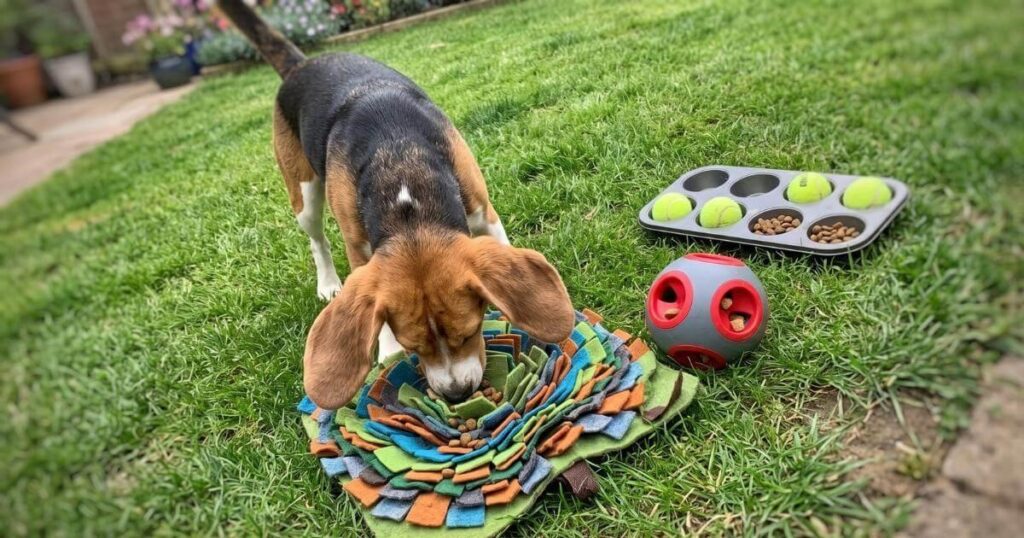
A snuffle mat, a textured fabric mat with treats hidden throughout the fibres, taps into a dog’s natural foraging instinct and turns mealtime or a treat session into a genuine mental workout.
Start with treats scattered loosely on top for a first introduction, then bury them deeper into the fabric as your dog gets the hang of searching.
Puzzle Feeders
Puzzle feeders require a dog to manipulate a lever, slide a panel, or solve a simple mechanism to access food, turning a routine meal into an engaging challenge.
Start with an easier puzzle level and increase difficulty gradually, since a puzzle that’s too hard early on can be discouraging rather than fun.
The Muffin Tin Game
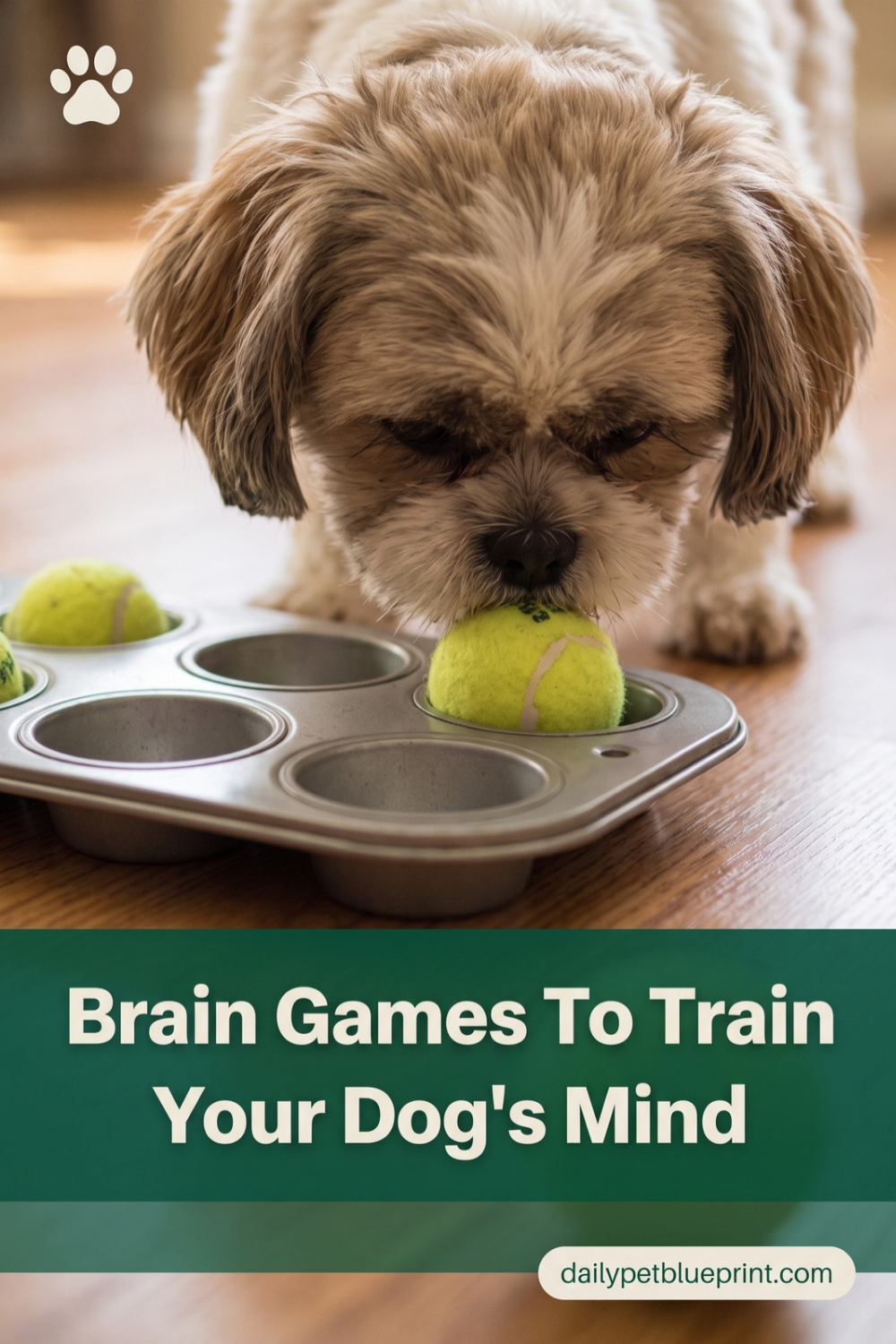
A simple muffin tin with treats hidden under tennis balls in each cup makes a genuinely effective, low-cost brain game.
Your dog has to figure out which cups to nose or paw the ball off of, engaging both problem-solving and a bit of physical dexterity.
Scent Work Basics
Hiding treats around a room and encouraging your dog to sniff them out taps into one of the most naturally satisfying activities for a dog, since scent processing occupies a huge part of a dog’s brain.
Start with easy, visible hiding spots and gradually make them more challenging as your dog gets better at the game. For a deeper dive into this specific activity, see: How to Start Scent Training Your Dog.
The Shell Game
A simplified version of the classic shell game, hiding a treat under one of three cups and shuffling them slightly, gives your dog a genuine memory and observation challenge.
Keep the shuffling minimal at first, since the goal is engagement, not genuinely stumping your dog every time.
New Trick Practice as Mental Work
Practicing an already-known trick, or working on a new one for just a few minutes, is itself a genuine brain workout, since it requires focus and problem-solving rather than pure repetition.
Rotating through a few known tricks in a short session gives your dog’s mind a workout without needing any special equipment at all.
Matching Games to Your Dog’s Breed and Drive
Scent hounds and working breeds bred for scent work often take to sniffing-based games especially fast, while herding breeds bred for quick problem-solving often excel at puzzle feeders and shape-based games.
There’s no need to match perfectly, but noticing what your own dog seems to enjoy most is a useful guide for where to focus your energy.
Rotating Toys to Keep Novelty High
Dogs habituate to toys that are always available, losing interest over time even in things they once loved.
Keeping only a few toys out at once and rotating the rest in and out of storage weekly keeps novelty high without needing to constantly buy new toys.
Building Games Into a Weekly Routine
A single ten to fifteen minute brain game session most days genuinely makes a noticeable difference in a dog’s overall demeanor, particularly for dogs who don’t get a huge amount of physical exercise.
Pairing a game with a meal, using a puzzle feeder instead of a regular bowl a few times a week, is an easy way to build this in without needing extra dedicated time.
Take the Next Step
🐾 Keep the good habits growing.
Want a clear plan for what to practise next? Brain Training for Dogs is a guided programme of games and everyday training you can work through together at home.
Read Our Full Review →Links to our affiliate review of Brain Training for Dogs.
Common Mistakes
Making games too difficult too soon. A puzzle that’s genuinely unsolvable for your dog’s current skill level leads to frustration rather than engagement, so starting easy matters more than people expect.
Only offering brain games occasionally. Mental stimulation works best as a consistent part of a routine, not an occasional treat reserved for rainy days.
Assuming physical exercise alone is enough. A physically tired dog can still be understimulated mentally, and the two types of fatigue don’t fully substitute for each other.
Frequently Asked Questions
How often should I do brain games with my dog? Most dogs benefit from some form of mental stimulation most days, even if it’s just a five to ten minute puzzle feeder session at a meal.
Are brain games useful for senior dogs? Yes, genuinely so. Mental stimulation can help keep an older dog’s mind sharp, and puzzle difficulty can simply be adjusted to match physical limitations.
My dog gets bored of the same puzzle quickly. What should I do? Rotating between a few different puzzle types, and gradually increasing difficulty as your dog masters each one, tends to keep engagement higher than repeating the exact same game.
The Bottom Line
A mentally tired dog is often a calmer, more content dog, and brain games are a genuinely simple way to get there.
Start easy, rotate for novelty, and build it into your normal routine rather than treating it as an occasional extra. For more ways to combine play and training, see: Fun Dog Training Games to Play at Home.