Play dead is a genuine crowd-pleaser, and it’s also one of the more approachable tricks to teach, since most of it builds directly on skills your dog may already have.
If your dog already knows roll over, this one often comes together even faster, since the two tricks share a similar starting point.
For the core principles behind trick training generally, see: Dog Tricks Training Step by Step for Beginners.
1. Start From a Solid Down
Just like roll over, play dead starts from your dog lying down, so that’s worth having solid before you begin.
Ask for a down, and get your dog comfortable holding that position for a few seconds before moving on.
2. Lure Your Dog Onto Their Side
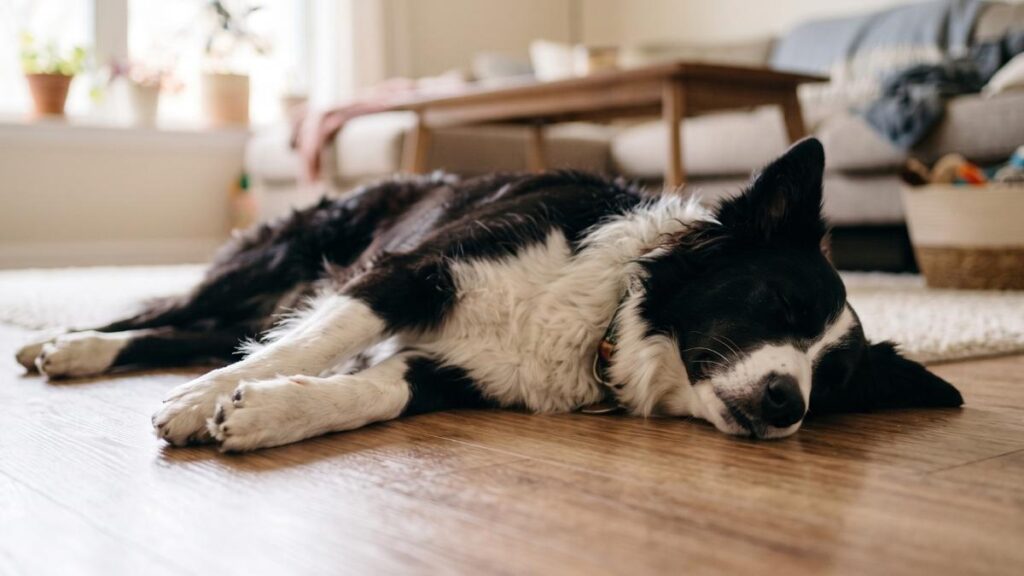
With your dog lying down, guide a treat slowly from their nose toward their shoulder, encouraging them to shift their weight and flop onto one side.
Unlike roll over, you’re stopping here rather than continuing the motion, so mark and reward the moment they’re lying flat on their side.
3. Build Duration Before Adding the Cue
Once your dog reliably flops onto their side for a treat, start waiting a second or two longer before marking and rewarding, gradually building up how long they hold the position.
A dog who pops back up immediately hasn’t quite learned the “hold” part yet, so this stage is worth taking slowly.
4. Add a Head-Down Finish
For a more polished look, once your dog is holding the side-lying position well, gently lure their head down flat against the floor too, marking and rewarding when their chin rests down.
This step is optional and purely cosmetic, some owners prefer skipping it and keeping the trick simpler.
5. Fade the Lure Into a Hand Signal
Once your dog reliably flops and holds with the treat guiding them, start making the same hand motion empty-handed, rewarding from a pocket or pouch afterward.
A common finished version uses a finger-gun-style point as the visual cue, though any consistent gesture works just as well.
6. Add the Verbal Cue
Once the hand signal alone reliably gets your dog to flop and hold, start saying “bang” or “play dead” right before the gesture each time.
With enough repetition, the word alone will start triggering the response, even before the hand signal.
7. Adding a Fun Recovery Cue
For a bit of extra flair, some owners teach a second cue, like “alive” or a hand clap, that releases their dog back up to a sit or stand.
Simply mark and reward your dog for popping back up the moment you give this release cue, the same way you’d teach any other cued behaviour. It’s entirely optional, but it turns the trick into more of a mini performance.
8. Practicing With Mild Distractions
Once your dog holds the position reliably at home in a quiet room, try it with a family member walking by, a bit of background noise, or a familiar visitor present.
Keep the distraction level low at first and build up gradually, since holding still is genuinely harder for a dog when something interesting is happening nearby.
9. Personality Affects How Dramatic the Trick Looks
Some dogs naturally flop with a big, theatrical thud, while others ease into the position more calmly, and both are perfectly correct versions of the trick.
Don’t worry about coaching a specific style of flop. Reward the position itself, not the amount of drama your dog brings to it, and let their natural personality show through.
Common Mistakes
Rewarding too soon after they pop back up. If you mark and treat after your dog has already stood back up, you risk reinforcing the wrong part of the sequence entirely.
Skipping the duration-building stage. A dog who flops for half a second isn’t quite there yet. Building genuine hold time makes the finished trick far more reliable.
Using a stressed or anxious tone for the cue. Play dead should feel like a fun, relaxed trick, not a serious command, and dogs pick up on tone more than people expect.
Frequently Asked Questions
My dog knows roll over. Will play dead confuse them? Not usually, since the two tricks have different endpoints and different cues, though it’s worth keeping the two training sessions separate at first while your dog learns to tell them apart.
How long should my dog hold the position? A couple of seconds is a solid, reliable target for most pet dogs. Longer durations are possible but not necessary for a fun party trick.
My dog gets up the instant I say the cue word. What’s wrong? This usually means the verbal cue was added before the behaviour was fully solid on the hand signal. Go back a step and rebuild the hand signal before reintroducing the word.
Do I need a release cue for play dead? Not strictly, most dogs naturally get up on their own after a few seconds, but a dedicated release cue makes the trick feel more polished and gives you more control over timing.
The Bottom Line
Play dead builds naturally on the same skills as roll over, just with a hold instead of a continuous motion.
Take the duration-building stage slowly and the rest tends to fall into place. For more trick training guides, see: Dog Tricks Training Step by Step for Beginners.