Roll over is one of the most requested tricks, and it’s also one of the more physically involved ones, so a bit of patience goes a long way here.
Some dogs pick it up in a single session, others take a couple of weeks, and both are completely normal.
For the core principles behind trick training generally, see: Dog Tricks Training Step by Step for Beginners.
1. Start From a Down Position
Your dog needs to already know a reliable “down” before starting roll over, since that’s the actual starting point of the whole trick.
If down isn’t solid yet, it’s worth spending a few sessions on that first rather than trying to teach both at once.
2. Lure Your Dog Onto Their Side
With your dog lying down, hold a treat right at their nose and slowly move it toward their shoulder, following the direction their head would naturally turn.
Most dogs will shift their weight and flop onto one side to keep following the treat. The moment they do, mark it and reward, even if it’s just a small shift at first.
3. Continue the Lure Into a Full Roll
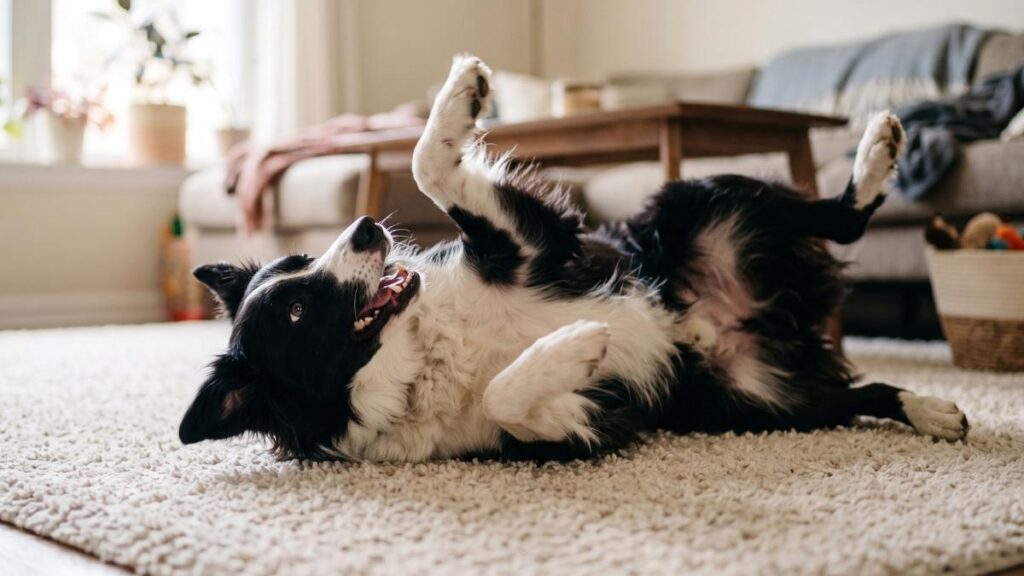
Once your dog is comfortable flopping onto their side, keep guiding the treat in a continuous arc over their shoulder and toward their opposite hip.
This encourages them to continue rolling all the way onto their back and over to the other side. Reward generously the first few times they complete a full roll, even a slightly awkward one.
4. Break It Into Stages If Your Dog Gets Stuck
If your dog stalls at the “onto their back” stage, that’s genuinely common, since it’s a slightly vulnerable position for a dog to hold.
Reward that halfway point on its own for a few sessions before asking for the full roll again. Some dogs need this stage broken down further than others, and that’s completely fine.
5. Fade the Lure and Add a Hand Signal
Once your dog is rolling over reliably by following the treat, start making the same hand motion without a treat actually in your hand, rewarding from a pocket or treat pouch afterward instead.
This turns the lure into a proper hand signal your dog responds to on its own.
6. Add the Verbal Cue
Once the hand signal alone reliably gets a full roll, start saying “roll over” right before the hand motion each time.
After enough repetitions, your dog will start rolling as soon as they hear the word, even before you move your hand.
7. Practicing on Different Surfaces
Once the trick is solid on a comfortable surface at home, try it on a few different textures, a rug, grass, or a dog bed, so your dog doesn’t only associate the trick with one exact spot.
Keep hard or slippery surfaces out of the rotation entirely, since they make the trick genuinely less comfortable regardless of how well trained your dog is.
8. Roll Over Safety for Certain Dogs
Senior dogs, dogs recovering from injury, and dogs with known back or joint issues may find the rolling motion uncomfortable even when it’s taught gently.
Flat-faced breeds can also find rolling briefly restrictive for their breathing. If any of this applies to your dog, it’s worth checking with your vet before teaching this specific trick, or simply choosing a different one that doesn’t involve lying on their back.
9. How to Tell When Your Dog Is Ready for the Next Step
A good rule of thumb is that your dog should succeed at the current stage roughly four or five times in a row before you move on to the next one.
If they’re still hesitant, slow, or need a lot of luring help, that’s a sign to stay at the current stage a bit longer rather than pushing forward, since a shaky foundation tends to cause more frustration later than a bit of extra patience now.
Common Mistakes
Trying to physically roll your dog. Guiding a dog’s body by hand rather than letting them move themselves usually creates hesitation rather than confidence.
Rushing past the halfway point. Skipping the “on their back” stage before it’s comfortable is one of the most common reasons dogs stall on this trick.
Training on a hard or slippery floor. A carpeted or grassy surface is far more comfortable for a dog learning to roll than tile or hardwood.
Frequently Asked Questions
How long does it take to teach roll over? Many dogs get the basics within a week of short daily sessions, though a fully polished version with the verbal cue alone often takes a few weeks longer.
My dog won’t lie on their side at all. What do I do? Try practicing on a soft, comfortable surface, and make sure your dog is genuinely relaxed before starting, since tension makes dogs less willing to expose their belly.
Is roll over hard on a dog’s joints? For most healthy dogs, no, but if your dog has a known joint or back issue, it’s worth checking with your vet before teaching this specific trick.
Can puppies learn roll over safely? Yes, most puppies handle the motion just fine once they’re past the very earliest weeks, though keep sessions extra short and gentle while their bodies are still developing.
The Bottom Line
Roll over comes together fastest when you break it into small stages rather than expecting the full motion right away.
Patience with the halfway point is usually the difference between a dog who’s stuck and one who’s about to get it. For more trick training guides, see: Dog Tricks Training Step by Step for Beginners.