Most homemade dog treat recipes call for a cupboard full of ingredients. These five need just three each, and you’ve probably got most of them already.

Every recipe uses only ingredients that vets list as safe for dogs, and each one comes with the one safety check that matters for it.
They also look good enough to give as a gift, if you’ve got a dog-owning friend.
Key Takeaways: 3-Ingredient Homemade Dog Treats
- Three ingredients each: Pumpkin peanut butter biscuits, frozen banana yogurt bites, watermelon blueberry pupsicles, strawberry oat biscuits and pumpkin bone broth gummies.
- Check the peanut butter: Only use one without xylitol, which is sometimes listed as birch sugar. It’s highly toxic to dogs.
- Plain means plain: Use plain pumpkin purée (not pie filling), plain unsweetened yogurt and unflavoured gelatin.
- Treats are extras: Keep all treats to about 10% of your dog’s daily calories.
- No sticks on frozen treats: Freeze them in silicone moulds instead, since sticks can splinter or be swallowed.
What “Vet-Approved” Means for These Recipes
No vet has tested these exact recipes in a lab. What we mean is that every ingredient comes from lists published by vets as safe for dogs, like the American Kennel Club’s chief vet, Dr. Jerry Klein.
We’ve also kept out anything vets warn against, and added the specific checks vets give for each ingredient.
For more on how we use the term, see What “Vet-Approved” Actually Means for These Homemade Dog Food Recipes.
If your dog has a health condition, like pancreatitis, diabetes or kidney disease, check with your vet before trying a new treat. Peanut butter is high in fat, and fruit adds natural sugar.
Before You Start: 4 Quick Checks
- Peanut butter: Read the label for xylitol or birch sugar. Pick an unsalted one with peanuts as the only ingredient if you can.
- Pumpkin: Use 100% plain canned pumpkin. Pumpkin pie filling has sugar and spices, and nutmeg isn’t safe for dogs.
- Yogurt: Plain and unsweetened only. Flavoured and “light” yogurts can contain sweeteners, including xylitol.
- One new food at a time: Give a single treat first and wait a day, so you can spot an upset stomach or a food your dog doesn’t agree with.
1. Pumpkin Peanut Butter Biscuits
These are the classic homemade dog biscuit. Pumpkin and peanut butter give them a smell most dogs go mad for.
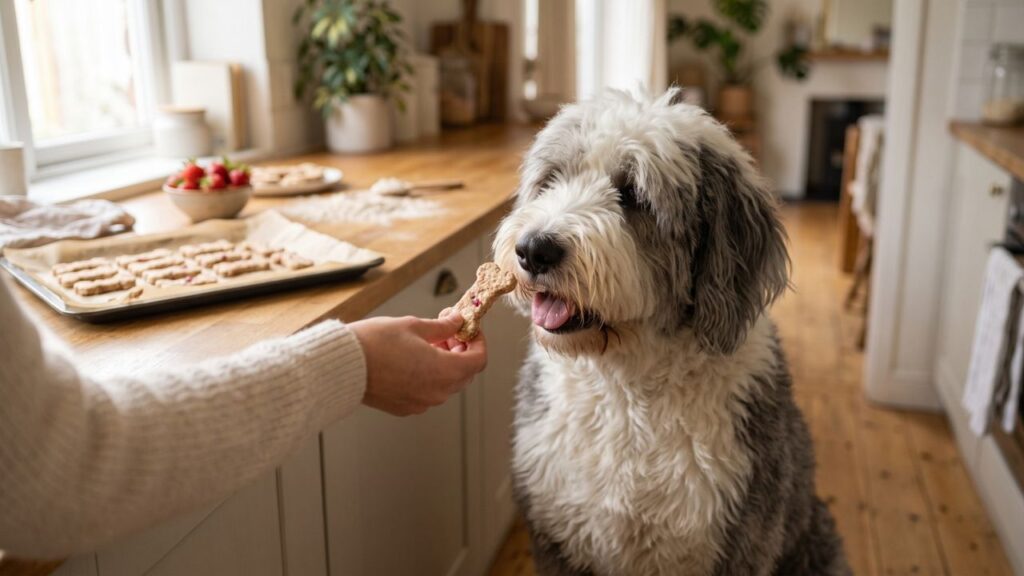
Cut them into bone shapes and they look like they came from a pet bakery.
Ingredients
- 120g (½ cup) plain canned pumpkin purée
- 60g (¼ cup) xylitol-free peanut butter
- 200g (about 2 cups) oat flour, or rolled oats blended into a fine flour
How to Make Them
- Heat the oven to 175°C (350°F) and line a baking tray.
- Mix the pumpkin and peanut butter until smooth, then stir in the oat flour until a firm dough forms.
- Roll the dough out to about 1cm thick and cut out shapes with a bone cutter.
- Bake for 20 to 25 minutes, until firm and golden at the edges.
Makes: About 25 medium biscuits.
Storage: Pumpkin keeps them soft inside, so store them in the fridge for up to a week or freeze for up to 3 months.
Tip: For crunchier biscuits, turn the oven off when they’re done and leave them inside to dry out for an hour.
Safety check: Xylitol-free peanut butter only. If the label says xylitol or birch sugar, don’t use it.
2. Frozen Banana Yogurt Bites
Creamy, cold and ready in five minutes of hands-on time. These are a good choice for a hot day or after a long walk.
Dr. Jerry Klein, the AKC’s chief vet, suggests the same mix of banana, plain yogurt and peanut butter frozen in moulds.
Ingredients
- 1 ripe banana
- 240g (1 cup) plain unsweetened yogurt
- 2 tablespoons xylitol-free peanut butter
How to Make Them
- Blend or mash the banana with the yogurt until smooth.
- Spoon the mix into a silicone mould, like a paw-print or bone mould.
- Warm the peanut butter for a few seconds so it runs, then drizzle it over the top and swirl it in with a cocktail stick.
- Freeze for 3 to 4 hours, until solid, then pop them out.
Makes: About 15 to 20 small bites, depending on your mould.
Storage: Keep them in a freezer bag for up to 2 months.
Safety check: Some dogs don’t handle dairy well. Start with one bite and watch for loose stools or tummy upset.
3. Watermelon Blueberry Pupsicles
Bright pink with blueberries frozen inside. Watermelon is mostly water, so these are one of the lowest-calorie treats you can make.
The AKC’s vet lists both melon and blueberries as good frozen treats for dogs.
Ingredients
- 300g (2 cups) seedless watermelon, rind removed
- 120g (½ cup) plain unsweetened yogurt
- 50g (about ⅓ cup) blueberries
How to Make Them
- Pick out any seeds, then blend the watermelon and yogurt until smooth.
- Drop 2 or 3 blueberries into each cavity of a silicone mould.
- Pour the watermelon mix over the top.
- Freeze for about 4 hours, until solid.
Makes: About 20 small pupsicles.
Storage: Keep them in a freezer bag for up to 2 months.
Tip: If your dog doesn’t do well with dairy, leave out the yogurt and use watermelon and blueberries alone. They’ll just be a bit icier.
Safety check: No seeds and no rind, since both can upset a dog’s stomach or cause a blockage. Freeze them in moulds rather than on popsicle sticks, which can splinter or be swallowed.
4. Strawberry Oat Bone Biscuits
Pink-flecked biscuits with a light, fruity smell. They’re softer than the pumpkin biscuits, which suits older dogs.
Strawberries are on the AKC vet’s list of safe fruits for dogs.
Ingredients
- 100g (about ¾ cup) fresh strawberries, hulled
- 1 egg
- 200g (about 2 cups) oat flour, or rolled oats blended into a fine flour
How to Make Them
- Heat the oven to 175°C (350°F) and line a baking tray.
- Mash the strawberries well with a fork, then beat in the egg.
- Stir in the oat flour until a soft dough forms. Add a spoonful more flour if it’s sticky.
- Roll out to about 1cm thick, cut into bone shapes and bake for 18 to 22 minutes, until firm.
Makes: About 20 medium biscuits.
Storage: Store in the fridge for up to a week, or freeze for up to 3 months.
Safety check: Fresh or frozen plain strawberries only. Skip strawberries in syrup or anything sweetened.
5. Pumpkin Bone Broth Gummies
Glossy orange gummies that hold their shape and are easy to break up for small dogs.
Gelatin sets the broth into a firm jelly, and pumpkin adds colour and fibre.
Ingredients
- 240ml (1 cup) bone broth with no onion or garlic
- 2 tablespoons (about 20g) unflavoured gelatin powder
- 60g (¼ cup) plain canned pumpkin purée
How to Make Them
- Pour the cold broth into a small pan and sprinkle the gelatin over the top. Leave it for 5 minutes to soak in.
- Warm it gently, stirring, until the gelatin has dissolved. Don’t let it boil.
- Take it off the heat and whisk in the pumpkin until smooth.
- Pour into a silicone mould and chill in the fridge for 2 to 3 hours, until set.
Makes: About 30 small gummies.
Storage: Keep them in a sealed container in the fridge for up to a week.
Safety check: Most shop-bought broth contains onion or garlic, which are toxic to dogs. Check the label carefully, or make your own by simmering bones in plain water. Use plain unflavoured gelatin, never flavoured jelly or Jell-O mixes, which are full of sugar and sometimes sweeteners.
How Many Treats Can Your Dog Have?
Vets generally advise keeping treats to about 10% of your dog’s daily calories. The other 90% should come from their normal, complete food.
That goes for homemade treats too. Healthy ingredients still add up.
As a rough guide, a small dog might have 1 or 2 biscuits a day, and a large dog 3 or 4. Frozen bites and gummies are smaller, so a few more is fine.
If you’re giving lots of treats during training, cut their meals down a little to make up for it. Our homemade dog training treats are made small for exactly this reason.
Ingredients to Never Use in Dog Treats
Plenty of human baking ingredients aren’t safe for dogs. Leave these out of any treat recipe you find online:
- Chocolate and cocoa
- Xylitol, also listed as birch sugar
- Grapes, raisins and sultanas
- Onion and garlic, including powders in broth
- Macadamia nuts
- Nutmeg, often found in pumpkin spice mixes
- Added salt and sugar
🐾 Not sure about an ingredient?
Search 69 common foods in our Toxic Food Calculator and see straight away whether each one is safe, needs caution or is toxic.
Check a Food →For the full list and the warning signs to watch for, see Food Toxic to Dogs: 14 Foods That Can Poison Your Dog.
Frequently Asked Questions
Can puppies eat these treats?
Yes, once they’re eating solid food, as long as you keep pieces small and give just one or two. Introduce one recipe at a time, since puppies’ stomachs are easily upset.
Can I use regular flour instead of oat flour?
Yes. Whole wheat flour works the same way in both biscuit recipes. Oat flour is a good choice if your dog doesn’t do well with wheat.
Which treat is lowest in calories?
The watermelon blueberry pupsicles, since watermelon is mostly water. They’re a good pick for dogs watching their weight.
Are frozen treats safe for dogs?
Yes, for most dogs. Keep them small, give them under supervision, and avoid sticks. If your dog tends to gulp, let the treat soften for a minute first.
Do I need a special mould?
No, but silicone moulds make frozen treats and gummies much easier to pop out. An ice cube tray works too.
How do I know if my dog doesn’t agree with a treat?
Watch for vomiting, loose stools or itching in the day after a new treat. If you see any, stop that recipe and check with your vet if it doesn’t settle.
The Bottom Line
Good homemade dog treats don’t need a long ingredient list. Three safe ingredients and a mould or cutter are enough.
Check the peanut butter for xylitol, keep everything plain, and keep treats to about 10% of your dog’s day.
For more on choosing treats, see Healthy Dog Treats: What to Look For.