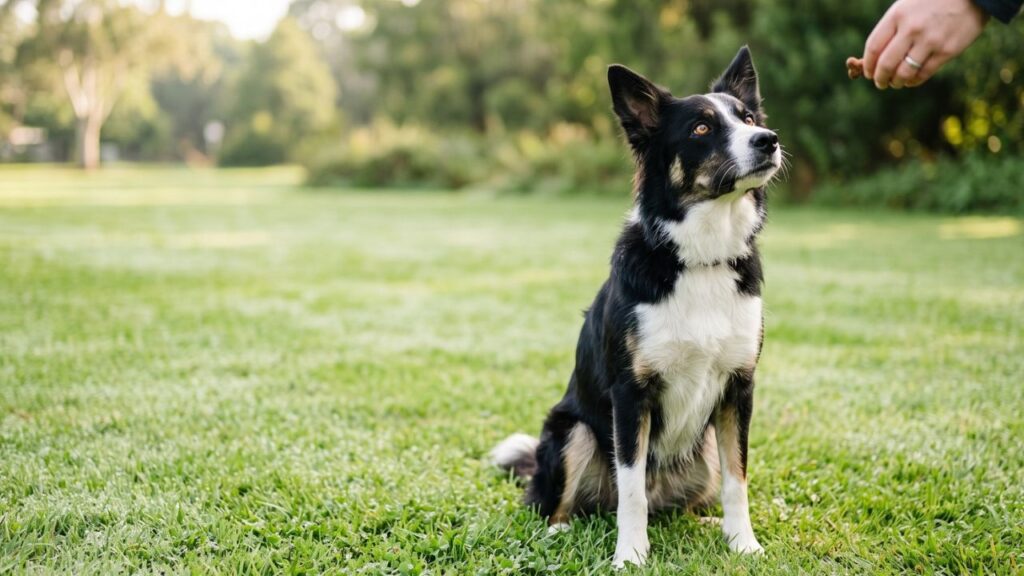
The hardest part of dog training for beginners is knowing where to start. A bouncy adolescent Labrador, a nervous rescue and a sleepy senior all need different things.
Answer six quick questions below and the quiz will suggest the best place to start, with the guides to follow next.
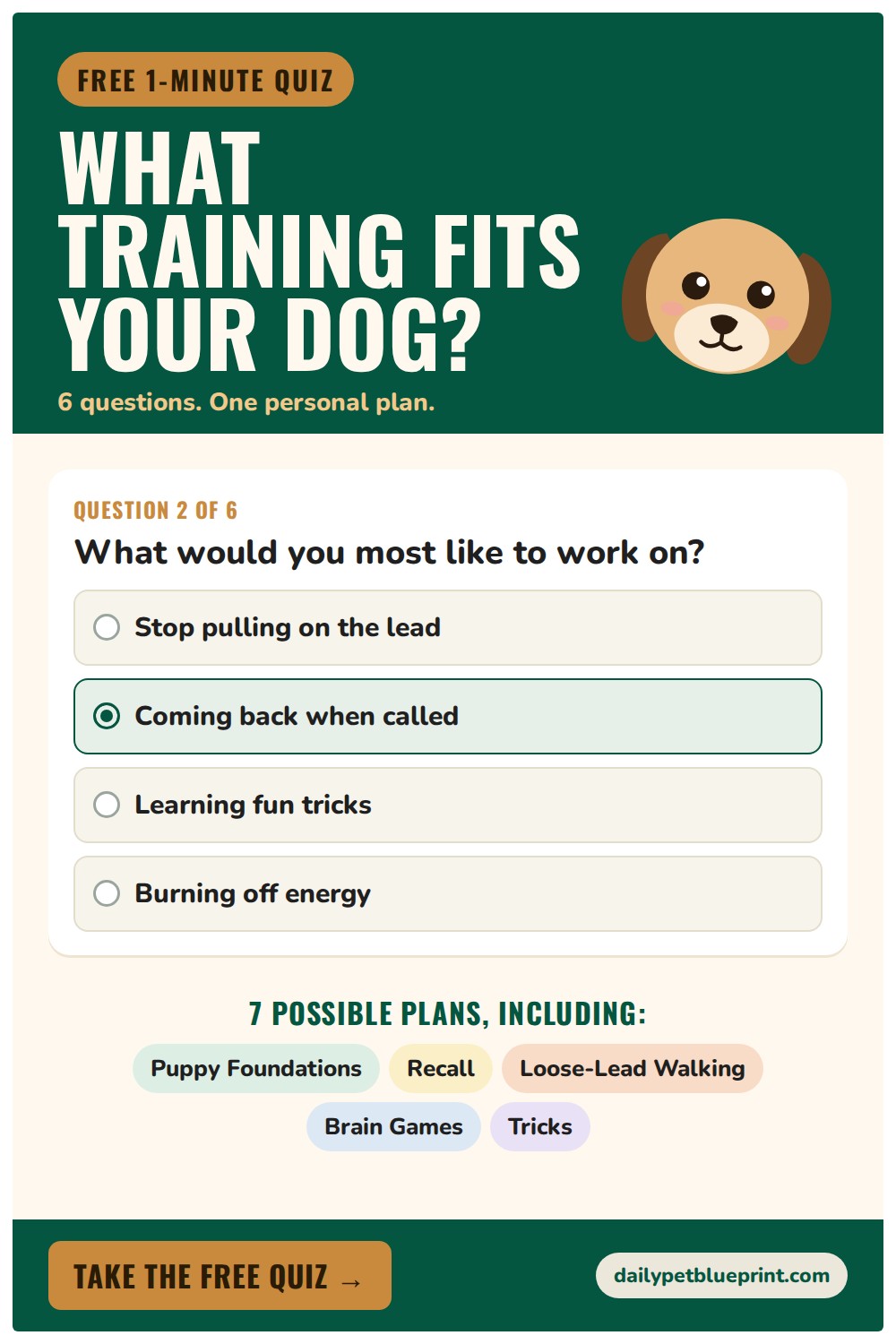
What Training Approach Fits My Dog?
Answer 6 quick questions about your dog and get a training plan to start with, plus the guides that go with it.
Why One Approach Doesn’t Fit Every Dog
Most training advice assumes your dog is calm, food-loving and keen to please. Plenty of dogs aren’t.
Age changes what a dog can manage, energy changes how much they need, and how they feel around other dogs changes what’s safe to practise. The quiz weighs all of these to pick a starting point that suits your dog.
The 7 Starting Points
- Puppy Foundations: name, recall and routine for dogs under six months. See the New Puppy Training Schedule.
- Foundation Obedience: sit, stay and come, taught with rewards. See Dog Obedience Training: The Complete Guide.
- Loose-Lead Walking: for dogs that pull. See Leash Heel Training.
- Recall: for dogs that won’t come back. See Off-Leash Training: Building Reliable Recall.
- Brain Games and Enrichment: for high-energy or bored dogs. See Brain Games to Train Your Dog’s Mind.
- Reactive Dog Plan: for dogs that bark or lunge at dogs or people. See Reactive Dog Training.
- Trick Training: for building focus and confidence. See Dog Tricks Training for Beginners.
Pick the Right Reward
A reward only works if your dog actually wants it.
Food-lovers suit clicker training, while toy-mad dogs often work harder for a quick game of tug. If you’re not sure, offer a treat, a toy and some praise, and watch which one gets the biggest reaction.
Keep Sessions Short
Five minutes of focused training beats half an hour of a bored or frustrated dog.
Two or three short sessions a day, ending while your dog is still keen, is the pattern most dogs learn fastest with. For the reasoning behind reward-based methods, read Positive Reinforcement Dog Training: How It Works.
When to Get Extra Help
If your dog has bitten, or their reactions to dogs or people are getting worse, work with a certified behaviour professional alongside any plan you follow.
A sudden change in behaviour can also point to pain, so it’s sensible to book a vet check first. For reading your dog’s signals in the moment, try our Dog Body Language Decoder. It’s 100% free to use as many times as you want.