At 9am your 8-week-old puppy is a sleepy, cuddly bundle.
By 10:15 they’re biting your ankles, shredding a slipper and peeing on the rug.
Nothing changed except the clock. They’ve simply been awake too long.
Run the day with no schedule, and you spend it reacting to accidents and meltdowns as they happen.
Let awake time stretch too far, and an overtired puppy bites harder, sleeps worse and forgets what they learned that morning.
The rule: about an hour awake, then about two hours asleep, with a potty trip every time your puppy wakes, eats or plays.
Here’s the whole day at a glance:
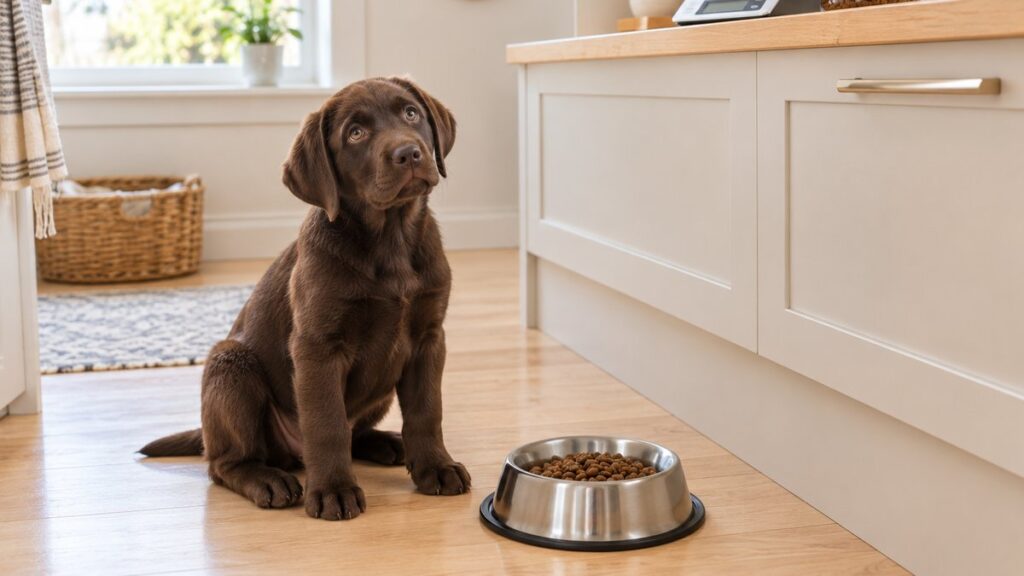
6:30 AM: Wake and potty | Goal: straight outside, praise as they go
7:00 AM: Breakfast | Goal: measured portion, bowl up after 15 minutes
7:20 AM: Potty break | Goal: most puppies go 15 to 20 minutes after eating
7:30 AM: Play and handling | Goal: gentle handling, short games, collar practice
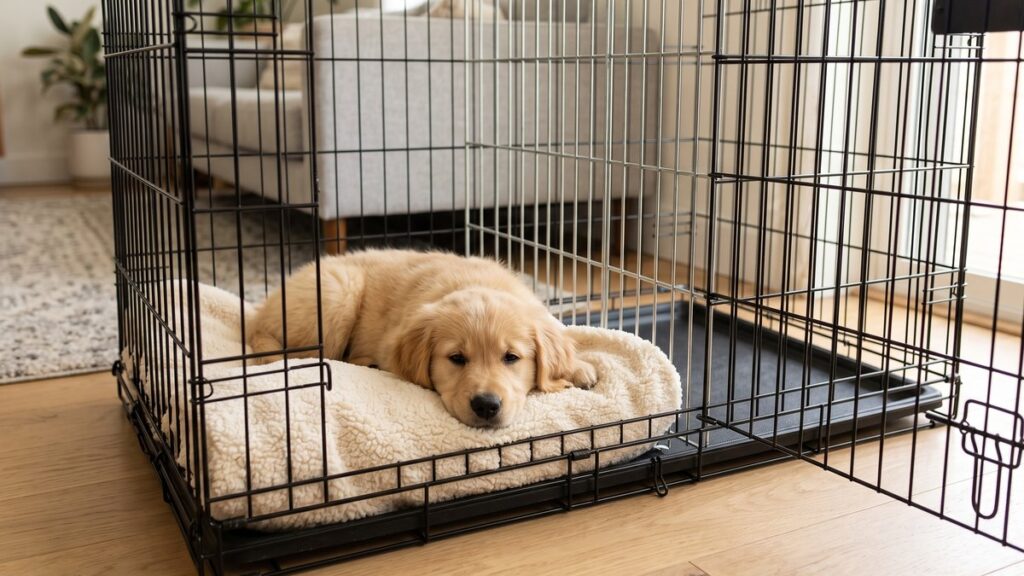
8:00 to 10:30 AM: Crate nap | Goal: dark, quiet room
10:30 AM: Potty and yard time | Goal: sniffing, exploring, 2-minute training games
11:00 AM to 12:30 PM: Crate nap | Goal: settle with a chew
12:30 PM: Lunch and potty | Goal: out within 15 minutes of eating
1:00 to 4:00 PM: Long afternoon nap | Goal: potty the moment they wake
4:00 PM: Afternoon meal and play | Goal: new sounds, calm visitors, yard time
6:30 PM: Dinner and potty | Goal: last meal, about 3 hours before bed
7:00 PM: Calm enrichment | Goal: lick mat or chew to head off the witching hour
8:00 PM: Water up | Goal: about 2 hours before bed, for fewer night wake-ups
10:00 PM: Final potty and bed | Goal: quiet and boring, straight into the crate
The awake and nap rhythm is what holds the whole day together, so that’s where we’ll start.

The Golden Rule: The 1-Hour Awake, 2-Hour Nap Rhythm
If you remember one thing from this schedule, make it this: about an hour awake, then about two hours asleep.
An 8-week-old puppy can only cope with 45 to 60 minutes of being awake before they need to sleep again. After that, things start to go wrong.
Why Overtired Puppies Throw Tantrums
Puppies can’t put themselves to sleep the way adult dogs do. When they’re past tired, they don’t slow down. They speed up.
This is the classic puppy meltdown. It looks like naughtiness, but it’s nearly always tiredness.
Watch for these signs that your puppy has gone past tired:
- Sudden zoomies around the room
- Biting harder and more often, especially hands, ankles and pant legs
- Grabbing at clothes, shoelaces or furniture
- Barking or growling at you during play
- Ignoring their name when they’d normally come running
- Getting more wound up the more you try to calm them
If you see two or three of these at once, don’t try to train it out of them. Take them out for a quick potty break, then put them in their crate or pen with a chew for a nap.
Why Nap Schedules Prevent Destructive Behavior
Most of the problems new owners complain about in the first few weeks, like biting, chewing and accidents, happen during long awake stretches.
A tired puppy has less self-control. They bite harder, chew whatever’s nearest and forget to ask to go out.
Short, planned awake windows keep your puppy in the state where they can learn. Every nap also gives you a break, which matters more than people expect in the first week.
For more on the biting side, see How to Stop Puppy Biting and Teething.
How to Run One Cycle
- Wake up: Take them straight outside to potty.
- Awake time (45 to 60 minutes): Food if it’s mealtime, then play, gentle handling and a couple of 2-minute training games.
- Wind down: A second potty break.
- Nap (1.5 to 2.5 hours): Into the crate or pen with a chew, in a quiet spot.
- Repeat.
Set a timer on your phone for the awake window. Don’t wait for your puppy to look sleepy, because by the time they do, it’s usually too late.
What If My Puppy Won’t Nap?
Most puppies fight the first few naps in a new home. Make the space dark and quiet, give them a rubber chew or a lick mat, and sit nearby for a few minutes if you need to.
Keep the routine going even if they only doze for 20 minutes. Within a few days most puppies start settling on their own.
Free · Interactive 7-day plan
Get the free First Week Puppy Plan
A day-by-day plan for your puppy’s first seven days at home: the first night, the crate routine and potty breaks. Tick off each day as you go, and get a short email with tips for the tricky bits.
Hourly 8-Week Puppy Schedule (Wake to Bedtime)

The times in the table are a guide, not a rule. If your day starts at 7:30 AM, move everything an hour later. What matters is keeping the same order every day.
Here’s what to actually do in each block.
6:30 AM: Wake and Potty Break
- Carry your puppy straight outside before their feet touch the floor. At 8 weeks, many can’t make it to the door without an accident.
- Go to the same spot each time and use the same short cue, like “busy busy”. Stay quiet and boring until they go, then praise straight away, while they’re finishing.
- No play until they’ve been. That way they learn going outside comes first.
7:00 AM: Breakfast and Water
- Measure the portion from your puppy food’s feeding guide, or use our Puppy Weight Calculator to check they’re on track.
- Pick the bowl up after 15 minutes, eaten or not. Set mealtimes make potty times far easier to predict.
- Hold back a handful of kibble to use as training rewards later in the day.
7:20 AM: Second Potty Break
- Eating sets the gut moving. Most puppies need to go again 15 to 20 minutes after a meal, often a poop.
- Go to the same spot and give them up to 5 minutes. If nothing happens, bring them in, watch them closely and try again in 10 minutes.
7:30 AM: Supervised Play and Handling
- Spend a few minutes touching their paws, ears, mouth and tail, with a treat after each. This makes vet visits and grooming much easier later on.
- Put a light collar on for 5 minutes and take it off again before they get bothered by it.
- Play a simple name game: say their name once, and reward when they look at you. Keep the whole session to about 30 minutes.
8:00 AM to 10:30 AM: Crate Nap #1
- A dark, quiet room helps, and white noise or a fan covers household sounds.
- If they wake and cry after an hour, take them out to potty with no fuss, then straight back in.
10:30 AM: Potty Break and Light Walk
- Until your vet says your puppy’s vaccinations are complete, keep walks to your own yard. Let them sniff, explore and get used to grass, gravel and outdoor sounds.
- You can carry them out to watch the world go by, which counts as early socialization.
- Fit in two or three training games of 1 to 2 minutes each: name, sit and hand touch work well.
11:00 AM to 12:30 PM: Crate Nap #2
- This nap teaches your puppy that the crate is the normal place to rest, not a punishment.
- Give them a stuffed rubber chew to settle with. Licking and chewing are calming for puppies.
12:30 PM: Lunch and Potty Break
- Same as breakfast: measured portion, bowl up after 15 minutes.
- Out to the potty spot within 15 minutes of eating.
1:00 PM to 4:00 PM: Afternoon Nap Cycle
- This is the longest daytime sleep. Some puppies wake halfway through, so if yours stirs and cries, take them out, then back in.
- Whenever they wake, go straight out to potty. No exceptions.
4:00 PM to 6:30 PM: Afternoon Meal and Play
- Start with the afternoon meal, then straight out to potty. Puppies under about 12 weeks do best on four small meals a day, and this is the third.
- After the long nap, your puppy will be full of energy. This is a good time for a short yard session, new sounds like the vacuum in another room, and meeting family members calmly.
6:30 PM: Dinner and Potty Break
- The last meal of the day. Feeding about 3 hours before bed gives their gut time to empty, so they’re not waking you to poop. For meal sizes and how the number of meals changes with age, see our Puppy Feeding Schedule by Age.
- Straight out to the potty spot afterwards.
7:00 PM: Calm Mental Enrichment
- Early evening is when many puppies go wild, often called the “witching hour”. It’s usually tiredness plus a busy house.
- Swap rough play for calm activities: a lick mat with a little wet food, a frozen stuffed chew, or a snuffle mat with kibble hidden in it.
- If they’re biting and zooming, it’s nap time, not play time.
8:00 PM: Water Lifted
- Take the water bowl up 2 to 2.5 hours before bed, so their bladder isn’t full at night.
- Don’t do this on a hot day or if your puppy has been very active, and always follow your vet’s advice if they’ve said otherwise. A puppy should never go without water when they need it.
10:00 PM: Final Potty and Bedtime
- Keep this trip quiet and boring: lights low, no play, no chat.
- Once they’ve been, it’s straight into the crate with a chew. Say goodnight and leave the room or switch off the light.
For more on how potty gaps stretch as your puppy grows, see Puppy Potty Training Schedule by Age.
Puppy Daily Schedule at 12 Weeks (3 Months Old)
Keep the same order of the day as your puppy grows. What changes is the length of each gap. By about 12 weeks, most puppies can handle this:
Awake time: 60 to 90 minutes between naps, up from 45 to 60
Meals: 3 a day, usually by dropping the 4:00 PM meal and keeping the same daily total
Potty breaks: every 2 to 3 hours while awake, plus after every nap, meal and play session
Naps: still several a day, so keep the crate naps in the routine
Nights: often down to one night break, and some puppies start sleeping through
Stretch one thing at a time and give it a few days. If accidents or meltdowns come back, go back a step for a week.
Nighttime Crate Routine and Handling 2 AM Potty Breaks
Nights are the hardest part of the first few weeks for most owners. Some crying is normal, and most of it settles within a week or two if you’re consistent.
How Long Can an 8-Week Puppy Last Overnight?
A common rule of thumb is that a puppy can hold their bladder for about one hour per month of age, plus one. That’s roughly 3 hours for an 8-week-old puppy, and less when they’re active.
So if bedtime is 10:00 PM, expect one, possibly two, night breaks. Most puppies can sleep through the night by around 4 to 5 months old.
Set Up the Crate for Night One
- Put the crate in or next to your bedroom for the first couple of weeks. Being able to hear and smell you helps them settle, and you’ll hear when they need to go.
- Cover three sides with a light blanket to make it feel like a den.
- Add something that smells of home, like an old T-shirt you’ve worn, or a blanket from the breeder.
- Use white noise or a fan to cover small household sounds.
- Size it right. Use a divider so there’s just enough room to stand, turn and lie down. Too much space and they’ll use one end as a bathroom.
For a full step-by-step plan, see Crate Training a Puppy: The 5-Day Method for Quiet Nights.
Set an Alarm Before They Wake
Instead of waiting for your puppy to cry, set an alarm for about 2:00 AM and wake them for a potty break.
This stops them learning that crying gets them out of the crate. Every few nights, push the alarm back by 15 to 30 minutes, until they’re sleeping through.
The 2 AM Potty Break, Step by Step
- Keep the lights low. Use your phone flashlight if you need to.
- Carry your puppy straight to their potty spot.
- Don’t talk, play or make eye contact beyond a quick, quiet cue word.
- Once they’ve been, give one calm “good” and nothing more.
- Carry them straight back to the crate. No food, no cuddles on the sofa.
- The whole trip should take under 5 minutes.
The aim is for night trips to be so dull that your puppy goes straight back to sleep.
Crying vs Needing to Go: How to Tell
This is the question every new puppy owner asks at 2 AM. Here’s how to tell the difference.
Likely needs to go out:
- They’ve been asleep and suddenly wake up restless
- They’re circling, sniffing the crate floor or scratching at the door
- The whining gets steadily louder rather than coming and going
- It’s been 3 hours or more since their last potty break
Likely crying for company:
- It starts as soon as you’ve put them in or left the room
- They went to the potty less than an hour ago
- They go quiet when they hear you, then start again when you move away
- The crying comes in bursts with quiet gaps in between
If it’s company, wait a few minutes before reacting. You can sit by the crate and put your fingers through the bars, but don’t open the door unless it’s a potty trip.
If you’re not sure, take them out. An accident in the crate sets potty training back further than one extra trip outside.
If There’s an Accident in the Crate
Don’t scold your puppy. They won’t connect it with what happened, and it can make them anxious about the crate.
Clean it with an enzyme cleaner, which removes the smell that tells them to go there again. Then check the crate isn’t too big and bring the night alarm a little earlier.
If crying goes on night after night, Why Does My Puppy Cry at Night? covers the other common causes.
Printable Daily Puppy Routine Checklist
The easiest way to stick to a puppy schedule is to have it where everyone can see it. Print this and put it on the fridge, so everyone in the house follows the same routine.
It includes:
- The full hourly routine from wake-up to bedtime
- Tick boxes for each block, for all 7 days of the week
- A night checklist for water, the final potty trip and the 2 AM alarm
- The overtired signs that mean it’s nap time

🐾 Free 8-Week Puppy Daily Schedule
A one-page printable with the full routine and tick boxes for every day of the week.
Open the Free Printable Schedule (PDF) →How to Use It
- Tick each block as you do it, so nobody has to ask “has she been out yet?”
- Mark any accidents in the box with an X. After a few days, you’ll spot the times they happen and can add an extra potty break.
- Start a fresh sheet each week. By week 3 or 4, you’ll probably be stretching the gaps.
Want to come back to it later? Save this page to your Pinterest puppy board.
🐾 Is your dog’s training on track?
Enter your dog’s age and size to see what’s realistic right now, how long sessions should be, and whether problems like biting or pulling are normal for their age.
Try the Training by Age Checker →Frequently Asked Questions
How long can an 8-week-old puppy hold their pee?
About 2 to 3 hours during the day when they’re resting, and much less when they’re playing. After waking, eating or playing, take them out straight away.
Should I wake my puppy up to pee at night?
Yes, for the first few weeks. Setting an alarm before they wake means you get there before an accident, and they don’t learn that crying works.
How many meals should an 8-week-old puppy eat?
Four small meals a day until about 12 weeks, then three until around 6 months. In this schedule they’re at 7:00 AM, 12:30 PM, 4:00 PM and 6:30 PM.
What if I work during the day?
An 8-week-old puppy can’t be left alone for a full working day. You’ll need someone to come in every 2 to 3 hours for potty breaks, a meal and some company.
When should I change the schedule?
From around 10 to 12 weeks, you can stretch awake time to 60 to 90 minutes and push potty breaks a little further apart. Go slowly and watch for accidents.
Is it normal for my puppy to cry in the crate the first few nights?
Yes. They’ve just left their mom and littermates. With a consistent routine, most puppies settle within one to two weeks.
The Bottom Line
An 8-week-old puppy needs a simple rhythm: about an hour awake, then about two hours asleep, with a potty trip every time they wake, eat or play.
Keep the order the same every day, plan for one or two night breaks, and keep those night trips dull.
Once the routine is in place, the next thing most owners need help with is those needle-sharp teeth: How to Stop Puppy Biting and Teething: Proven Redirection Methods.
Your New Puppy Journey
Puppy Potty Training & Crate Training
Crate training first, then potty training, in the order you’ll need them.
Start hereChoose the right crate →See all steps
Crate Training
- What Size Crate for a Puppy?
- First Night With a New Puppy
- Why Does My Puppy Cry at Night?
- How to Crate Train a Puppy: The 5-Day Method
- Puppy Crate Training Tips
- What to Do When Your Puppy Cries or Whines in the Crate
- When to Stop Crate Training
Potty Training
- Puppy Potty Training Routine
- Puppy Potty Training Schedule by Age
- Puppy Feeding Schedule by Age
- Potty Training a Puppy With Bells
- Potty Training an Apartment Dog
- How to Stop Your Puppy Peeing in the House
- Potty Training Regression
More for New Puppy Owners
Free · Interactive 7-day plan
Get the free First Week Puppy Plan
A day-by-day plan for your puppy's first seven days at home: the first night, the crate routine and potty breaks. Tick off each day as you go, and get a short email with tips for the tricky bits.