The first night home is often the most overwhelming hours of a puppy’s life. Separated from their mother and littermates for the first time, their natural instinct in an empty, quiet room is to cry for survival, not to test your patience.
How you handle the first few hours of darkness sets the tone for weeks of sleep. The mistake most new owners make is banishing the crate to a distant laundry room or rushing to comfort crying with middle-of-the-night playtime.
Surviving night one comes down to three non-negotiables: proximity to you, an intentional crate footprint, and a boring bathroom routine.
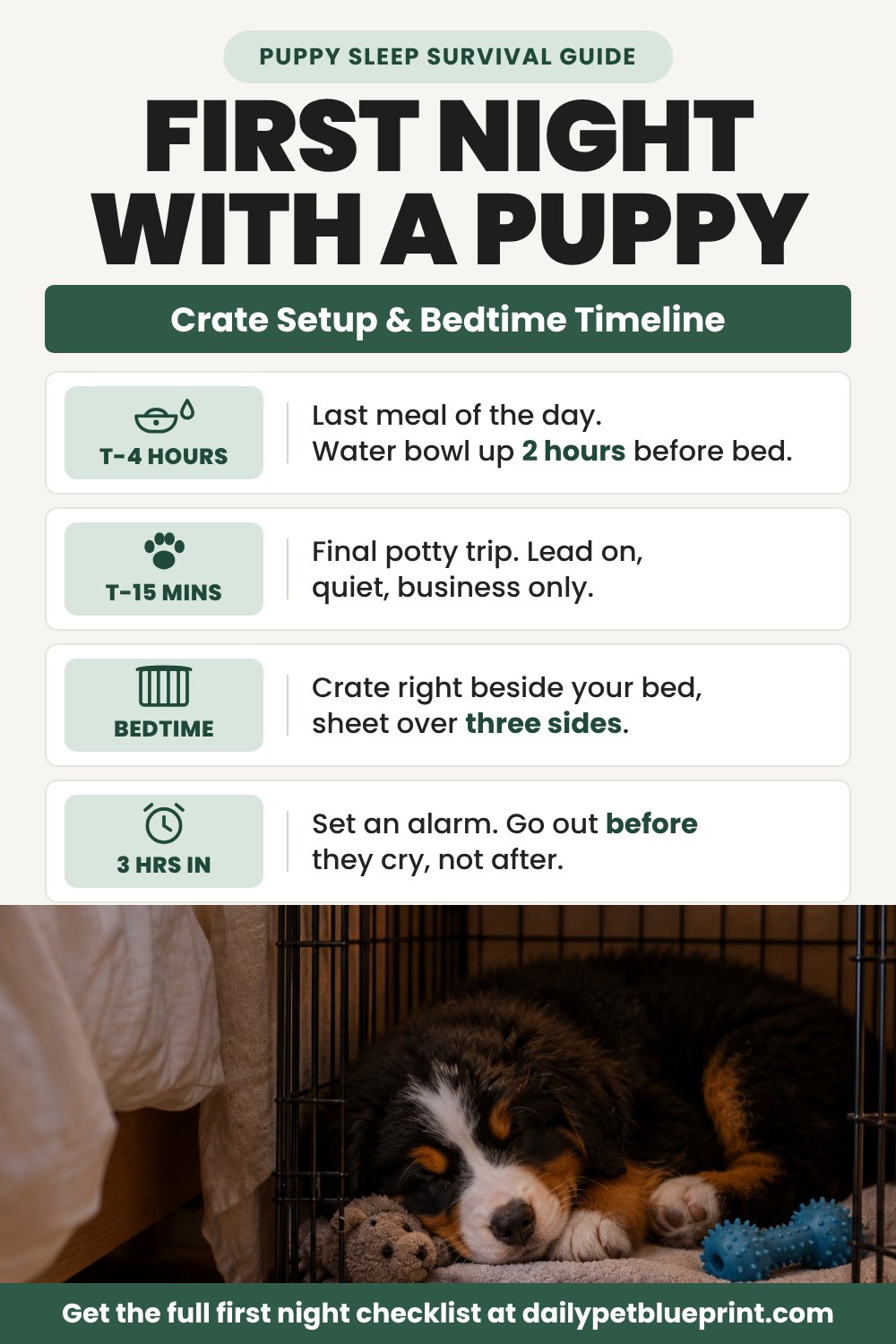
Bedtime Phase: 2 Hours Before Bed Action: Cut off food and large water bowls; engage in gentle, calm play.
Bedtime Phase: 15 Mins Before Bed Action: Final potty trip outside; zero excitement or high-energy praise.
Bedtime Phase: Crate Placement Action: Right next to your bed at mattress height so they smell and hear you.
Bedtime Phase: Midnight Potty Trips Action: Out on a leash, 3 minutes to go, no talking or play, straight back into the crate.
Set Up the Crate Before Your Puppy Comes Home
Get the crate built and in place a day or two before pickup. Trying to assemble a wire crate at 10pm with a crying puppy under one arm is nobody’s idea of a good start.
Get the Size Right
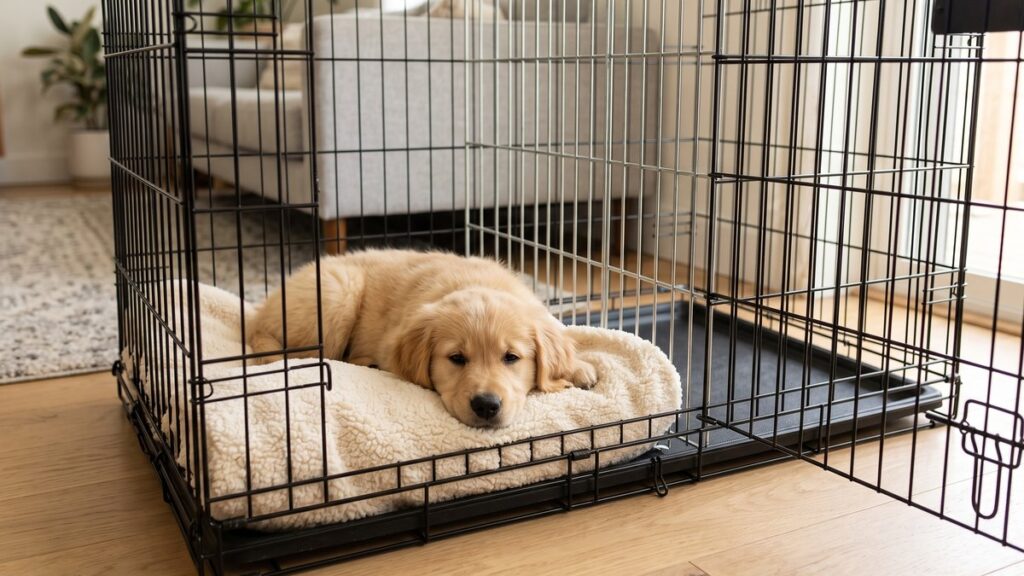
Your puppy should be able to stand up, turn around and lie down stretched out, and not much more. A crate with room to spare gives them a sleeping end and a toilet end, which works against house training from night one.
The easiest fix is a crate sized for their adult size with a divider panel, moved back as they grow. Not sure how big your puppy will get? Our Puppy Weight Calculator gives you an estimate, and Choosing the Right Size and Type of Crate covers the rest.
Put It Right Next to Your Bed
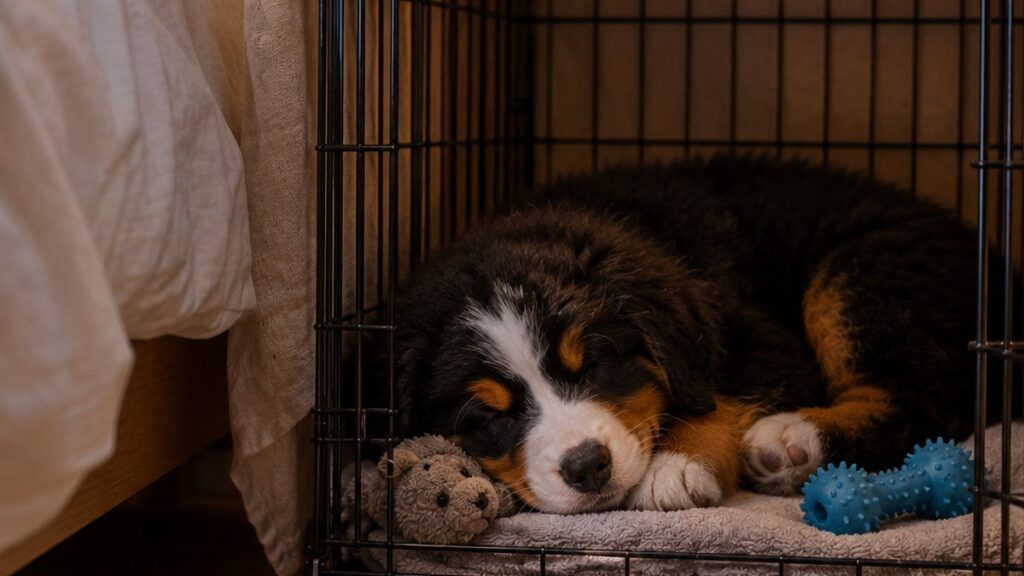
For the first few weeks, the crate belongs in your bedroom, close enough that you can drop a hand down to it without getting up. Your puppy can hear you breathing and smell you, which is the closest thing they’ve got to the litter they just left.
If you can, raise it to roughly mattress height on a sturdy low table or a chest. It isn’t essential, but being able to see you as well as hear you settles a lot of puppies faster.
Keep it away from radiators, drafty doors and direct sun from the window in the morning.
What Goes Inside the Crate
- A flat, washable mat or an old towel. Skip the expensive plush bed for now. It’ll get chewed or wet in the first week.
- Something that smells of the litter. Ask the breeder or rescue for a small blanket or toy that’s been with the mother and littermates. Many will happily give you one if you ask before pickup day.
- An unwashed T-shirt you’ve worn. It helps your puppy learn your smell as the new “safe” one.
- One safe chew or rubber toy. Nothing small enough to swallow, and nothing with stuffing they can pull out.
- A heartbeat toy, if you have one. These soft toys have a pulsing insert and a warm pack, and mimic sleeping against a littermate.
Leave out: a water bowl overnight (it gets tipped and fills the bladder), puppy pads (they teach your puppy it’s fine to go in the crate), and the collar. Tags and buckles can catch on the wire.
Make It Feel Like a Den
- Drape a light, breathable sheet over the top and three sides of a wire crate, leaving the front open. Less to look at means less to react to.
- A fan or white noise machine on low covers creaks, traffic and the fridge humming downstairs.
- A dim night light helps you on the 2am toilet run without switching on the big light and waking everyone up properly.
Puppy-Proof the Bedroom
Get down to puppy height and look around. Phone chargers, socks, hair ties, earrings on the bedside table and anything under the bed are all fair game the moment your puppy is out of the crate. Clear them before you bring your puppy home, not after.
The First Afternoon: Set Up Bedtime Before It Starts
A good first night starts hours earlier. If you can choose your pickup time, go for late morning or midday. That gives your puppy a full afternoon to explore, nap and get used to the crate before it’s dark.
- Go straight to the toilet spot. Before you even go inside, carry your puppy to the patch of grass you want them to use and give them a few minutes. Praise quietly if they go.
- Keep the first day small. One or two rooms, not the whole house. And no visitors. The neighbors and grandparents can meet the puppy next weekend.
- Make the crate a good place. Leave the door open and toss a few treats inside every now and then. Let your puppy wander in and out on their own.
- Feed their meals in the crate. Put the bowl just inside the door at first, then further back. Food in the crate is the quickest way to make it feel like theirs.
- Use the crate for an afternoon nap. When your puppy is clearly sleepy, pop them in with a chew and sit nearby. A short, easy crate nap in daylight makes the night-time version much less of a shock.
- Take them out often. After every nap, every meal and every bit of play. An 8-week-old puppy can need to go every 30 to 60 minutes while awake.
Keep the same food the breeder or rescue was using, and the same feeding times if you can find out what they were. A new home is enough change for one week without a new diet as well.
Free · Interactive 7-day plan
Get the free First Week Puppy Plan
A day-by-day plan for your puppy’s first seven days at home: the first night, the crate routine and potty breaks. Tick off each day as you go, and get a short email with tips for the tricky bits.
The Bedtime Routine, Step by Step
Here’s what the evening looks like with a 10:30pm bedtime. Shift everything earlier or later to suit your house, but keep the order and the gaps.
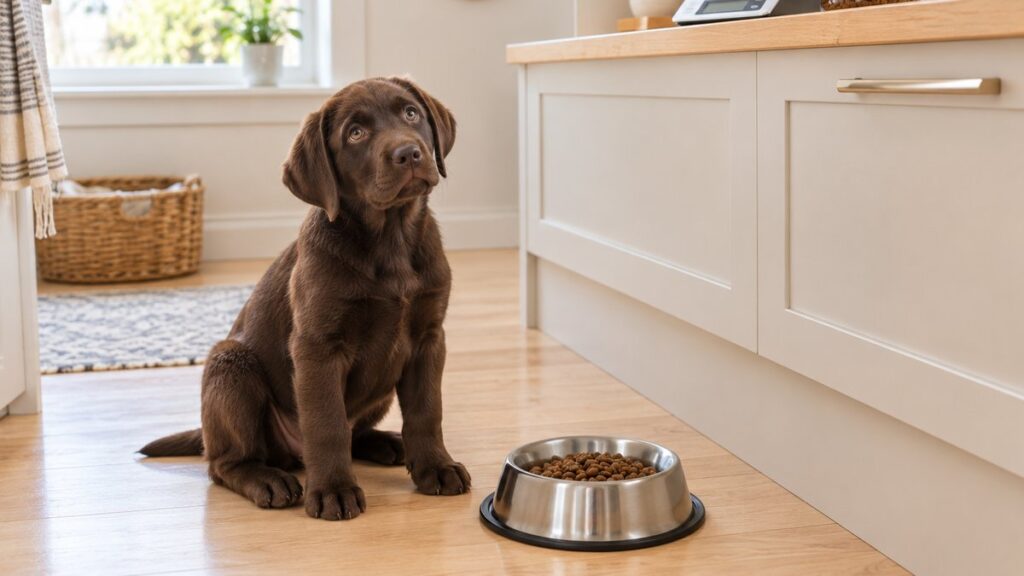
- 6:30pm: Last meal of the day. Feeding 3 to 4 hours before bed gives your puppy time to digest and go to the toilet before lights out.
- 7pm: Toilet trip. Puppies usually need to go 10 to 30 minutes after eating.
- 8:30pm: Water bowl up. Lift the bowl about 2 hours before bed. Your puppy can still have a few laps if it’s warm, but not a long drink.
- 8:30 to 9:30pm: Calm time. Gentle play, a short training game or a stuffed rubber toy. No wrestling or zoomies, which wind a puppy up just when you want them winding down. If evenings turn into chaos, our Puppy Witching Hour guide covers the evening crazies.
- 10pm: Toilet trip. Then a quiet half hour together.
- 10:15pm: Final toilet trip. Business only. Lead on, same spot, quiet praise, straight back in.
- 10:30pm: Into the crate. Pop them in with their chew, close the door, lights low, and get into bed yourself. Keep it calm and matter-of-fact. A long, emotional goodbye tells your puppy something big is happening.
Middle-of-the-Night Toilet Trips
An 8-week-old puppy can’t hold on all night. A rough guide is one hour per month of age, plus one, so expect a young puppy to need to go about every 3 hours. Plan on at least one trip, and often two, on the first night.
Set an alarm rather than waiting for crying. For the first few nights, get up about 3 to 4 hours after bedtime and take your puppy out before they wake you. That way you’re not teaching them that crying opens the door, and you’re far less likely to have an accident in the crate.
Each night-time trip should be as dull as you can make it:
- Keep the lights dim and say as little as possible.
- Carry your puppy out, lead on, so they don’t stop for an accident on the way.
- Go to the same toilet spot and wait about 3 minutes.
- Quiet “good dog” when they go. No treats, no games, no cuddles on the sofa.
- Straight back into the crate, door closed, lights off.
If they don’t go within a few minutes, take them back anyway and try again in 20 minutes if they’re restless. A party at 3am teaches your puppy that 3am is party time.
Keep a note of when they wake and when they go. After a few nights you’ll see a pattern, and you can push the alarm back by 15 to 30 minutes at a time as your puppy grows.
When Your Puppy Cries
Some crying on the first night is almost certain. What matters is working out which kind it is.
- Crying straight after you close the door: this is loneliness, not a full bladder. Stay where you are, drop your fingers against the crate so they can smell you, and talk softly or not at all. Most puppies settle within 10 to 20 minutes.
- Crying after 2 or more hours of sleep: assume they need the toilet. Wait for a few seconds of quiet, then do the boring toilet trip above.
- Frantic crying, pacing and scratching at the door: take them out straight away. Most puppies will do anything to avoid soiling where they sleep.
Don’t leave a young puppy to scream for hours to “cry it out” on the first night. It doesn’t teach them anything except that the crate is a frightening place. Being close, calm and boring works much better. For more on telling the cries apart, see Why Does My Puppy Cry at Night?
Can Your Puppy Sleep in Your Bed Instead?
It’s tempting, especially at 1am. But a loose puppy in the bed means no warning before an accident on the duvet, a real risk of a fall from the mattress, and no early house training. A crate right next to the bed gives your puppy almost all the comfort of sleeping with you, without the downsides.
If you’d like your dog on the bed when they’re grown, that’s fine. Wait until they’re fully house trained and sleeping through the night first.
What If the Crate Can’t Go in Your Bedroom?
Stairs, a partner who’s a light sleeper or a tiny bedroom can all get in the way. Two options work well:
- Sleep downstairs for a few nights. A camp bed or the sofa next to the crate for the first 3 to 5 nights gets you the same result. It’s not glamorous, but it’s short.
- Use a second crate. A cheap travel crate in the bedroom for nights and the main crate downstairs for daytime naps.
What doesn’t work well is shutting a brand-new puppy alone in the kitchen or utility room on night one. You’ll get more crying, a longer settling-in period and a puppy who learns the crate means being abandoned.
Morning: The First Toilet Trip of the Day
Puppies wake early, often around 5 or 6am. When they stir, carry them straight outside before you do anything else, kettle included. A puppy who’s held on all night can’t wait while you find your slippers.
This is the one trip of the day where you can be properly excited. Big praise when they go, then breakfast.
If they start crying at 4:30am wanting to start the day, treat it like any other night-time trip: out, toilet, back in the crate, lights off. Getting up for good at 4:30am just once teaches them that 4:30am is morning.
Nights 2 to 7: What to Expect
- Night 2 is sometimes worse than night 1. The excitement and tiredness of moving day has worn off, and your puppy has realized this is now home. Stick with the plan.
- Nights 3 to 5: most puppies settle within a few minutes of lights out and wake only for toilet trips.
- By the end of week one: you should have a predictable routine and a puppy who walks into the crate at bedtime without much fuss.
Keep the crate beside your bed for at least 2 to 3 weeks. If you want it in another room long term, move it gradually, a few feet every few nights, once your puppy is sleeping well.
For building up daytime crate time over the first week, see How to Crate Train a Puppy at Night Without Crying: The 5-Day Method.
First Night Checklist
- Crate built, sized right, divider in place
- Crate beside your bed, away from radiators and drafts
- Flat washable mat or towel inside
- Blanket or toy that smells of the litter
- An unwashed T-shirt of yours
- One safe chew
- Sheet to cover three sides of the crate
- Fan or white noise machine
- Dim night light
- Lead and collar by the bedroom door for night trips
- Alarm set for 3 to 4 hours after bedtime
- Enzyme cleaner and kitchen roll within reach
- Torch or phone light for the garden
- Bedroom cleared of cables, socks and small objects
Still buying the basics? Tick everything off with our interactive New Puppy Checklist.
Common First Night Mistakes
Putting the crate in another room on night one. Your puppy has never slept alone in their life. Distance turns normal whining into panic.
A crate that’s too big. Room for a toilet corner means you’ll find one.
Letting them out while they’re screaming. Wait for a few seconds of quiet first, or you’ll teach them screaming opens the door.
Making night trips fun. Lights on, chatting and a game on the lawn tell your puppy night-time is for getting up.
A big dinner late in the evening. Food in late means toilet trips late.
Too many visitors on day one. An overtired, overexcited puppy settles badly at bedtime.
Telling them off for an accident. Clean it up with enzyme cleaner and take them out more often. A puppy who’s scolded learns to hide accidents, not to stop having them.
Frequently Asked Questions
How long will my puppy cry on the first night?
With the crate beside your bed, most puppies cry on and off for 10 to 30 minutes before settling, then wake for toilet trips. It usually gets much better within 3 to 5 nights.
Should I wake my puppy up to go to the toilet?
For the first few nights, yes. An alarm 3 to 4 hours after bedtime gets you there before an accident and before crying starts. As your puppy grows, push it later until they’re sleeping through.
Should I cover the crate at night?
Covering the top and three sides with a light, breathable sheet helps most puppies settle. Leave the front open, and take the cover off if your puppy pulls it through the bars and starts chewing it.
Is it OK to leave water in the crate overnight?
For a healthy puppy, it’s better not to. Give plenty of water during the day and lift the bowl about 2 hours before bed. In very hot weather, or if your vet advises otherwise, follow their advice.
What if my puppy has an accident in the crate?
Don’t tell them off. Take them out, clean the crate with an enzyme cleaner so no smell is left, and put a fresh towel in. Then check the crate size and set your night alarm a little earlier.
When will my puppy sleep through the night?
Most puppies can manage 6 to 8 hours somewhere between 12 and 16 weeks old, though every puppy is different. Small breeds often take a little longer because their bladders are smaller.
The Bottom Line
The first night isn’t about a puppy who never makes a sound. It’s about keeping them close, keeping toilet trips dull, and keeping the routine the same every night, so your puppy learns quickly that the crate is a safe place to sleep.
Get through the first week, and the nights get easier fast. If the crying carries on past the first few nights, the next guide explains why it happens and how to stop it: Why Does My Puppy Cry at Night? How to Stop It.
Your New Puppy Journey
Puppy Potty Training & Crate Training
Crate training first, then potty training, in the order you’ll need them.
Start hereChoose the right crate →See all steps
Crate Training
- What Size Crate for a Puppy?
- First Night With a New Puppy
- Why Does My Puppy Cry at Night?
- How to Crate Train a Puppy: The 5-Day Method
- Puppy Crate Training Tips
- What to Do When Your Puppy Cries or Whines in the Crate
- When to Stop Crate Training
Potty Training
- Puppy Potty Training Routine
- Puppy Potty Training Schedule by Age
- Puppy Feeding Schedule by Age
- Potty Training a Puppy With Bells
- Potty Training an Apartment Dog
- How to Stop Your Puppy Peeing in the House
- Potty Training Regression
More for New Puppy Owners
Free · Interactive 7-day plan
Get the free First Week Puppy Plan
A day-by-day plan for your puppy's first seven days at home: the first night, the crate routine and potty breaks. Tick off each day as you go, and get a short email with tips for the tricky bits.