Most crate training problems don’t start with the crate.
They start with small timing mistakes: a puppy left in a little too long, a crate divider placed too far back, or a latch opened at the exact second they whine.
The most critical factor to get right from day one is duration.
While awake, a young puppy’s bladder capacity is measured in minutes, not hours.
Expecting them to hold it longer than their developmental limit doesn’t teach patience, it forces them to soil their sleeping space and ruins their natural instinct to keep the den clean.
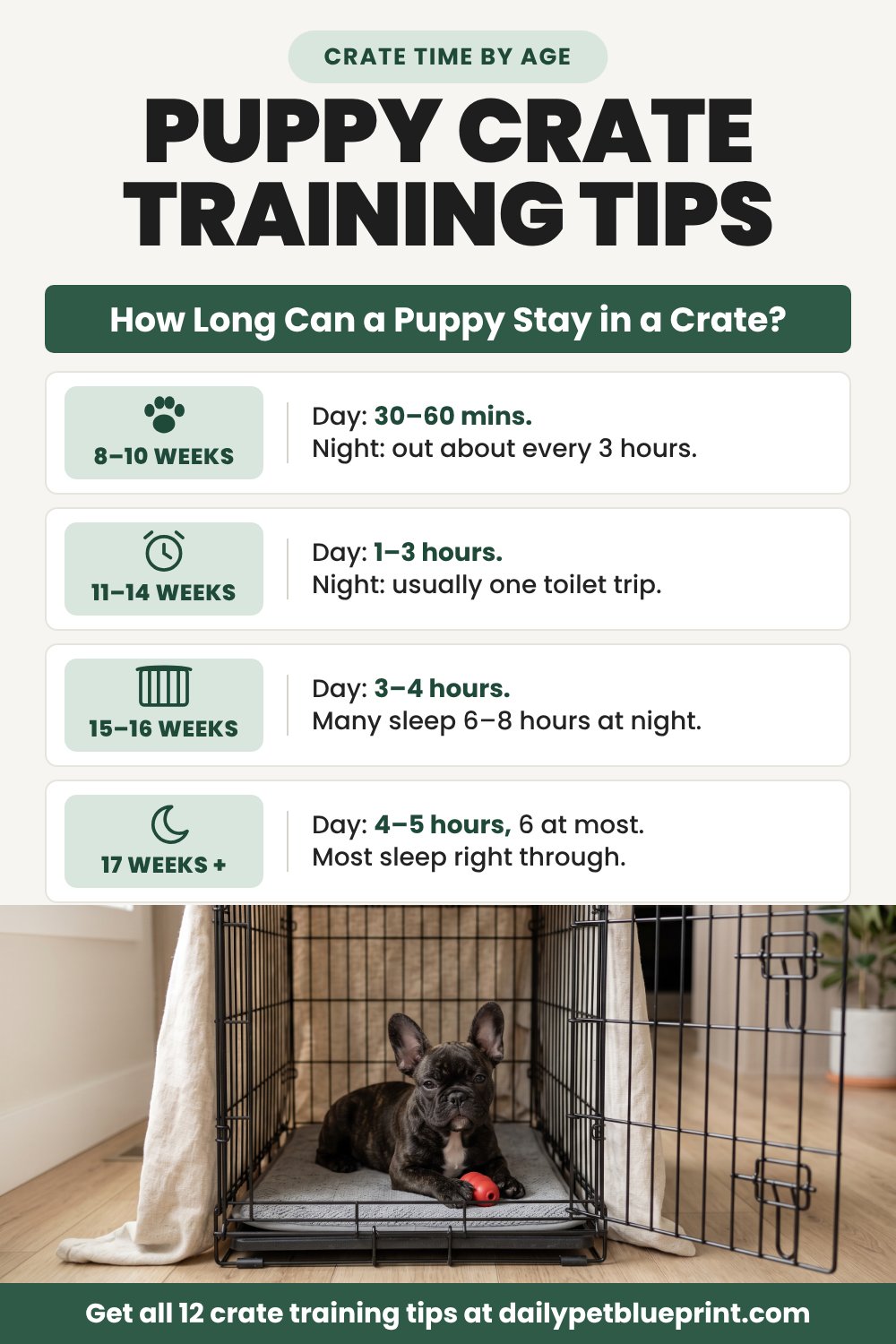
Before adjusting your routine, use this age-by-age breakdown to check your puppy’s realistic daytime and overnight limits:
Puppy Age: 8 to 10 Weeks Max Crate Limit: Day: 30–60 minutes (awake) | Night: 1–2 potty breaks (every ~3 hours)
Puppy Age: 11 to 14 Weeks Max Crate Limit: Day: 1–3 hours | Night: 1 potty break (stretches of 4–6 hours)
Puppy Age: 15 to 16 Weeks Max Crate Limit: Day: 3–4 hours | Night: 6–8 hours
Puppy Age: 17 Weeks to 6 Months Max Crate Limit: Day: 4–5 hours (6 at the absolute most) | Night: 7–8 hours (sleeps through)
Puppy Age: Adult (6+ Months) Max Crate Limit: Day: 4–6 hours maximum | Night: Full night
These are upper limits, not targets. Plenty of puppies need to come out sooner, and it’s always better to take them out early than to clean up an accident in the crate.
1. Know How Long Your Puppy Can Stay in the Crate
This tip comes first because getting it wrong undoes almost everything else.
A puppy who’s left in the crate longer than their bladder can manage has two choices: cry until someone comes, or go where they sleep.
Neither is what you want them to learn.
Daytime
Awake puppies need the toilet far more often than sleeping ones. Playing, drinking and eating all speed things up. That’s why the daytime limits in the chart are so much shorter than the overnight ones.
Most daytime crate sessions should be naps anyway. A young puppy goes into the crate tired, sleeps for an hour or two, then comes straight out to the toilet. If your puppy is wide awake and crying, they’ve probably either been in too long or went in before they were ready to settle.
Overnight
A sleeping puppy’s body slows down, so they can hold on longer. A rough guide for nights is one hour per month of age, plus one. That’s about 3 hours for an 8-week-old puppy.
For the first few weeks, set an alarm and take your puppy out before they wake you, then push the alarm later by 15 to 30 minutes every few nights. Our Puppy Potty Training Schedule by Age shows how the gaps stretch as your puppy grows.
What If You Work Full Time?
An 8-hour working day in a crate isn’t fair on any puppy, and it isn’t really fair on adult dogs either. If you can’t be home, you’ll need a plan that doesn’t rely on the crate alone:
- Someone to come in at lunchtime. A family member, a neighbor or a dog walker who can let your puppy out, give them a short play and put them back for a nap.
- A playpen instead of a closed crate. Put the crate inside a pen with the door open, a water bowl, a chew and a pee pad or turf patch at the far end. Your puppy can rest in the crate and still has somewhere to go.
- Time off for the first week or two. Even a few days at home lets you build the routine before your puppy has to manage on their own.
- Doggy daycare, later on. Once your vet says your puppy is fully vaccinated, a good daycare can cover the longer days.
Signs Your Puppy Has Been in Too Long
- Accidents in the crate, especially if they used to stay clean
- Crying that starts after a long quiet spell and keeps getting louder
- Chewing or pulling at the bars or bedding
- Wild zoomies and hard biting the moment they come out
If you’re seeing these, shorten the sessions for a week or two and build back up more slowly.
Free · Interactive 7-day plan
Get the free First Week Puppy Plan
A day-by-day plan for your puppy’s first seven days at home: the first night, the crate routine and potty breaks. Tick off each day as you go, and get a short email with tips for the tricky bits.
2. Get the Size Right, and Use the Divider
Your puppy should be able to stand up, turn around and lie down stretched out. Not much more. A crate with spare room gives them a bed at one end and a toilet at the other.
Buy one crate for their adult size and use the divider panel to make it smaller now, moving it back as they grow. Check the fit every couple of weeks during growth spurts. For help picking one, see Choosing the Right Size and Type of Crate.
3. Make the Crate the Best Spot in the House
Your puppy should think good things happen in the crate. The easiest ways to do that:
- Feed every meal in it. Start with the bowl just inside the door, then move it further back over a few days.
- Hide surprise treats. Drop a couple of treats in the back of the crate when your puppy isn’t looking, so they find them later.
- Keep one special chew for the crate only. If the best chew in the house only ever appears in the crate, the crate gets a lot more appealing.
4. Put the Crate Where the Family Is
Puppies hate being shut away on their own. In the day, keep the crate in the kitchen or living room, where your puppy can see and hear you. At night, it goes beside your bed for the first few weeks.
If you’d rather not move one crate up and down the stairs, a cheap second crate for the bedroom makes life much easier. Our First Night With a New Puppy guide covers the bedroom setup in detail.
5. Use the Crate While You’re Home, Not Just When You Leave
If the crate only comes out when you’re about to disappear, your puppy soon works out that the crate means being left. Then they start dreading it.
Pop them in for short spells while you’re in the same room making dinner or watching TV. Most crate time should happen while you’re home, so the crate just becomes a normal part of the day.
6. Toilet Trip Before Every Session, and Straight Out After
Every crate session should start with an empty bladder and end with a trip outside. Make it a habit:
- Toilet trip.
- Into the crate with a chew.
- Nap or quiet time.
- Door opens, and straight outside before anything else. Carry young puppies so they don’t stop for an accident on the way.
This one habit helps crate training and potty training at the same time.
7. Give Them Something to Do
Licking and chewing are calming for puppies, and a puppy with something to work on is far less likely to cry.
- A stuffed rubber toy. Fill it with soaked kibble and freeze it overnight. It can keep a puppy busy for 20 minutes or more.
- A lick mat with a smear of wet food, for supervised crate time.
- A tough chew sized for their mouth.
Leave out rawhide, anything with stuffing they can pull out, and anything small enough to swallow, especially when you’re not in the room.
8. Wait for Quiet Before You Open the Door
If you open the door while your puppy is crying, they learn that crying opens the door. Next time they’ll cry louder and longer.
Wait for a few seconds of quiet, even a short pause for breath, then let them out. The exception is a puppy who clearly needs the toilet: frantic scratching after a long sleep means take them out now. For telling the different cries apart, see What to Do When Your Puppy Cries or Whines in the Crate.
9. Keep Comings and Goings Boring
A long, emotional goodbye tells your puppy something big is about to happen. A huge welcome when you let them out makes the crate feel like the boring bit they have to get through.
Put them in calmly, close the door and walk away. Let them out the same way. Save the fuss for outside, once they’ve been to the toilet.
10. Use the Crate for Naps
Puppies need 18 to 20 hours of sleep a day, and they’re terrible at putting themselves to bed. An overtired puppy doesn’t slow down. They bite harder, zoom around and get into everything.
A simple rhythm for a young puppy is about an hour awake, then about two hours asleep in the crate. Set a timer rather than waiting for them to look sleepy. Our 8-Week Puppy Daily Schedule lays out a full day built around this.
11. Take the Collar Off and Keep Bedding Simple
Tags and buckles can catch on wire crate bars, so take the collar off before your puppy goes in.
For bedding, a flat washable mat or an old towel is all you need for now. Expensive plush beds tend to get chewed or wet in the first few weeks. If your puppy starts eating their bedding, take it out and let them sleep on the crate tray until the chewing phase passes.
12. Never Use the Crate as Punishment
Shoving your puppy in the crate after they’ve chewed a shoe or had an accident turns their safe place into a place they get sent when you’re cross. It doesn’t teach them anything about the shoe, either.
It’s fine to use the crate to give an overtired puppy a calm break. Just keep your voice and body relaxed, and hand them a chew on the way in, so it feels like rest rather than trouble.
When Things Go Backwards
Most puppies have a wobble somewhere along the way. A puppy who was settling happily starts crying again, or has an accident after weeks of staying clean.
When that happens, go back to the last stage that was going well. Shorter sessions, more meals in the crate, and more crate time while you’re home. Check that they haven’t outgrown the space and that nothing has changed in their routine. Most setbacks clear up within a week or two.
If your puppy panics in the crate, with drooling, frantic scratching or injuring themselves trying to get out, stop crating for now and talk to your vet or a qualified trainer.
Frequently Asked Questions
How long can a puppy stay in a crate at night?
Roughly one hour per month of age, plus one, before they need the toilet. An 8-week-old puppy usually needs a trip after about 3 hours, while most puppies can sleep 6 to 8 hours by around 4 months.
Is it cruel to crate a puppy?
Not when it’s done well. A crate that’s the right size, used for naps and nights, with plenty of time out for play, toilet trips and company, gives a puppy a safe den of their own. It becomes a problem when puppies are shut in for far longer than they can manage.
Should I put water in the crate?
Not overnight for a young puppy, as it fills the bladder and usually gets tipped over. For longer daytime stretches with an older puppy, a clip-on bowl fixed to the side of the crate works well. Always follow your vet’s advice in hot weather.
How long does crate training take?
Many puppies are happy going in for short stays within a few days. Settling calmly for longer stretches, and while you’re out of the house, usually takes a few weeks of steady practice.
Can I crate my puppy while I’m at work?
Only for as long as the chart above allows for their age. For a full working day, you’ll need someone to come in, or a playpen setup with the crate door left open and a toilet area at one end.
The Bottom Line
Keep crate stays within what your puppy can manage for their age, make the crate the best spot in the house, and keep everything about it calm and predictable. Get those right and most of the other problems never start.
If your puppy is still crying or whining in the crate, the next guide covers exactly what to do: What to Do When Your Puppy Cries or Whines in the Crate.
Your New Puppy Journey
Puppy Potty Training & Crate Training
Crate training first, then potty training, in the order you’ll need them.
Start hereChoose the right crate →See all steps
Crate Training
- What Size Crate for a Puppy?
- First Night With a New Puppy
- Why Does My Puppy Cry at Night?
- How to Crate Train a Puppy: The 5-Day Method
- Puppy Crate Training Tips
- What to Do When Your Puppy Cries or Whines in the Crate
- When to Stop Crate Training
Potty Training
- Puppy Potty Training Routine
- Puppy Potty Training Schedule by Age
- Puppy Feeding Schedule by Age
- Potty Training a Puppy With Bells
- Potty Training an Apartment Dog
- How to Stop Your Puppy Peeing in the House
- Potty Training Regression
More for New Puppy Owners
Free · Interactive 7-day plan
Get the free First Week Puppy Plan
A day-by-day plan for your puppy's first seven days at home: the first night, the crate routine and potty breaks. Tick off each day as you go, and get a short email with tips for the tricky bits.