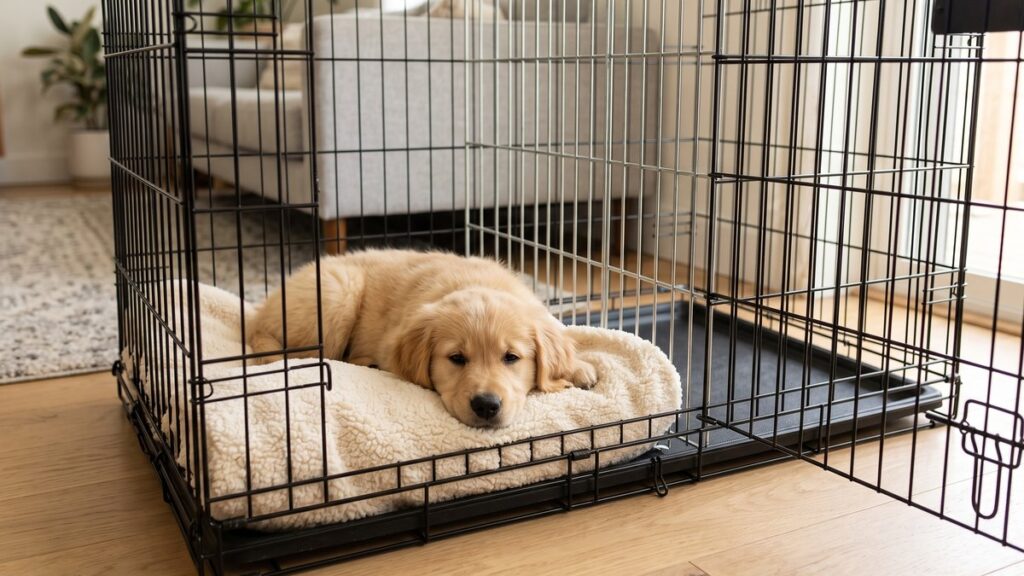
Your puppy has been in the crate for two minutes and the whining has already started.
Open the door and you’ve taught them that whining works.
Ignore it and you might be ignoring a puppy who genuinely needs the toilet.
The way to stop puppy whining in the crate is to work out which kind of whine you’re hearing first, because each one needs a different response:
Whine Type: Protest | Sounds Like: starts the moment the door shuts, rises and falls | Do This: wait for a few seconds of quiet, then open the door
Whine Type: Needs the Toilet | Sounds Like: sudden, after a nap or meal, with scratching at the door | Do This: take them straight outside, no fuss
Whine Type: Lonely at Night | Sounds Like: they can hear and smell you but can’t see you | Do This: move the crate beside your bed
Whine Type: Bored in the Day | Sounds Like: whining while the house is busy around them | Do This: give a frozen stuffed chew as they go in
Whine Type: Real Distress | Sounds Like: escalating, with drooling, panting or frantic scratching | Do This: end the session calmly and go back a step

1. Work Out What Kind of Whining It Is
Protest whining starts almost as soon as the door closes. It sounds demanding rather than frightened, and it rises and falls. Your puppy might stop for a moment to chew a toy or listen to you moving about, then start again. It usually fades once they realize whining isn’t opening the door.
A toilet need sounds more urgent. It often comes on suddenly after your puppy has been asleep for a while, or 15 to 30 minutes after a meal, and you may hear scratching or circling at the front of the crate. Young puppies can’t hold on for long, so if it’s been a couple of hours, assume this is the reason.
Real distress is different again. It keeps building instead of fading, and it often comes with drooling, panting in a cool room, or frantic scratching and biting at the bars. A puppy in real distress won’t settle even when you’re sitting right beside the crate.
2. Never Open the Door While Your Puppy Is Whining
If protest whining gets the door open, your puppy learns that whining works. Next time they’ll whine louder and for longer.
Wait for a pause, even just a few seconds of quiet while they take a breath, then open the door. That way you’re rewarding quiet, not the noise.
This is hard at 2am with a new puppy, but it matters more than almost anything else in crate training. Puppies learn fast, and a few nights of giving in can undo weeks of good progress.
The one exception is a toilet need. If your puppy has been asleep for a couple of hours and is scratching at the door, take them out straight away and keep the trip quiet and boring.
Free · Interactive 7-day plan
Get the free First Week Puppy Plan
A day-by-day plan for your puppy’s first seven days at home: the first night, the crate routine and potty breaks. Tick off each day as you go, and get a short email with tips for the tricky bits.
3. Don’t Ignore Real Distress
Waiting out protest whining is fine. Leaving a panicking puppy to scream isn’t, because a puppy in real panic isn’t learning to settle. They’re just getting more frightened of the crate.
If the whining is getting worse instead of fading within a few minutes, you’ve probably moved too fast. End the session calmly and make the next one easier.
A useful rule of thumb: if you couldn’t comfortably listen to another ten minutes of it, the session has gone past what your puppy can cope with right now.
4. Night Whining vs Daytime Whining
At night, your puppy can often hear and smell you but can’t see you. For a puppy who’s only ever slept in a warm pile of littermates, that can feel very lonely. Moving the crate beside your bed for the first few weeks stops most night whining, because being close to you is often enough on its own. Our First Night With a New Puppy guide covers the full bedtime setup.
Daytime whining is more often about boredom, or missing out on what the rest of the house is doing. A frozen stuffed chew or a lick mat given right as your puppy goes in usually helps, and so does making sure they’re tired and ready for a nap first.
5. Make the Crate Easier to Settle In
A light, breathable sheet over the top and three sides of a wire crate makes it feel more like a den and cuts down on things to react to. Leave the front open.
White noise or a fan on low covers sudden household sounds, like a door closing or the dishwasher, that might otherwise set off a fresh round of whining.
An unwashed T-shirt you’ve worn, or a blanket from the breeder that smells of their mother and littermates, can help a lot in the first week or two.
6. Rule Out a Physical Cause
Before you treat whining as a training problem, check the basics. Has your puppy been to the toilet recently? Are they too hot or in a draft? Is the bedding wet, or has the crate been set too small since their last growth spurt?
Teething can make puppies unsettled too, especially between about 3 and 6 months. A chilled rubber chew in the crate can help sore gums.
If a puppy who was settling well suddenly starts whining a lot, mention it to your vet. Tummy upsets and urine infections are common in puppies, and both can show up first as a puppy who suddenly can’t settle.
7. Go Back a Step If the Whining Doesn’t Stop
If your puppy keeps getting upset at a certain point, like when the door closes or after ten minutes, don’t push through it. Go back to the last stage where they were calm and build up again more slowly.
That might mean closing the door for just a few seconds at a time, or going back to meals in the crate with the door open. Our 5-Day Crate Training Method sets out the stages. Progress is rarely a straight line, and needing an easier day now and then is normal.
Common Mistakes That Make Whining Worse
Rushing over at the first sound. If every little whimper brings you running, your puppy learns that even small noises get a response, and whines sooner next time.
A big fuss when you let them out. An excited welcome makes the door opening the best part of the day, which builds frustration while they wait for it.
Only using the crate when you leave. If the crate always means being left alone, your puppy will start whining as soon as they see it. Use it for naps while you’re home too.
Comparing your puppy to someone else’s. Some puppies settle in a few days, others take a few weeks. Neither says anything about how well you’re doing.
When to Get Extra Help
If the whining hasn’t improved after a few weeks of patient, consistent training, or your puppy is hurting themselves trying to get out, talk to your vet or a qualified positive-reinforcement trainer.
Severe distress in the crate can be an early sign of separation anxiety, which is much easier to help when it’s caught young.
Take the Next Step
🐾 Keep the good habits growing.
Want a clear plan for what to practise next? Brain Training for Dogs is a guided programme of games and everyday training you can work through together at home.
Read Our Full Review →Links to our affiliate review of Brain Training for Dogs.
Frequently Asked Questions
Should I ever let my puppy out while they’re whining? Only if it’s a toilet need. Otherwise, wait for a few seconds of quiet first so you’re not rewarding the whining.
Is it normal for a puppy to whine the first few nights? Yes. Most puppies whine on and off for the first few nights, and it usually settles within a week with the crate beside your bed and a steady routine.
How long will my puppy whine in the crate? Protest whining often lasts 5 to 20 minutes at first and gets shorter each day if you don’t give in. Whining that keeps getting louder for longer than that usually means the session is too hard for now.
How do I know if it’s separation anxiety? Escalating panic, drooling, trying to break out, or distress that doesn’t improve with a slower approach are signs it’s worth getting a professional opinion.
Will moving the crate to my bedroom spoil my puppy? No. It’s a comfort for the first few weeks, not a habit for life, and you can move the crate gradually once your puppy is sleeping well.
The Bottom Line
Most puppy whining in the crate stops with patience, a steady routine, and never opening the door mid-whine. If the whining keeps getting worse, that’s your cue to slow down rather than push through.
Once your puppy settles happily in the crate, the next question is when they can manage without it: When to Stop Crate Training.
Your New Puppy Journey
Puppy Potty Training & Crate Training
Crate training first, then potty training, in the order you’ll need them.
Start hereChoose the right crate →See all steps
Crate Training
- What Size Crate for a Puppy?
- First Night With a New Puppy
- Why Does My Puppy Cry at Night?
- How to Crate Train a Puppy: The 5-Day Method
- Puppy Crate Training Tips
- What to Do When Your Puppy Cries or Whines in the Crate
- When to Stop Crate Training
Potty Training
- Puppy Potty Training Routine
- Puppy Potty Training Schedule by Age
- Puppy Feeding Schedule by Age
- Potty Training a Puppy With Bells
- Potty Training an Apartment Dog
- How to Stop Your Puppy Peeing in the House
- Potty Training Regression
More for New Puppy Owners
Free · Interactive 7-day plan
Get the free First Week Puppy Plan
A day-by-day plan for your puppy's first seven days at home: the first night, the crate routine and potty breaks. Tick off each day as you go, and get a short email with tips for the tricky bits.