The Witching Hour Rule: Frantic biting, lunging at ankles, and sudden wild sprinting between 6:00 PM and 9:00 PM is not aggression, it’s sleep deprivation.
Just like overtired human toddlers, puppies throw physical tantrums when their nervous systems become overloaded.
The fix is not more physical exercise; it’s low-energy calming enrichment followed by an enforced quiet nap.
| Evening Step | What to Do |
| Step 1: The Sniff Walk 5:00 PM, decompress | 10-minute slow sniff walk outside; lets their nose drain mental energy. |
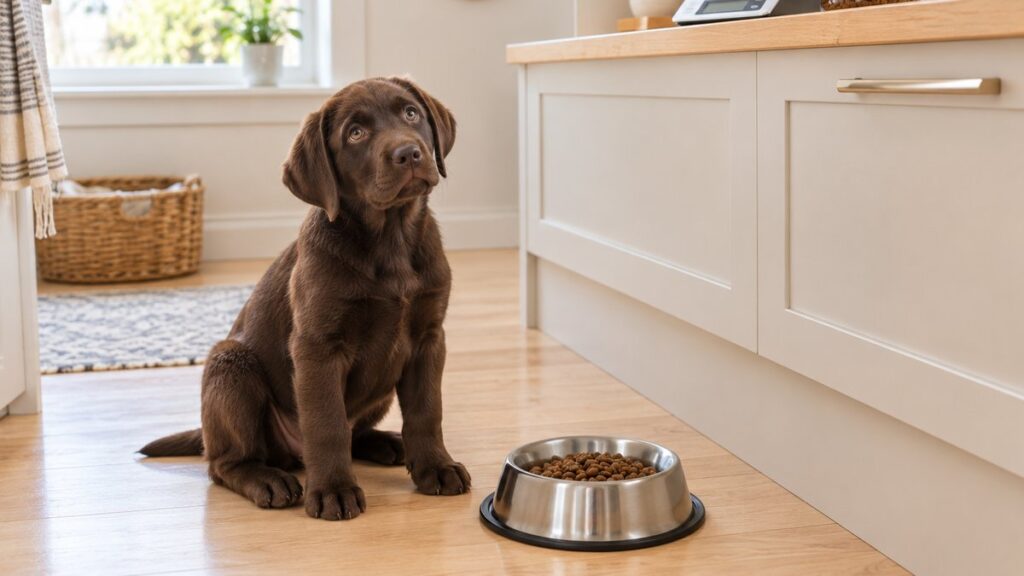
| Step 2: Low-Key Dinner 5:30 PM, mental work | Ditch the food bowl; scatter kibble in grass or use a snuffle mat. |
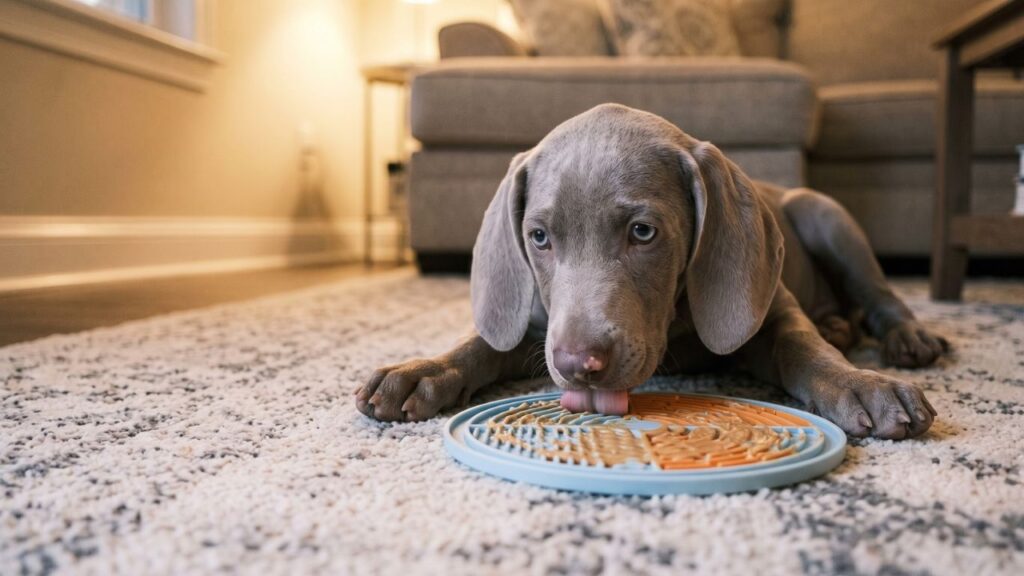
| Step 3: The Lick / Chew 6:30 PM, lower arousal | Give a frozen KONG or lick mat; licking releases natural calming endorphins. |
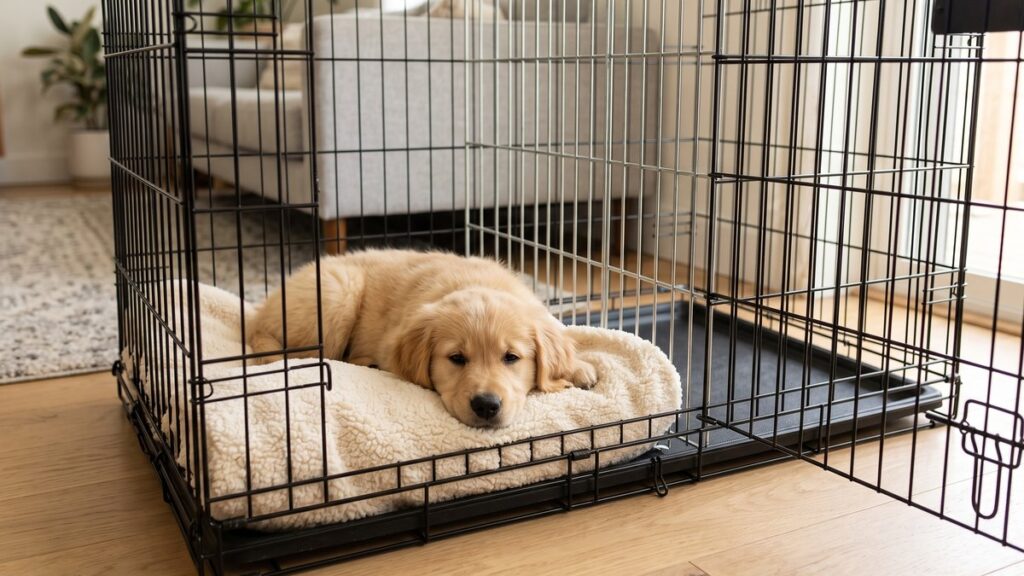
| Step 4: Enforced Rest 7:15 PM, dark crate nap | Turn lights low, turn on white noise, and enforce quiet crate sleep. |
It happens every evening like clockwork.
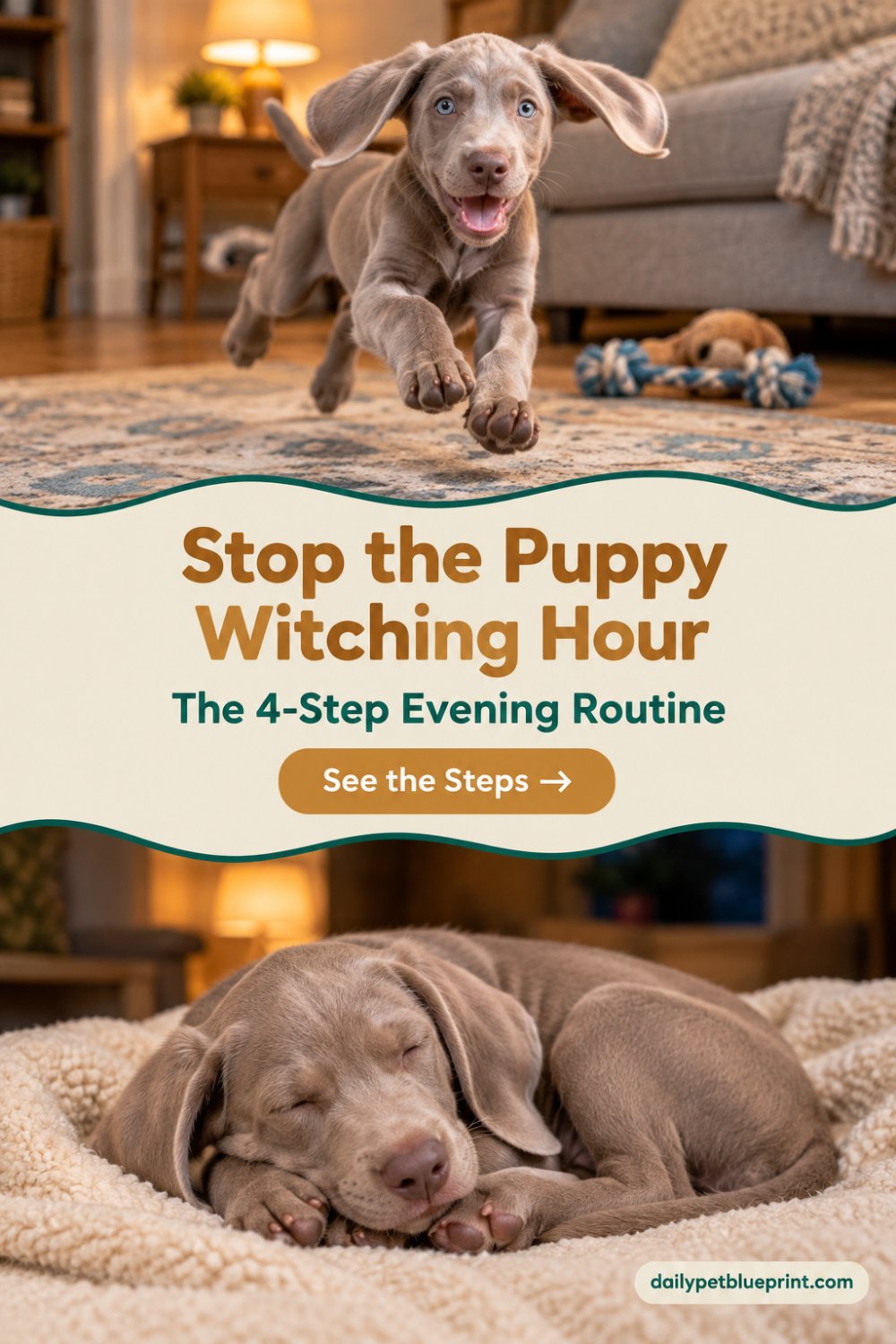
Your sweet, cuddly puppy suddenly gets glazed eyes, tucks their tail, sprints laps across the living room furniture, and starts lunging at your ankles like a miniature piranha.
You try to redirect them, you tell them “no,” and they bark directly in your face.
It’s exhausting, painful, and makes almost every new puppy parent wonder: Did I adopt an aggressive dog?
The short answer is no. You’re experiencing the dreaded puppy witching hour.
Key Takeaways: The Witching Hour Breakdown
- It’s Overtiredness, Not Spite: Puppies need 18 to 20 hours of sleep per day. Evening meltdowns almost always trace back to missed daytime naps.
- More Exercise Makes It Worse: Running an overtired puppy around the yard floods their body with adrenaline and cortisol, intensifying the biting.
- Licking and Chewing Are Natural Sedatives: Chewing and licking drop a dog’s heart rate and release calming hormones.
- You Must Step In and Manage Bedtime: Young puppies lack the self-regulation to lie down and go to sleep on their own when overstimulated.
Why Does the Puppy Witching Hour Happen?
To fix the evening frenzy, you first have to understand what is happening inside your puppy’s brain.
1. Sensory Overload
By 6:00 PM, your puppy has processed an entire day of sights, sounds, smells, training sessions, and household activity. Their immature nervous system simply fills up with sensory input until it boils over.
2. The Toddler Meltdown Reflex
When young human toddlers skip a nap, they don’t curl up quietly on the rug, they scream, run around, and throw toys. Puppies do the exact same thing.
Their “tantrum” takes the form of frenzied running (the zoomies) and hard mouthy biting.
3. The Exercise Trap
Most owners assume evening zoomies mean the puppy still has “too much energy.” They break out tug ropes, throw balls, and wrestle on the carpet.
This is the biggest mistake you can make. Adding high-arousal physical games on top of an exhausted puppy just pours gasoline on an open fire.
Free · Interactive 7-day plan
Get the free First Week Puppy Plan
A day-by-day plan for your puppy’s first seven days at home: the first night, the crate routine and potty breaks. Tick off each day as you go, and get a short email with tips for the tricky bits.
The 4-Step Evening Routine to Stop the Meltdown
Follow this structured evening sequence to bring your puppy down from high arousal smoothly before the biting begins:
Step 1: The Sniff Walk (5:00 PM)
Trade fast-paced marching for a slow “decompression sniff.” Put your puppy on a flat collar or harness and a 6-foot leash, walk out to your yard or quiet driveway, and let them sniff whatever they want for 10 minutes.
Scent work uses immense mental energy without spiking physical adrenaline.
Step 2: Ditch the Food Bowl (5:30 PM)
Gulping down dinner from a stainless steel bowl in 30 seconds leaves your puppy with 59 minutes of unoccupied evening time.
Make dinner a calming brain game:
- Scatter kibble across a flat snuffle mat.
- Roll their food inside a dry bath towel and let them unroll it with their nose.
- Scatter feed across a clean patch of grass outside.
Step 3: Calming Lick and Chew Time (6:30 PM)
The repetitive physical motions of licking and chewing trigger the parasympathetic nervous system, slowing your dog’s breathing and reducing stress.
Instead of roughhousing on the rug, hand your puppy an approved, long-lasting chew:
- A rubber KONG stuffed with soaked kibble or a spoonful of dog-safe pumpkin.
- A silicone lick mat spread with our Frozen Dog Treats: 3-Ingredient Yogurt Pupsicle Recipe.
- A puppy-safe rubber chew toy.
Step 4: The Enforced Quiet Nap (7:15 PM)
Don’t wait for your puppy to fall asleep on the floor. At this stage of the evening, household movement (cooking dinner, watching TV, children moving around) will keep them in a hyper-aroused state.
Place your puppy into their dark, covered crate with a white noise machine or fan running.
They may let out a minute or two of light protest, but within five minutes, their eyes will close for a deep 1.5-to-2-hour restorative nap.
For tips on setting up a quiet nighttime space, check out our guide on How to Crate Train a Puppy at Night Without Crying: The 5-Day Method.
What to Do If You’re Caught in a Meltdown Right Now
If you didn’t catch the signs early and your puppy is actively lunging, growling, and biting your pant legs right this second, take these three emergency steps:
- Become a Statue: Cross your arms, stand up, and look away. Moving your hands, pulling your legs away, and yelling “ouch” mimics prey behavior and encourages them to bite harder.
- Scatter 5 Treats on the Floor: Drop a handful of tiny treats right onto the carpet. Looking down and sniffing the floor forces their brain to switch gears from high-drive biting to foraging.
- Calm Body-Block to the Safe Zone: While their head is down eating the treats, calmly step between your puppy and your family. Guide them into their exercise pen or crate with a safe chew so they can sleep.
Witching Hour vs. True Aggression: How to Tell
New owners frequently mistake frantic puppy behavior for underlying dominance or aggression. Review these differences to put your mind at ease:
| Normal Witching Hour (Overtired) | Potential Behavioral Concern |
| Occurs reliably at the same evening window (6–9 PM). | Unprovoked growling occurring at random times throughout the day. |
| Puppy wags loosely, bounces, play-bows, or darts wildly. | Stiff body posture, hard eye stare, and lip curling over objects/food. |
| Resolves completely after 20 minutes in a dark crate. | Ongoing distress that continues after adequate sleep. |
Frequently Asked Questions
At what age does the puppy witching hour stop?
The most intense witching hour phases happen between 8 and 16 weeks of age. As puppies develop better emotional impulse control and transition toward adult sleep patterns around 5 to 6 months old, evening meltdowns naturally fade away, provided consistent nap routines are maintained.
Should I put my puppy in “time out” during the witching hour?
Never treat nap time or crate time as an angry punishment. If your puppy is wild, calmly place them in their pen or crate with a chew toy. Frame it not as a “time out,” but as a needed rest opportunity for an overtired baby.
Can teething make the witching hour worse?
Yes. Between 12 and 16 weeks, adult teeth begin pushing through sore gums, and discomfort often peaks in the evening. Offering chilled or frozen chews during Step 3 numbs the gums while soothing their nervous system.
Predictable Evenings Create Calm Dogs
The witching hour is not a personal failure, and it doesn’t mean you have a bad dog. It is simply your puppy’s way of saying: “I am completely exhausted, and I don’t know how to turn my brain off.”
Stick to predictable sniff breaks, replace rowdy evening play with calming chews, and enforce scheduled sleep. Your evenings will be quiet again in no time.
With calmer evenings sorted, the next step is building your puppy’s confidence out in the world: Puppy Socialization Guide: How to Safely Introduce New Sights and Sounds.
Your New Puppy Journey
Puppy Potty Training & Crate Training
Crate training first, then potty training, in the order you’ll need them.
Start hereChoose the right crate →See all steps
Crate Training
- What Size Crate for a Puppy?
- First Night With a New Puppy
- Why Does My Puppy Cry at Night?
- How to Crate Train a Puppy: The 5-Day Method
- Puppy Crate Training Tips
- What to Do When Your Puppy Cries or Whines in the Crate
- When to Stop Crate Training
Potty Training
- Puppy Potty Training Routine
- Puppy Potty Training Schedule by Age
- Puppy Feeding Schedule by Age
- Potty Training a Puppy With Bells
- Potty Training an Apartment Dog
- How to Stop Your Puppy Peeing in the House
- Potty Training Regression
More for New Puppy Owners
Free · Interactive 7-day plan
Get the free First Week Puppy Plan
A day-by-day plan for your puppy's first seven days at home: the first night, the crate routine and potty breaks. Tick off each day as you go, and get a short email with tips for the tricky bits.