If your dog’s skin smells a bit like corn chips (that’s the actual classic description), or looks greasy and darker than usual in certain spots, you’re probably not dealing with a regular allergy. That’s the signature of a yeast overgrowth, and it’s a lot more common than most owners realize.
Why This Happens in the First Place
Yeast, specifically a type called Malassezia, lives on every dog’s skin normally in small amounts without causing any problem at all. It only becomes an issue when something lets it multiply out of control, often an underlying allergy, excess moisture, or a weakened skin barrier that gives it room to take over. Think of it less as a separate disease and more as a normal resident overstaying its welcome once conditions favor it.
Where It Tends to Show Up
Ears, paws, the folds of the face, armpits, and anywhere skin touches skin are the classic spots, basically anywhere warm and a bit damp. Floppy-eared breeds and dogs with skin folds, Bulldogs, Pugs, Shar-Peis, Basset Hounds, deal with this more often simply because those areas trap moisture more easily.
The Smell Is Genuinely a Real Diagnostic Clue
That corn-chip or slightly musty smell isn’t just an unpleasant coincidence, it’s actually caused by the yeast itself and is one of the more reliable signs that this is what you’re dealing with rather than a typical allergy or dry skin. If you notice it, trust it.
What Actually Helps
An antifungal shampoo made specifically for dogs, containing something like miconazole or chlorhexidine, is the most effective approach for a real yeast overgrowth, and it’s worth getting one formulated for this specifically rather than a general dog shampoo. Bathing on the schedule the product recommends, usually a couple of times a week initially, matters more than a single bath.
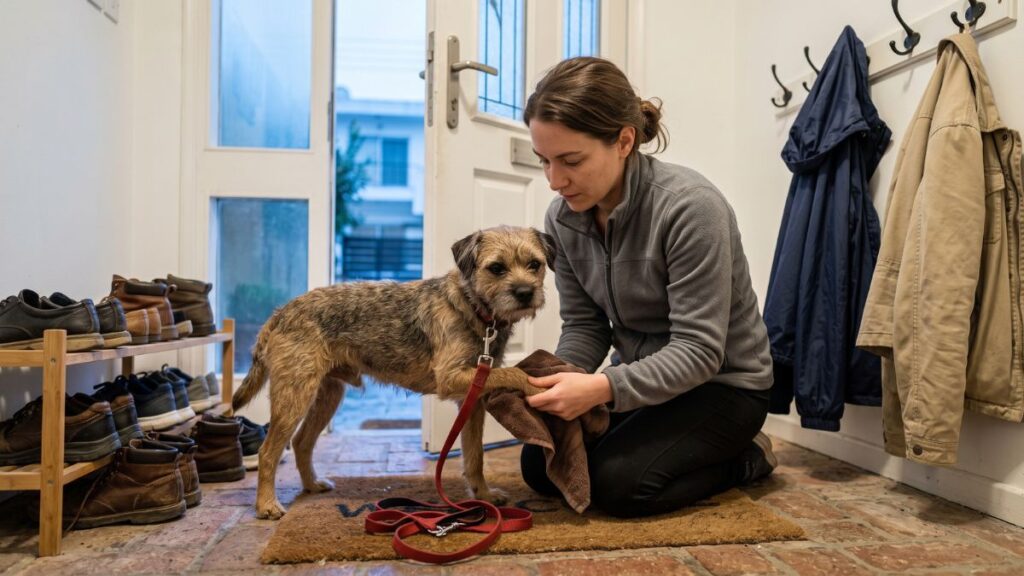
Keeping affected areas properly dry after baths and swimming is just as important as the shampoo itself, since ongoing moisture is exactly what let the yeast take over in the first place. A quick pass with a towel or even a low, cool setting on a hair dryer for ear flaps and skin folds does help.
Diluted Vinegar Rinse for Paws Specifically
For yeasty paws specifically, a diluted apple cider vinegar rinse (one part vinegar to two or three parts water) can help create an environment yeast doesn’t thrive in as easily. Skip this on any broken or irritated skin though, since it’ll sting rather than help there.
This Is Almost Always a Symptom, Not the Root Cause
Here’s the thing worth actually understanding: yeast overgrowth is usually a secondary problem, meaning something else, most often an underlying allergy, set the conditions for it to happen in the first place. Treating the yeast without addressing that underlying cause often means it just comes right back within weeks.
Diet’s Worth a Look Too
Some dogs with recurring yeast issues do better on a lower-carbohydrate diet, since yeast can feed on excess sugars in a way that makes overgrowth more likely. This isn’t a guaranteed fix on its own, but it’s worth discussing with your vet if yeast keeps coming back despite treating each flare-up.
Ear-Specific Yeast Needs Its Own Approach
If it’s specifically in the ears, head shaking, scratching at the ears, a dark waxy discharge, a proper ear cleaner formulated for yeast matters more than a general skin approach. Ears are also easy to under-treat since it’s hard to see what’s actually happening deep in the canal, which is part of why ongoing ear yeast often needs an actual vet look.
Certain Breeds Deal With This Far More Than Others
Beyond the fold-heavy and floppy-eared breeds already mentioned, West Highland White Terriers and Cocker Spaniels also show up disproportionately often with recurring yeast issues, enough that some vets consider it close to a breed tendency in these cases. If you’ve got one of these breeds and yeast keeps coming back, it’s worth a longer-term management conversation rather than treating each flare-up as a one-off.
FAQ
Is yeast overgrowth contagious to other pets?
No, it’s not contagious the way a lot of people assume. It’s an overgrowth of something already living on your dog’s own skin, not something passed between animals.
How long does it take to clear up with treatment?
Mild cases can improve within a couple of weeks of consistent antifungal bathing. More established or recurring cases can take longer and genuinely benefit from addressing the underlying allergy alongside it.
Can I use human antifungal cream on my dog?
It’s better to use something formulated for dogs specifically, since your dog will likely lick any topical product, and not all human formulations are safe to ingest.
The Bottom Line
A yeast overgrowth has a genuinely distinct smell and look once you know what to check for, and antifungal treatment plus keeping the area dry usually clears it up. If it keeps coming back, that’s your sign there’s an underlying allergy worth actually addressing too.
For the allergy connection, see Dog Allergy Remedies, or head back to Dog Remedies: The Real, Honest Guide to What Actually Helps.